

Russian 'Geraniums' violated NATO airspace: Romania shot down two drones
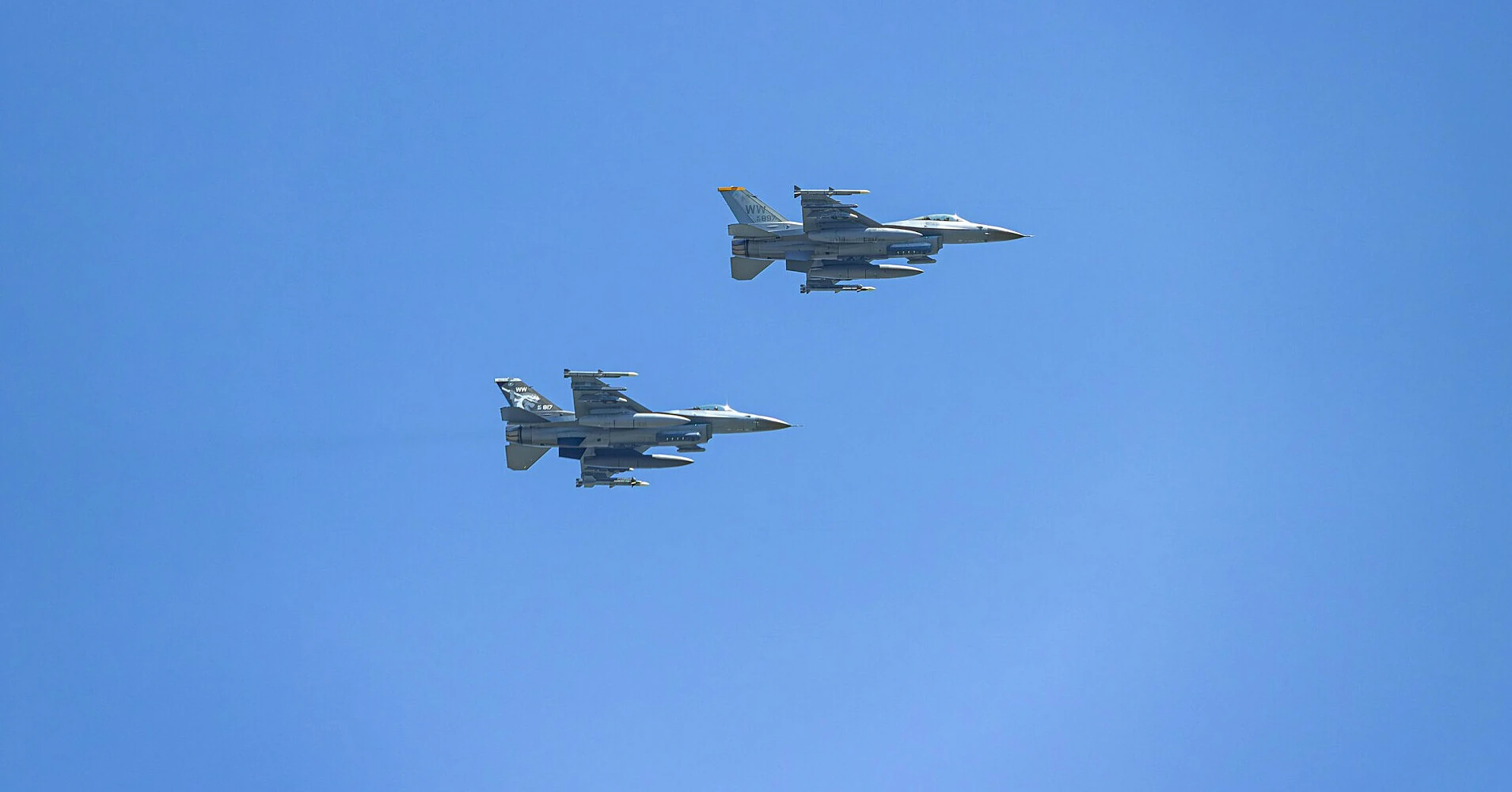
Romanian Air Force F-16 fighters shot down two attack drones of the 'Geranium' family with jet engines on October 17. Both drones violated the country's airspace over the Black Sea but were destroyed just four minutes apart — at 18:01 and 18:05. According to the Romanian Ministry of Defense, during the previous week drones crossed the border briefly four more times. The new interception came amid growing threats to shipping in the area of Ukrainian and Romanian ports.
The operation was officially confirmed by the Romanian Ministry of National Defense. The military specified that both aerial targets were destroyed over the country's territorial waters, not far from the city of Sulina, located near the Ukrainian border.
Later, specialists identified the downed craft as jet-powered attack drones of the Geran family. Their exact modifications are not specified.
How Romanian F-16s intercepted two drones
According to the Ministry of Defense, on October 17 Romanian radar systems detected a group of aerial targets about 120 kilometers east of the Ukrainian Snake Island.
The objects were moving southwest, approaching Romania's airspace.
At 17:43, two F-16 fighters on standby as part of the air policing mission took off from the 86th Borcea Air Base.
The first target crossed the national airspace border at 17:59.
Two minutes later, at 18:01, one of the fighters shot down the drone approximately 25 kilometers southeast of the city of Sulina.
The second drone entered Romanian airspace around 18:01 and was destroyed by another F-16 at 18:05 — about 20 kilometers east of Sulina.
Thus, only four minutes passed between the destruction of the first and second targets.
The Ministry of Defense stressed that both drones were shot down over Romanian territorial waters. This means that the military acted within national airspace, not over international waters of the Black Sea.
Defense Minister Radu Miruță confirmed the successful interception of both targets.
What is known about jet-powered 'Geraniums'
After the operation was completed, the Romanian defense ministry reported that the destroyed drones belong to the family of Russian attack drones 'Geranium'.
Unlike the widely used devices with piston engines and propellers, the downed drones were equipped with jet power plants.
Such engines allow some modifications of attack drones to reach significantly higher speed, making their detection more difficult and reducing the time for interception.
However, the Romanian military did not name the exact model of the destroyed devices and did not disclose their technical specifications.
It was also not reported from where exactly they were launched and what objects could have been their intended targets.
Therefore, there are no grounds yet to claim that the drones were heading to attack a specific port, military facility, or commercial vessel.
Drones violated Romanian airspace four times in a week
The Saturday interception followed a series of air incidents near the Romanian border.
According to the Ministry of Defense, during the previous week surveillance systems detected aerial targets moving over the territory of Ukraine in immediate proximity to Romania eight times.
In four cases, drones briefly crossed the national air border.
The military repeatedly scrambled fighters to monitor the situation, but weapons were not used in all cases.
Thus, on October 14, Romanian radars detected an aerial target approximately 30 kilometers east of Snake Island.
Two F-16s took off from Borcea Air Base to check the situation.
The drone entered Romanian airspace about 22 kilometers northeast of Sulina and remained there for about eight minutes, after which it left the country's territory.
Air raid alerts were declared in the border areas of Tulcea County, and residents were sent warnings via the RO-Alert system.
The current incident is different in that Romanian pilots independently destroyed two aerial targets directly over the country's territorial waters.
However, this is not the first use of weapons by Romanian fighters against drones that violated the border during the full-scale war. Similar operations have been reported before.
Why tensions are rising in the Black Sea
New airspace violations come amid increasingly frequent attacks on commercial vessels in the Black Sea.
In mid-October, several commercial vessels were attacked by drones near the Romanian and Bulgarian coasts.
Among the most serious incidents is a fire on the tanker Wine Trader flying the flag of San Marino, which occurred on October 15 near the Sulina Canal.
According to the Romanian Maritime Administration, five crew members were rescued, while seven others were reported missing at the time of the initial report.
The circumstances of the attack are being investigated. Romanian authorities have not officially established a link between this incident and the two drones destroyed on October 17.
Nevertheless, such incidents raise growing concerns about the safety of maritime transport.
The Black Sea remains a vital transport route for exports of agricultural products, petroleum products, and other goods.
Therefore, air threats near commercial ports and maritime routes affect not only regional security but also international trade.
Why the incident matters for NATO and Ukraine
Romania is a NATO member and shares an extensive border with Ukraine.
A significant part of it runs along the Danube, where Ukrainian river ports and important transport routes are located.
The city of Sulina is located near the mouth of the Danube into the Black Sea. Commercial vessels, including those serving Ukrainian exports, pass through this area.
Therefore, the violation of Romanian airspace near Sulina is important for several security domains: protecting the borders of a NATO state, maritime trade operations, and transport links with Ukraine.
Romanian Foreign Minister Oana Țoiu previously stressed that the security of the Black Sea is important for international supplies of food, energy resources, and industrial products.
She announced plans to discuss with allies the strengthening of defense and deterrence in the region.
However, the destruction of drones by Romanian fighters does not automatically trigger Article 5 of the North Atlantic Treaty on collective defense.
In this case, it concerns actions of national armed forces aimed at protecting their own airspace.
What changed after the interception
The Romanian Ministry of Defense stated that it continues to improve procedures for responding to air threats and to strengthen protection of national airspace and territorial waters.
The new measures are related to the increased number of incidents near the border with Ukraine and threats to shipping in the Black Sea.
However, no additional NATO decisions directly following the October 17 interception have been reported so far.
The Romanian side has also not published information about casualties or destruction on the country's territory as a result of the destruction of the two drones.
The main confirmed outcome of the operation is that two jet-powered attack drones of the 'Geranium' family were destroyed by F-16 fighters after violating Romanian airspace.
Against the backdrop of ongoing Russian attacks on Ukraine and increasingly frequent incidents involving commercial vessels, this episode shows how close air threats have come to the borders of NATO states.
Romania has recorded violations of its airspace several times over the past week. Now two such violations ended with the destruction of drones over the country's territorial waters.
Based on materials from: Romanian Ministry of Defense — official clarification about two jet drones Geran dated October 17, 2026, Romanian Ministry of Defense — timeline of the interception, AGERPRES — confirmation of the type of destroyed drones, Euronews — details of the operation and reaction of Romanian authorities, Romanian Ministry of Defense — previous airspace violation on October 14.