
Ukrainians named the main obstacle to peace and assessed concessions regarding Donbas
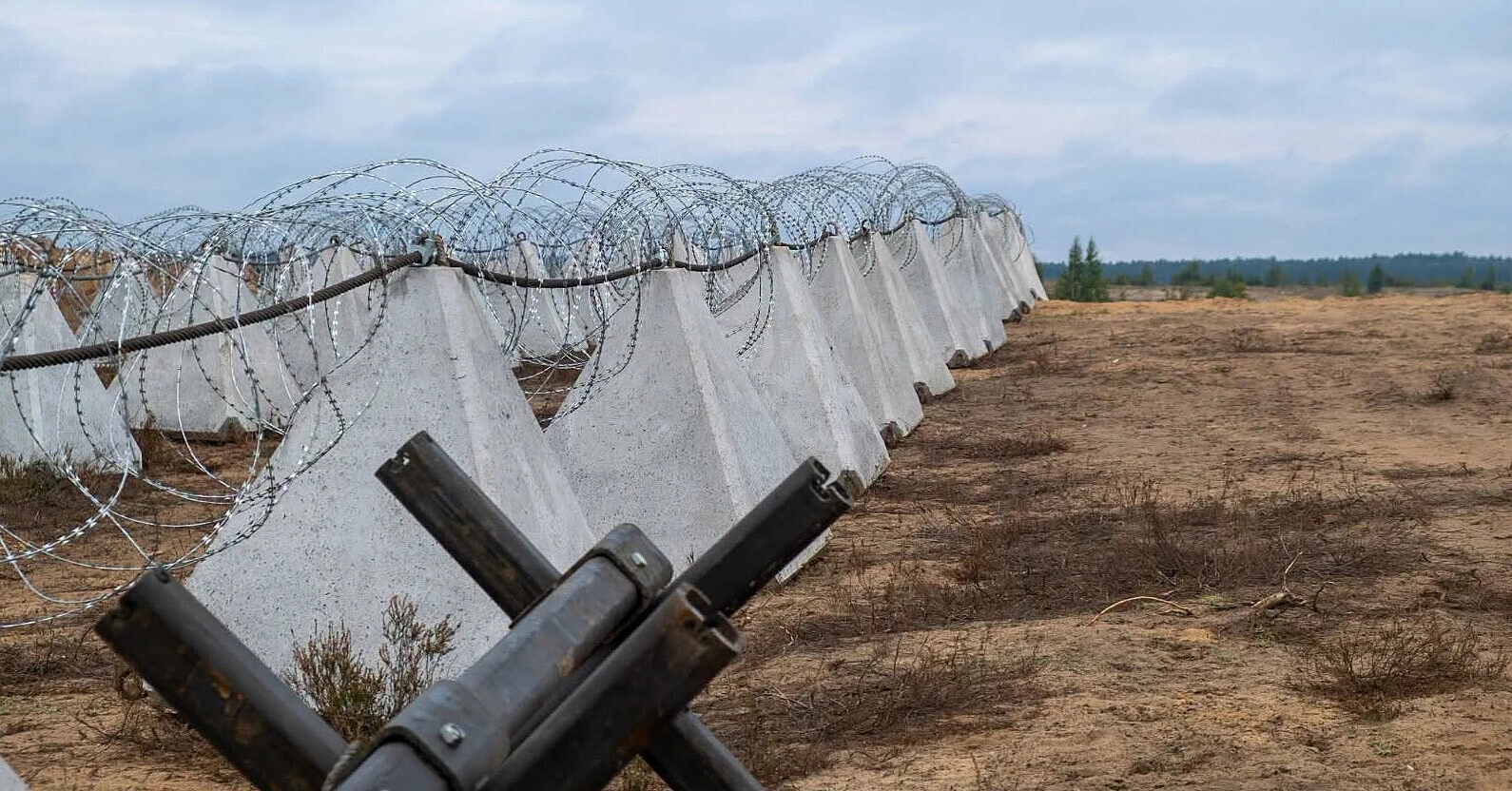
Most Ukrainians believe that the main obstacle to achieving peace is Russia's desire to subjugate Ukraine, not the insufficient flexibility of the Ukrainian authorities. At the same time, the overwhelming majority of citizens continue to reject the possibility of withdrawing the Armed Forces of Ukraine from the territories of Donbas controlled by Ukraine, even in exchange for security guarantees from Western partners.
This is evidenced by the results of a new survey by the Kyiv International Institute of Sociology (KIIS), conducted on October 8-16, 2026 and published on October 19.
Who Ukrainians consider the main obstacle to peace
Sociologists conducted a special experiment to find out whether Ukrainians associate the absence of peace agreements with Kyiv's position or with Russia's intentions.
For this, study participants were divided into two groups of approximately 500 people each. Each group was asked to evaluate two statements about the reasons for the absence of peace, but in different formats.
In the first group, 84% of respondents agreed with the statement that Russia seeks to subjugate Ukraine and therefore is not ready for peace that presupposes the preservation of Ukrainian sovereignty and a strong army. 12% of respondents disagreed with this assessment.
At the same time, 73% of participants in this group rejected the statement that the Ukrainian authorities should be more flexible in peace negotiations. 20% of respondents supported the need for greater flexibility by Kyiv.
In this case, 78% of respondents named Russia's desire to subjugate Ukraine as the main obstacle to peace. Only 12% pointed to the excessive inflexibility of the Ukrainian authorities.
Because the questions in the two groups differed, their results cannot be mechanically combined. At the same time, both survey methods showed a predominance of the position that the main obstacle to a peaceful settlement is related to Russia's intentions.
Majority does not support troop withdrawal from Donbas
Separately, KIIS studied Ukrainians' attitudes toward a possible withdrawal of the Armed Forces of Ukraine from the territories of Donbas that currently remain under Ukraine's control.
The proposed scenario stipulated that the Ukrainian army would leave the areas it controls, including Kramatorsk and Sloviansk, after which these territories would come under Russian control. In return, the United States and European countries would provide Ukraine with security guarantees.
61% of respondents categorically reject such a condition. 35% are ready to agree to it, although most of them admit that it would be a difficult decision. Another 4% were undecided.
Compared to the previous study conducted in late July - early August, there were no statistically significant changes in Ukrainians' attitudes toward this proposal.
Sociologists also compared survey results before and after October 9 amid new events regarding Russian fuel and international pressure on Ukraine.
Among respondents surveyed on October 8-9, 57% opposed the withdrawal of troops from Donbas. Among those surveyed October 10-16, 62% did.
However, KIIS emphasizes that this difference falls within the statistical margin of error. Therefore, it is not possible to speak of a credible strengthening or weakening of Ukrainians' readiness for the relevant concessions.
Why KIIS results differ from "Rating" group survey
In early October, the sociological group Rating Group published the results of another study that at first glance seemed to show a greater readiness of Ukrainians for territorial compromises.
According to "Rating," whose survey was conducted on October 3-5, 56% of citizens admitted the possibility of territorial concessions for the sake of a lasting peace under the condition of security guarantees from the US and European partners. Such guarantees were to include funding for Ukraine's Defense Forces and the provision of weapons.
35% of respondents in that study opposed territorial concessions. Another 3% admitted them without preconditions, and 6% could not decide.
The main difference between the two studies lies in the wording of the questions and the concreteness of the proposed conditions.
Sociologists from "Rating" studied the general readiness of citizens to consider territorial concessions with specified security guarantees. In contrast, KIIS proposed a specific scenario: transfer all Ukrainian-controlled areas of Donbas to Russia in exchange for security guarantees.
The "Rating" message did not specify which territories would be the subject of concessions and whether they would involve the withdrawal of the Armed Forces from current defensive positions.
Therefore, the readiness to consider territorial compromises in general cannot automatically be equated with support for transferring Kramatorsk, Sloviansk and other Ukrainian-controlled cities of Donetsk region to Russia.
Moreover, the studies were conducted in different periods, and their wording does not allow direct comparison of the figures 56% and 35% as changes in public sentiment.
Previously, "Course of Ukraine" already reported that, according to "Rating," 57% of Ukrainians support the cessation of hostilities and search for compromise in negotiations. At the same time, support for negotiations as a way to end the war does not necessarily mean agreement to any specific terms of a peace agreement.
Thus, the new KIIS data show that the majority of respondents associate the absence of peace with Russia's position and do not support the specific scenario of transferring the Ukrainian-controlled part of Donbas to Russia.
Survey methodology
KIIS surveyed 1,031 adult citizens of Ukraine on October 8-16 using telephone interviews. The study covered territory controlled by the Ukrainian government. The formal statistical margin of error for the entire sample does not exceed 4% for indicators close to 50%. For the two separate groups of the experiment on obstacles to peace, the margin of error is up to 5.7%.
The "Rating" sociological group conducted its survey on October 3-5 among 1,000 adult respondents using telephone interviews. The stated statistical margin of error is no more than 3.1 percentage points.
Both studies did not cover the population of the temporarily occupied territories.
Based on materials from: KIIS, Rating Group
