
China again called for mutual concessions to end the war in Ukraine
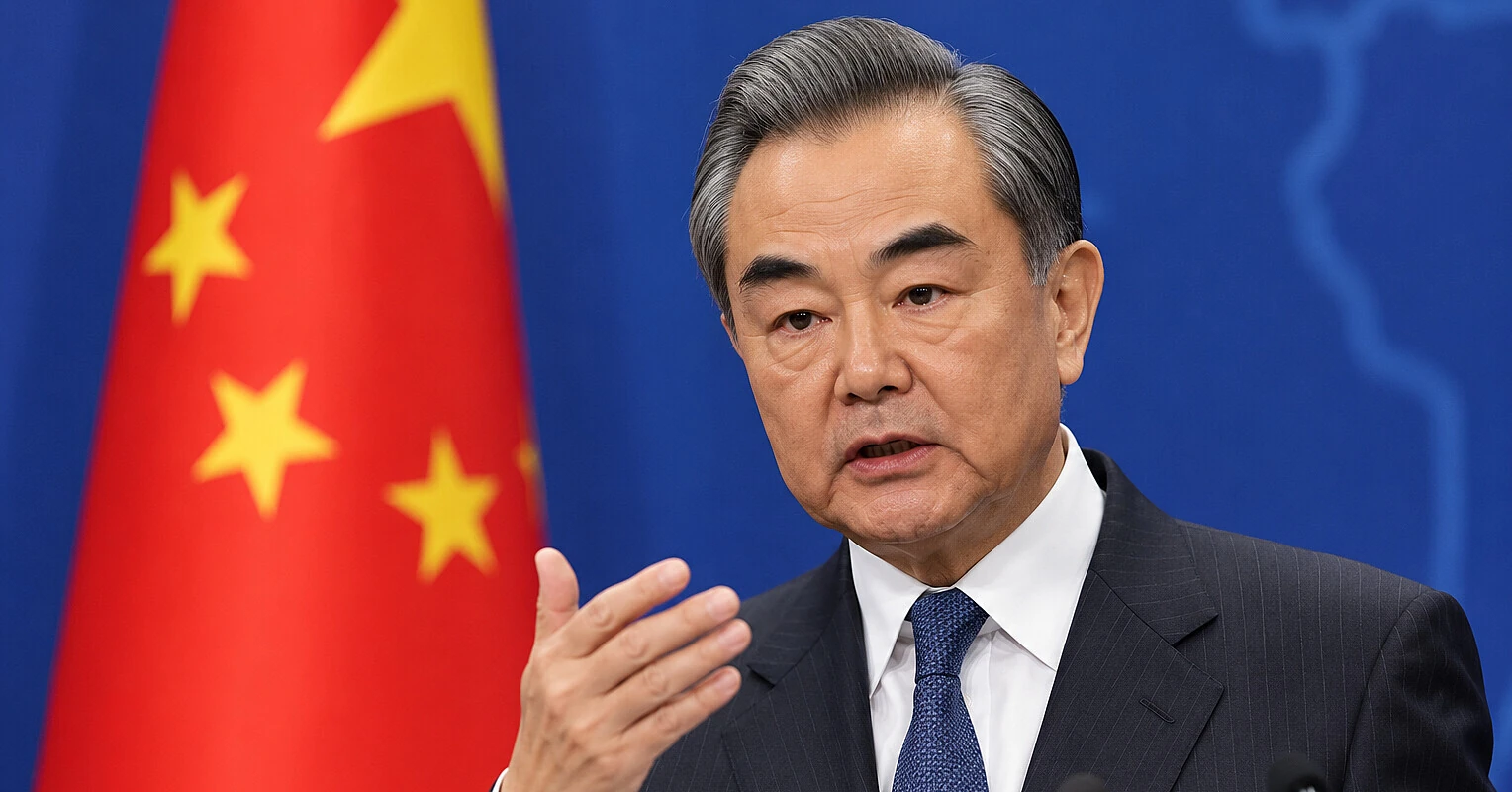
China has again advocated for settling Russia's war against Ukraine through negotiations, restoring trust and mutual concessions. Beijing believes that the same approach should be applied to ending armed conflicts in the Middle East.
This was stated by Chinese Foreign Minister Wang Yi during a joint briefing with Bulgarian Foreign Minister Velislava Petrova in Sofia on October 19. Details of his speech were published by the Chinese Ministry of Foreign Affairs on October 20 published by the Ministry of Foreign Affairs of China.
Wang Yi summed up the results of his Eurasian tour, during which he visited Azerbaijan, Croatia, Montenegro and Bulgaria, and also took part in the summit of the Conference on Interaction and Confidence-Building Measures in Asia as a special representative of Chinese President Xi Jinping.
One of the main conclusions of the trip, according to the Chinese minister, was the need to restore trust between states. He said that its lack remains one of the main problems of international relations and hinders the settlement of armed conflicts.
"Trust is the cornerstone of peace. From the Ukrainian crisis to the hostilities in the Middle East: trust is needed to resolve conflicts, and communication is needed to strengthen it," — said Wang Yi.
The head of Chinese diplomacy emphasized that Beijing continues to advocate for a political settlement of international crises and intends to facilitate the restoration of dialogue between opposing sides.
According to him, during a recent summit he held separate talks with the leaders of Israel and Palestine, met with representatives of other Middle Eastern countries, and also listened to assessments by Balkan leaders regarding the war in Ukraine and the regional security situation.
Wang Yi said that China conveyed to interested parties a call to show persistence in seeking peaceful solutions, to continue diplomatic consultations, to strive for mutual understanding, to make mutual concessions and gradually restore trust.
However, the Chinese minister did not specify which compromises Beijing considers necessary to end the Russian-Ukrainian war. The published statement also lacks new proposals on ceasefire conditions, the timing of possible negotiations, or a concrete mechanism for achieving a peace agreement.
Thus, Wang Yi's speech confirmed China's previous diplomatic approach, which emphasizes negotiations and compromises, without presenting a new detailed plan for settling the war.
Bulgaria raised the issue of Black Sea security
The topic of the Russian-Ukrainian war was also discussed during Wang Yi's separate talks with Bulgarian Foreign Minister Velislava Petrova.
As reported by the Bulgarian Ministry of Foreign Affairs, Sofia drew special attention to the consequences of the war for the security of the Black Sea region and international trade routes.
Petrova noted that the situation in Ukraine and incidents in Bulgaria's exclusive economic zone and in the Black Sea make issues of shipping safety and maintaining reliable trade links between Europe and Asia particularly pressing.
The Bulgarian minister stressed the need for diplomatic efforts to reduce tensions and achieve a comprehensive and sustainable peace. She also noted the importance of constructive participation of international partners, including China, in conflict resolution.
According to Petrova, international stability is a shared responsibility of states, especially those with significant political and economic influence.
The Chinese side, in turn, stated that the ministers exchanged views on the situation in Ukraine and other international issues. However, no new agreements directly on the Russian-Ukrainian war were announced.
China intends to expand cooperation with European countries
In addition to security issues, Wang Yi presented three other conclusions from his European tour. They concerned strengthening international ties, economic cooperation and the development of partnership relations.
The Chinese minister said Beijing is interested in expanding trade, mutual investment and infrastructure projects with Central and Eastern European countries. Among promising areas he named artificial intelligence, green energy and the development of transport corridors between Europe and Asia.
In particular, China intends to more actively coordinate its Belt and Road Initiative with the development of the Middle Corridor — a transport route linking Asian and European markets.
Separately, Wang Yi stressed Beijing's interest in improving relations with the European Union. According to him, recent progress in trade and investment consultations between China and the EU shows the possibility of overcoming differences by diplomatic means.
He also stated that China regards European states as partners rather than adversaries and advocates for developing international relations based on cooperation instead of confrontation.
During talks in Sofia, the parties discussed prospects for expanding trade, investment, energy and technological cooperation. Bulgaria also expressed interest in developing transport infrastructure that would strengthen ties between Europe and Asia.
At the same time, despite the broad international agenda of the visit, Beijing's main statement on the war in Ukraine remained a call for dialogue and mutual concessions. China did not present any concrete new diplomatic initiatives for ending it.
