
The Polish Sejm supported the softening of abortion legislation: Navrotsky's office allowed for a veto
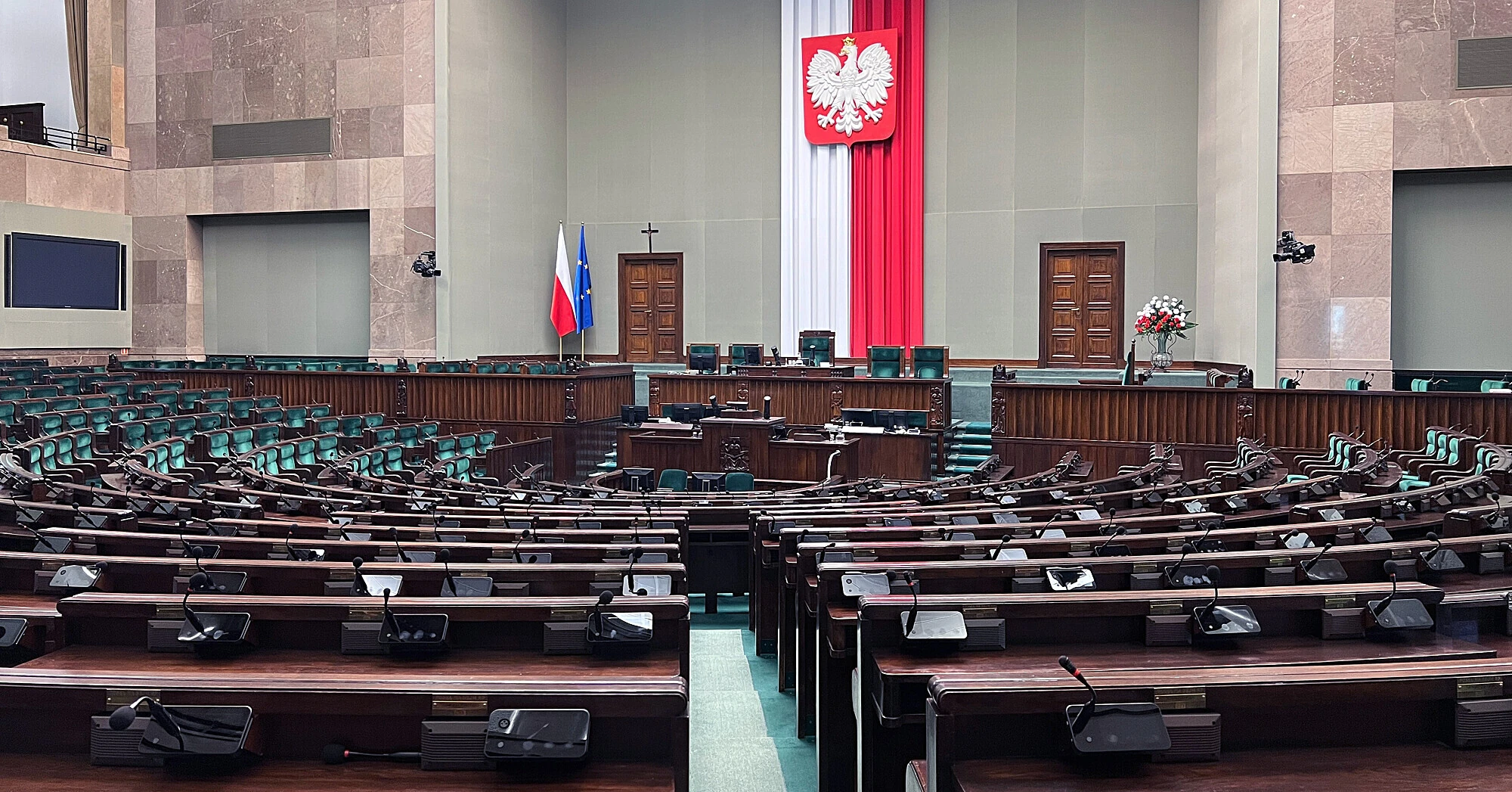
The Polish Sejm on October 20 passed two laws aimed at easing one of the strictest abortion legislations in the European Union. Members of parliament supported partial decriminalization of pregnancy termination and restoring the possibility of abortion in cases of severe fetal malformations. At the same time, President Karol Nawrocki may veto these changes.
The parliamentary decision was reported by Onet. The possible presidential veto was covered by Bloomberg, citing a statement by Zbigniew Bogucki, chief of the presidential chancellery.
The first law provides for partial abolition of criminal liability for performing an abortion with the woman's consent and assistance in it. Currently, violation of the relevant norms of Polish legislation carries a penalty of up to three years of imprisonment.
The changes to the Criminal Code also provide additional safeguards for medical workers. In particular, a physician, nurse, or midwife will not bear criminal liability for terminating a pregnancy as part of a necessary medical procedure if there is a threat to the woman's health or life, or severe fetal development abnormalities are diagnosed.
The decision was supported by 217 deputies, 213 voted against, and three abstained. Thus, the document passed by a margin of only four votes.
The second law restores the possibility of terminating a pregnancy in cases of severe and irreversible fetal defects or an incurable disease threatening its life. It was supported by 233 deputies, 203 voted against, and one abstained.
With this decision, the parliament is attempting to undo the consequences of the ruling by Poland's Constitutional Tribunal of October 2020. Then the court declared unconstitutional the provision allowing abortion due to severe fetal development abnormalities. The ruling triggered massive protests in Polish cities.
After the respective court decision came into force in 2021, legal termination of pregnancy in Poland remained possible mainly in two cases: if there is a threat to the woman's life or health, or if the pregnancy resulted from a crime, in particular rape.
Easing the legislation was one of the election promises of the political forces that formed the government coalition of Donald Tusk. However, due to disagreements between the parties, the implementation of this promise had been delayed for a long time.
Updated. Polish president may veto new laws
As Bloomberg reported on October 21, the changes adopted by the Sejm may face a presidential veto. This is indicated by the position of Zbigniew Bogucki, chief of the presidential chancellery, who commented on the parliamentary vote on Polsat News.
Bogucki reminded that Karol Nawrocki already during the election campaign advocated for the protection of life from conception to natural death. According to the official, the president's position remains unchanged.
At the same time, the head of the presidential chancellery did not announce a final decision on signing or rejecting the laws. He stressed that the legislative procedure is still ongoing, so it is not yet known in what wording the documents will be submitted for the head of state's signature.
If Nawrocki uses the veto, it will be hard for the government coalition to override it. According to Poland's Constitution, to re-pass the law despite the presidential decision, a majority of three-fifths of the Sejm deputies is required, with at least half of its members present.
According to Bloomberg, the coalition of Prime Minister Donald Tusk currently lacks enough votes to override a presidential veto. During the votes on October 20, both documents also received support below the constitutional majority required for that.
A possible veto may intensify political contradictions between the president, supported by the opposition, and the Tusk government on the eve of the parliamentary elections scheduled for the end of 2027.
For the government coalition, the abortion issue remains one of the important election commitments. Previous unsuccessful attempts to change the legislation have already caused discontent among some of its voters.
The laws passed by the Sejm have not yet entered into force. Now they must be considered by the Senate, after which the documents will be submitted to the Polish president for signature.
Thus, the final relaxation of the legislation will depend on the completion of the parliamentary procedure and Nawrocki's decision. Until then, the existing restrictions remain in effect.
Sources: Onet, Bloomberg, Presidential Chancellery of Poland, 20.10.2026
