
Russia launched a series of strikes on Kharkiv's energy and logistics infrastructure - police
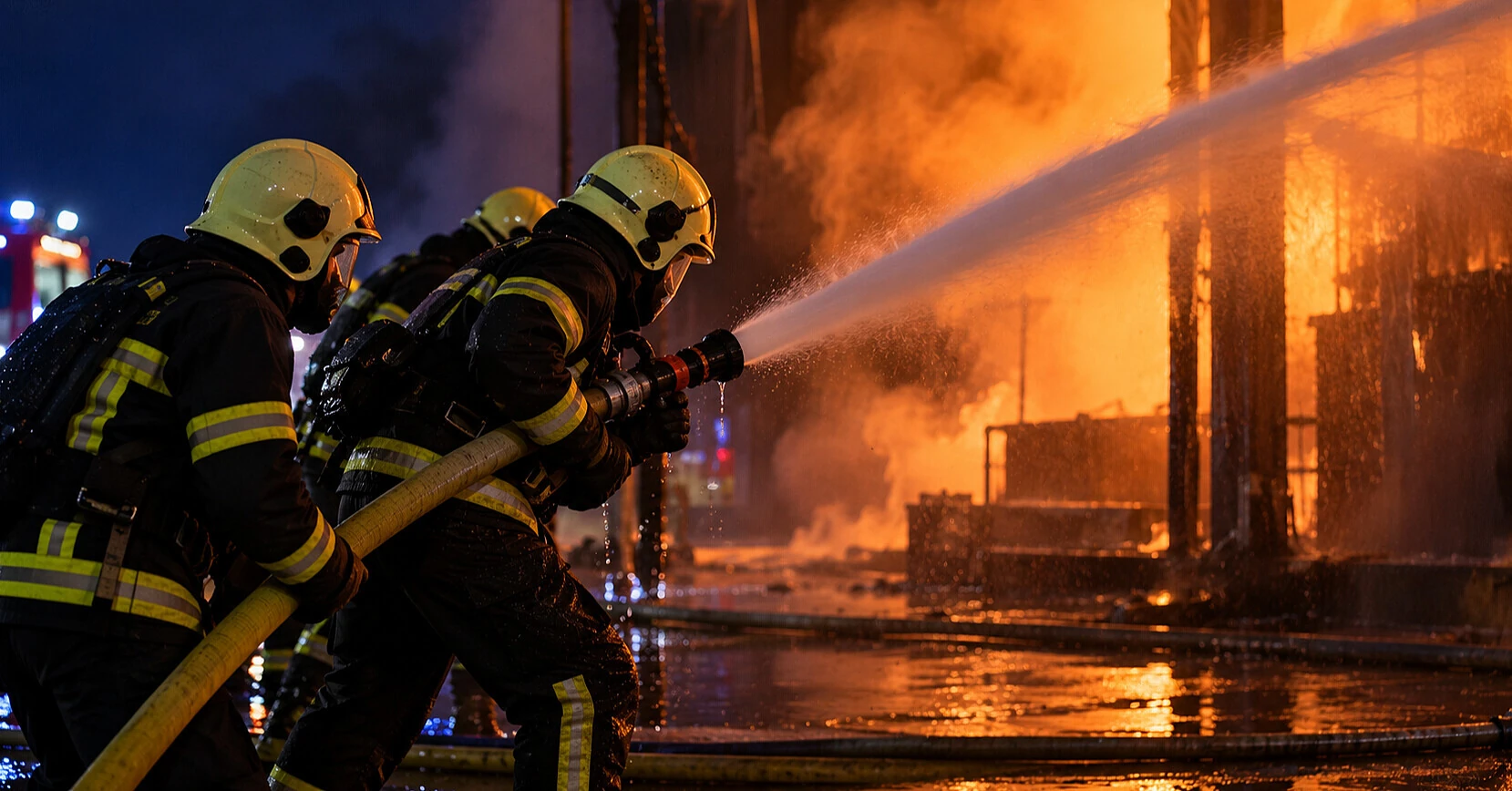
Over the past week, Russian troops launched a series of strikes on energy, water supply and railway infrastructure in Kharkiv region. Kharkiv TEC-3, TEC-5, Zmiivska TPP, water intake facilities for the regional center and railway infrastructure came under attack.
On October 21, the Head of the Main Directorate of the National Police in Kharkiv region Petro Tokar announced this on the air of the "Suspilne. Studio" project on Channel One.
According to the police chief, during the week Russian troops purposefully attacked facilities on which the life support of Kharkiv and surrounding settlements depends.
For strikes on energy infrastructure, the enemy used drones of various types and small cruise missiles S8000 "Banderol".
Tokar confirmed that among the attacked facilities were TEC-3 in Kharkiv, Kharkiv TEC-5 and Zmiivska thermal power plant.
Separate targets of Russian attacks were water intake facilities that provide water supply to Kharkiv, as well as the region's railway infrastructure.
The police chief stressed that strikes on critical infrastructure are systemic. In his assessment, Russian troops are trying to deprive the population of basic utility services and complicate the heating season.
Over the past week, power supply interruptions were also recorded in the region. According to Tokar, blackouts in some settlements were related to Russian strikes on key electricity distribution nodes.
However, the regional police chief did not provide detailed data on the extent of damage to each power plant, the condition of water intake facilities or possible restrictions on rail traffic. Therefore, it is currently impossible to assess the impact of the latest strikes on electricity generation, heat supply and railway operations.
Russia intensifies attacks on transport and utility services
According to police observations, during the week Russian troops focused strikes on three main categories of targets: the civilian population, critical and logistical infrastructure, and vehicles.
In particular, attacks by FPV drones on vehicles moving towards Staryi Saltiv and Ruski Tyshky were recorded in frontline communities.
In Zolochiv, a Russian fiber-optic-controlled FPV drone hit a National Police service vehicle. Law enforcement officers also documented strikes on utility equipment, including garbage trucks.
Such attacks create additional risks for the work of utility services, transport links and provision of essential services to the population.
The most intense shelling in Kharkiv region is experienced by the Zolochiv community. According to police, since the beginning of 2026, Russian troops have attacked it 1,491 times. Kharkiv was shelled 892 times in the same period.
According to Tokar's assessment, since the beginning of the full-scale invasion, Russian strikes have affected 52.6% of settlements in Kharkiv region.
Previous strikes on energy and railway
Russian attacks on energy infrastructure in Kharkiv region continue amid discussions of a possible halt to strikes on such facilities.
In particular, on October 11, a Russian missile hit a suburb of Kharkiv near TEC-5 shortly after US President Donald Trump's statement about a supposedly reached "energy truce". At that time, direct damage to the plant was not officially confirmed.
In addition, on October 14, Russian troops massively attacked railway infrastructure in five regions of Ukraine, including Kharkiv region. The strikes damaged Ukrzaliznytsia facilities, causing power supply and train disruptions.
The new report by Kharkiv region police shows that over the past week, several components of critical infrastructure were immediately hit by Russian strikes: electricity and heat production, water supply and railway logistics.
Previous strikes on energy facilities in Kharkiv region
Kharkiv TEC-5 has repeatedly suffered large-scale Russian attacks. Back on September 11, 2022, Russian troops struck the plant, after which there were massive power outages in Kharkiv and neighboring regions. During the massive shelling on March 22, 2024, TEC-5 suffered critical destruction and lost the ability to produce electricity and thermal energy.
On the night of February 3, 2026, Russians again damaged TEC-5, as well as the "Kharkivska" and "Zalyutine" electrical substations. Due to serious equipment damage, almost 105,000 consumers were left without heating. A local state of emergency was declared in the city.
The latest strike on TEC-5 before this week was recorded on October 11. At that time, Russia attacked the plant shortly after US President Donald Trump's statement about a supposedly reached "energy truce". Initially, a missile strike was reported in the area of TEC-5, and later President Volodymyr Zelenskyy directly confirmed the attack on the thermal power plant. However, detailed data on plant damage after that strike were not released.
Kharkiv TEC-3 also previously suffered significant damage. According to the State Environmental Inspectorate, on April 11, 2024, a Russian missile strike damaged the thermal power plant, which provided heat and hot water to almost a third of Kharkiv. Due to equipment destruction, a transformer oil leak and fire, environmental damage was estimated at almost UAH 550 million.
Zmiivska TPP, owned by state-owned Centrenergo, also suffered massive destruction. After the Russian attack on March 22, 2024, the company reported the destruction of all power units and damage to auxiliary equipment. And on October 16, 2026, it became known that the consequences of another missile strike on Zmiivska and Trypilska TPPs were being eliminated.
Thus, the new attacks hit energy facilities that have already repeatedly sustained serious damage and required lengthy restoration. This creates additional risks for stable electricity and heat supply in Kharkiv region on the eve of winter.
Source: Suspilne Uzhhorod, Centrenergo
