
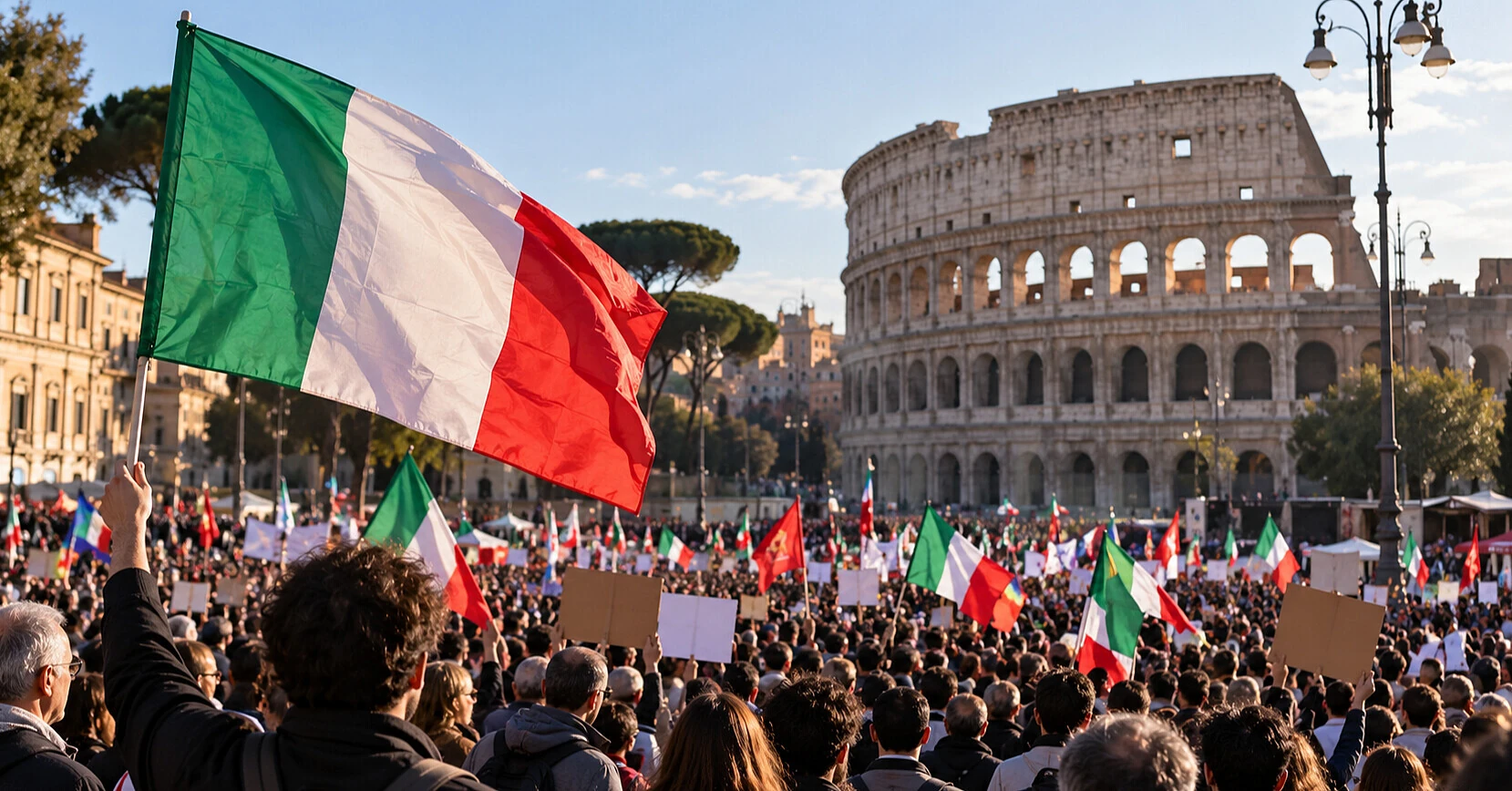
Italian authorities are examining possible interference by Russian agents and other foreign entities in mass protests that in recent days have been accompanied by clashes with police, arson and looting of shops. Italian intelligence services are checking whether external forces could have contributed to organizing the riots and spreading calls for violence via social media.
Bloomberg reported this on October 21, citing sources familiar with discussions in the Italian government.
According to the agency, the government of Prime Minister Giorgia Meloni has requested information from competent departments about the possible role of foreign provocateurs, including those linked to Russia, in mass demonstrations that have swept European cities.
The scale of violence and signs of organization among certain groups of rioters prompted the investigation. Italian authorities are trying to determine whether the clashes were solely the result of social discontent or whether someone deliberately intensified protest sentiments.
A representative of Meloni declined to comment to Bloomberg on the investigation.
The main focus of the intelligence services is on events in Milan, Turin and Bologna. On 17–18 October, mass protests against the high cost of living, rising fuel prices and social problems escalated into clashes with police, ransacking of shops, and arson.
Particularly serious riots occurred in Milan, where protesters smashed shop windows and clashed with law enforcement. A significant proportion of those detained were minors.
As La Repubblica reports, Italian intelligence is analyzing the spread of calls for protests through social media. Specialists are interested in the actions of automated accounts, algorithms for promoting publications, and possible coordination of information campaigns.
Italian Defense Minister Guido Crosetto called the events a manifestation of hybrid warfare against Western states. In his opinion, social media, including TikTok and YouTube, can be used to influence public sentiment and provoke instability.
At the same time, Interior Minister Matteo Piantedosi stated that there is currently no evidence that the riots were directed from abroad.
In an interview with Open, he drew attention to the contradiction between the behavior of the detained young people, some of whom had little understanding of what was happening, and the fairly effective organization of their participation in the protests.
According to the minister, police and intelligence services continue to investigate who spread calls for action and how participants received the relevant messages.
However, the Italian government does not have a unified position regarding the causes of the riots. Deputy Prime Minister Matteo Salvini is skeptical of suggestions of foreign interference and advocates for increasing the responsibility of those directly involved in the violence.
Investigations into possible information operations are also being conducted at the European level. As Euronews reports, disinformation networks linked to Russia used video footage of the riots to spread their own messages and amplify societal divisions.
However, the European Commission stresses that there is currently no convincing evidence of direct organization of the mass protests by foreign states. The spread of disinformation after the riots began does not mean that the same structures organized the demonstrations themselves.
Thus, the possible involvement of Russian structures in the riots remains one of the versions being investigated. Italian authorities have not yet presented evidence establishing a direct link between the actions of foreign agents and the violence on the streets of European cities.
