
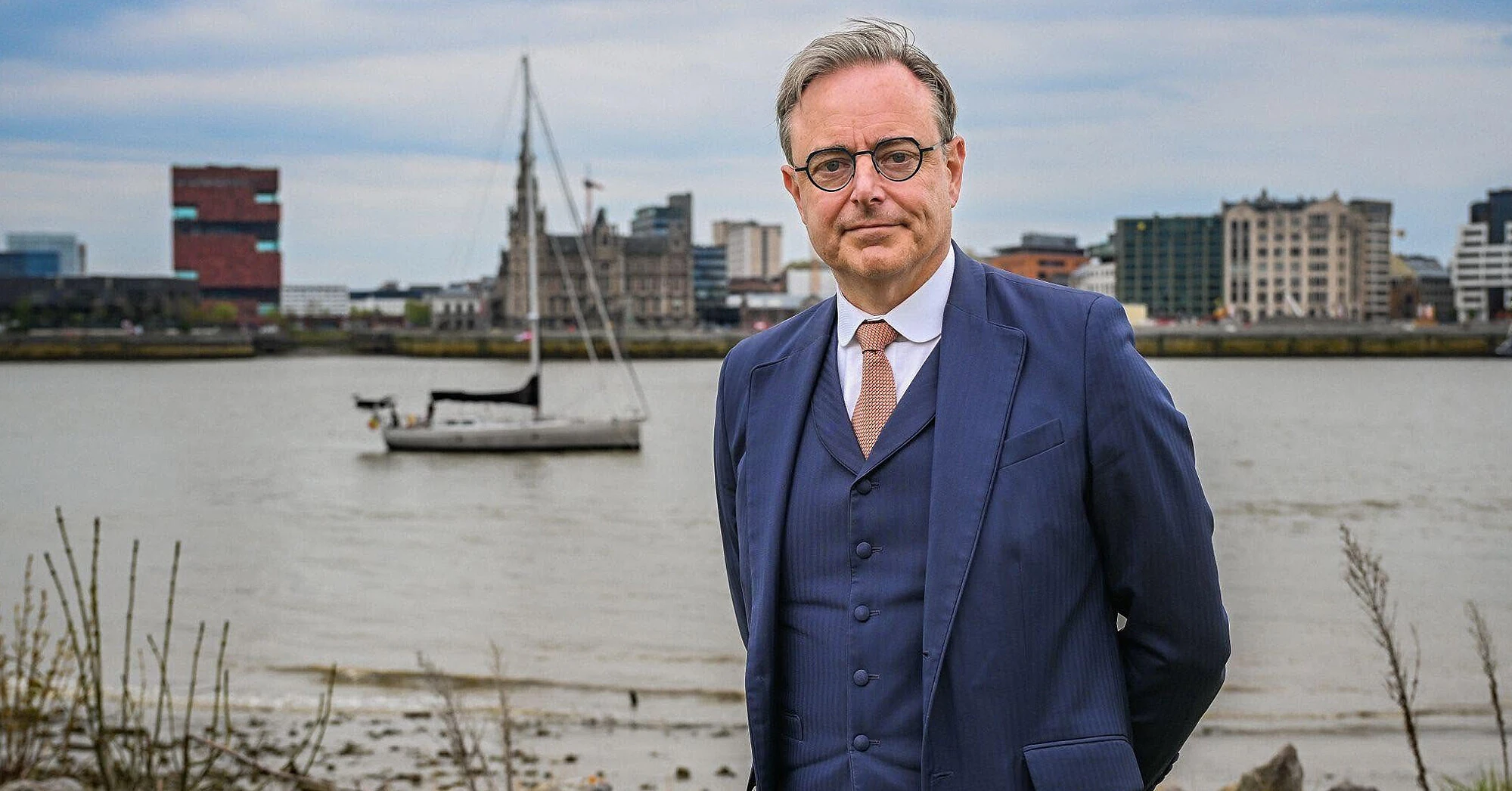
The European Commission has no plans to propose new mechanisms for using frozen Russian assets to finance Ukraine. Belgium's Prime Minister Bart De Wever is convinced of this, citing agreements reached during the latest EU summit.
He said this on 21 October during a speech in the Belgian parliament, reports The Brussels Times.
According to De Wever, during the negotiations of European leaders, an understanding was reached that the European Commission will not return to developing a new scheme for financing Ukraine using Russian funds blocked in the Belgian depository Euroclear.
This concerns approximately 185 billion euros of Russian assets, most of which belong to the Central Bank of the Russian Federation. Belgium has long opposed using the principal amount of these funds, fearing legal consequences and potential financial claims against Euroclear.
De Wever at the same time acknowledged that individual EU countries may raise this issue again. In particular, he criticized Dutch Prime Minister Rob Jetten, who publicly supported the seizure of frozen Russian funds.
The Belgian PM claims that during the latest summit he warned partners about the possible legal consequences of such initiatives. In his opinion, after these discussions, support for using the assets among European leaders noticeably weakened.
Meanwhile, the European Commission has not officially confirmed a final rejection of this mechanism. At a briefing on 19 October, its spokesperson Balazs Ujvari stated that Brussels will study possible ways to cover Ukraine's financial needs. When asked directly about returning to the use of Russian assets, he replied that it is still too early to determine specific options.
Thus, De Wever's statement reflects his assessment of the negotiation results, rather than a new official EU decision.
The issue is of particular importance due to the expected funding gap for Ukraine in 2027. According to European Commission estimates, next year Ukraine could lack about 70 billion euros even taking into account already planned European assistance and commitments from international partners.
At the end of 2025, the EU agreed on a loan program for Ukraine of 90 billion euros for 2026–2027. Instead of immediately using the principal amount of frozen Russian assets, financing was provided through EU borrowing on international markets.
During the summit on 15–16 October, European leaders confirmed the continuation of payments under this program and instructed the European Commission, together with the IMF, to update the assessment of Ukraine's financial and military needs.
However, a decision on a new aid package for 2027 has not yet been made. If the EU does not agree to use frozen Russian funds, it will have to seek other sources to cover the gap, including additional budget contributions or borrowing.
Based on materials from: The Brussels Times; European Commission; European Council
