
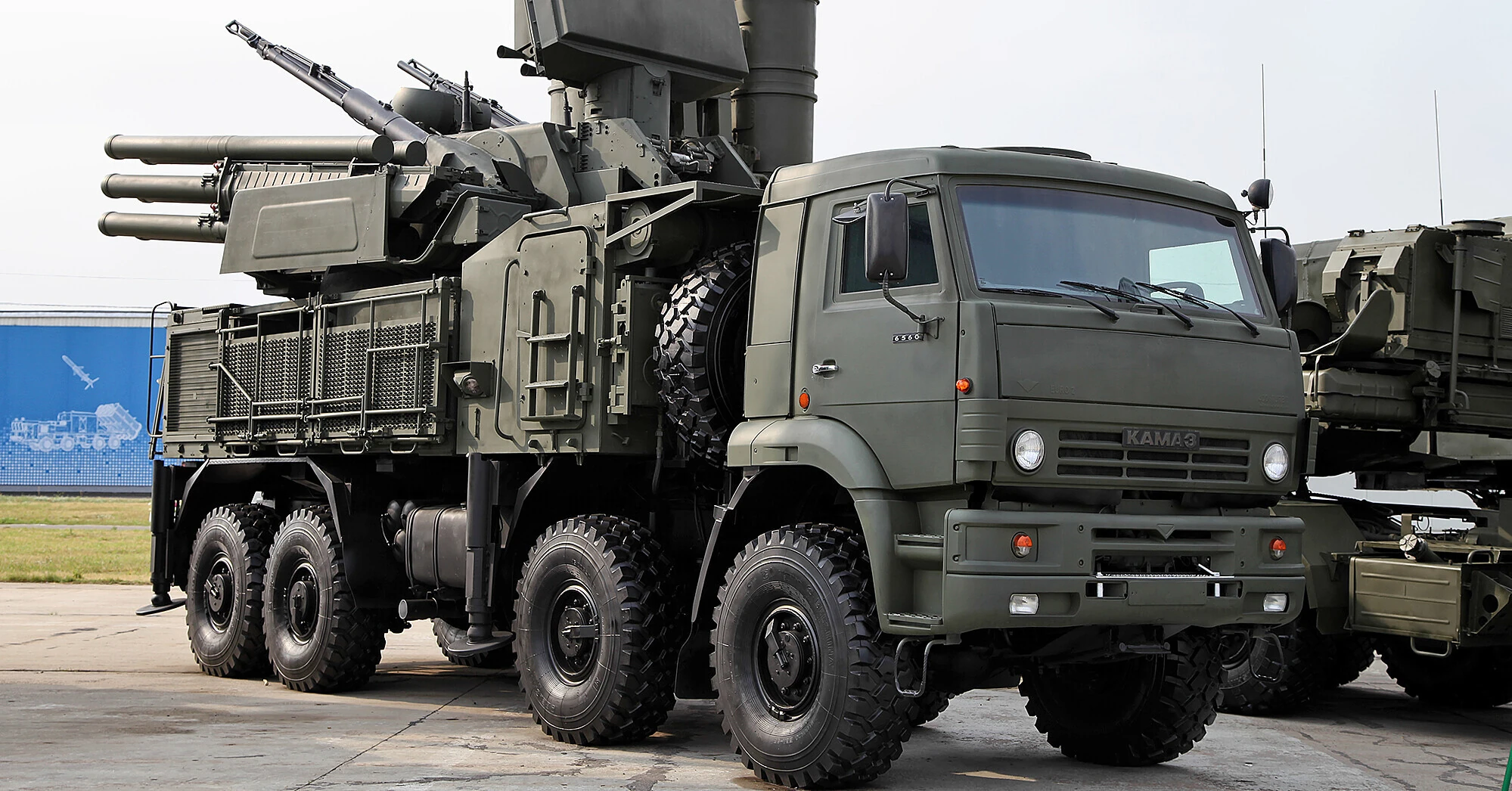
Russia continues to expand its air defense system around the special economic zone "Alabuga" in Tatarstan, where there is large-scale production of strike unmanned aerial vehicles of the "Geran" family, created on the basis of Iranian Shaheds. The number of detected defensive positions around the industrial complex reached 33.
This was reported on October 21 by "Radio Svoboda" based on the analysis of new satellite images.
Since the spring of 2026, the Russian military has significantly expanded the protective infrastructure around the facilities of "Alabuga". Satellite images show new structures for air defense, designed to protect the industrial complex from air attacks. At the same time, the presence of equipped positions does not mean that each of them has active anti-aircraft systems placed permanently.
In addition to active air defense means, the Russian side is building passive protection of production buildings, including structures with anti-drone barriers.
Back at the end of August, the American Institute for Science and International Security reported on large-scale construction of protective structures at the "Alabuga" territory. In September, researchers confirmed further expansion of this system based on new satellite images.
According to the assessment of "Radio Svoboda", "Alabuga" has turned into one of the most protected industrial facilities in Russia from air attacks. In terms of the scale of its defense infrastructure, it is compared to the residence of the Russian President Vladimir Putin on Valdai.
"Alabuga" is one of the main Russian centers of serial production of long-range strike drones. The project was created with technological support from Iran. The initial production agreements provided for the assembly of Shahed-136 from ready-made components, and later—localization of production of fuselages, electronics, and other components in Russia.
The initial contract provided for the release of 6000 drones. Subsequently, the production capacity of the enterprise significantly expanded, and Russia began to manufacture various modifications of the "Geran" family.
In parallel, Moscow is increasing production of materials necessary for drone assembly. In September, Politico reported on plans to expand the "Alabuga-Volokno" enterprise, which is part of "Rosatom" and produces carbon fiber for drones.
According to internal documents of the Russian corporation, by 2029, additional production capacity of the enterprise could provide the release of 500 tons of carbon fiber annually. According to American researchers, this volume would theoretically be enough for the bodies of approximately 28 thousand Shahed-136 type drones. This refers to potential production of materials, not to confirmed release of that number of finished drones.
In addition, in September, the Main Directorate of Intelligence of the Ministry of Defense of Ukraine reported finding 20 units of foreign industrial equipment at "Alabuga" facilities. These were machines from manufacturers in China, Germany, Japan, Switzerland, and Iran, which are used in the process of manufacturing drones.
Expansion of production capacity is accompanied by strengthening of their protection. According to "Radio Svoboda", the last reports of Ukrainian drones reaching the "Alabuga" area were in June 2025.
Thus, the new satellite images indicate further investments by Russia not only in production of strike drones used against Ukraine, but also in protection of the relevant industrial infrastructure.
According to: Радіо Свобода, Institute for Science and International Security, України
