
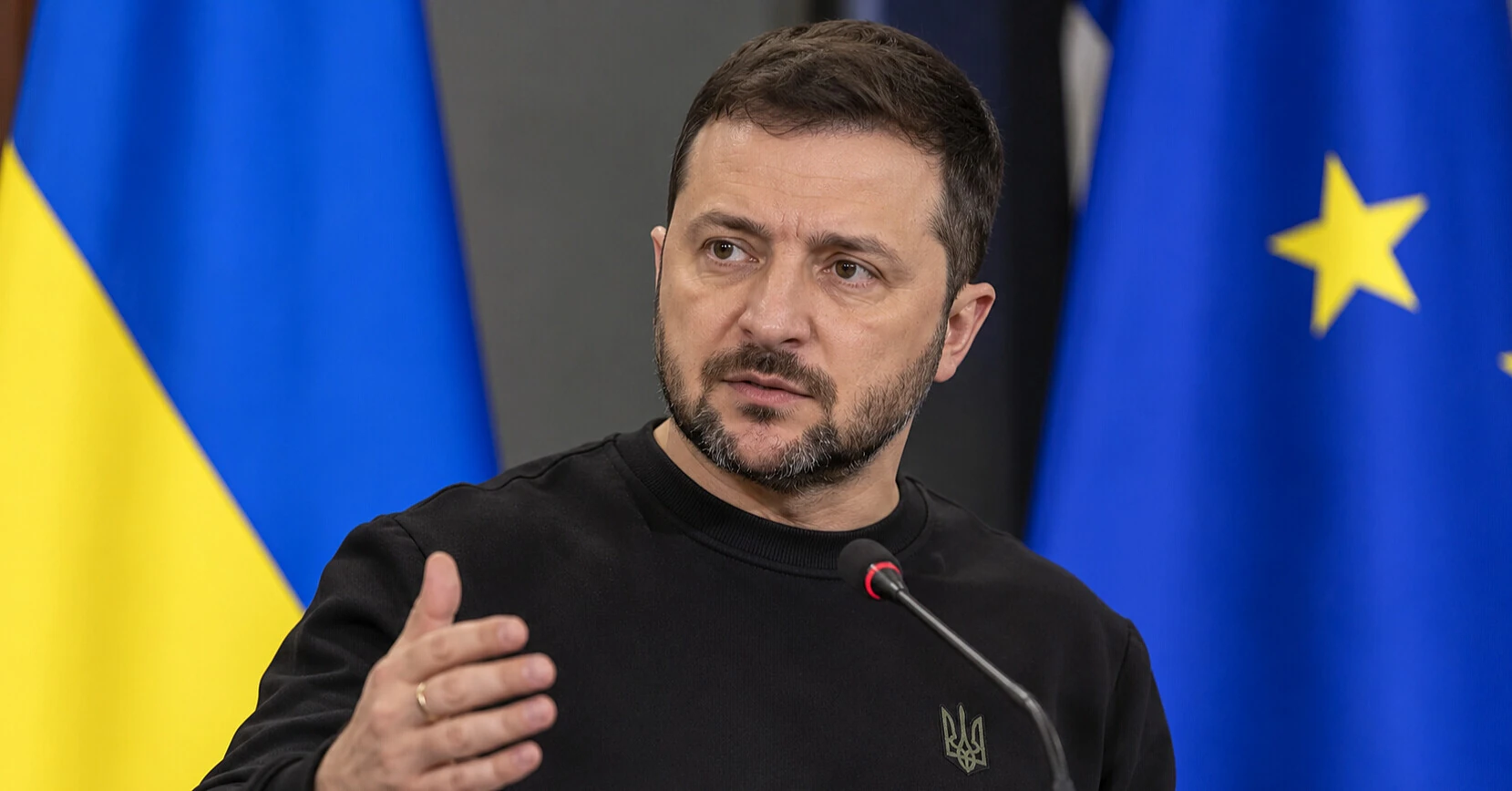
President of Ukraine Volodymyr Zelensky stated that there is no personal conflict between him and American leader Donald Trump. The disagreements concern Washington's policy towards Russia, primarily the easing of sanctions pressure on Moscow. The Ukrainian president is convinced that such decisions only strengthen Vladimir Putin's positions and reduce the chances of ending the war.
Zelensky spoke about this on October 22 in an interview with CNN, conducted by journalist Christiane Amanpour. The conversation took place in Kyiv amid a new round of diplomatic contacts between Ukraine, the US, and Russia.
Zelensky explained his stance on sanctions
The Ukrainian president emphasized that his disagreement with Trump's decisions should not be perceived as a personal confrontation between the two politicians. According to him, the main issue remains the ability of the international community to contain Russia and prevent the strengthening of its military potential.
"It is not something personal between me and President Trump," Zelensky said.
He explained that he opposes the lifting of any restrictions imposed on Moscow. According to the Ukrainian president, lifting sanctions would give Putin additional opportunities to continue the war.
Tensions in relations between Kyiv and Washington intensified after the Trump administration decided to conclude an agreement on purchases of Russian fuel. The American president also suspended the application of some new sanctions against Russia, which drew criticism from the Ukrainian leadership and some American lawmakers.
Earlier, Zelensky stated that such steps by Washington contradict efforts to internationally isolate Moscow. At the same time, the Ukrainian side continues to count on cooperation with the US and participation of the American administration in negotiations to end the war.
Talks with Putin did not convince Zelensky of Russia's readiness for peace
In the CNN interview, Zelensky also commented on the latest diplomatic contacts with the American administration. In particular, he positively assessed the meeting with the US President's Special Representative Steve Witkoff, which took place on October 20 in Oslo.
However, the results of the subsequent negotiations the American representative held with the Russian leadership did not convince the Ukrainian president that Moscow truly intends to cease hostilities.
On October 21, Witkoff visited St. Petersburg, where he talked with Vladimir Putin for about three hours. After the meeting, the Russian president admitted the possibility of negotiations in November, but no concrete agreements on ending the war were announced.
Zelensky believes that Putin is using the diplomatic process to strengthen his own positions, not demonstrating real readiness to compromise.
The Ukrainian president called on allies not to provide Moscow with additional opportunities for strengthening while negotiations continue. According to his assessment, the Russian leadership is not interested in ending the war on terms that would guarantee Ukraine's security.
Meanwhile, Trump stated on October 21 that his administration has come closer to settling the Russian-Ukrainian war than ever before. The night after this statement, Russia again launched a massive strike with drones and ballistic missiles on the territory of Ukraine.
Why Trump opposes tightening sanctions
The American president explains his position by the need to maintain conditions for negotiations with Moscow. In his opinion, introducing additional economic restrictions during the period of diplomatic contacts could complicate reaching an agreement.
In particular, Trump linked his refusal to tighten sanctions to the release of 74-year-old American Steven Hubbard, who was in Russian custody.
According to the US president, applying new restrictions could have hindered the release of the American citizen. Trump also believes that sanctions pressure during a sensitive stage of negotiations could put a possible peace deal at risk.
After the meeting with Putin, Witkoff characterized the Russian leadership's decision to release Hubbard as a humanitarian step. This assessment sparked controversy amid ongoing Russian strikes on Ukrainian cities.
Thus, the approaches of Kyiv and Washington to the negotiations remain different. The American administration hopes to reach an agreement, including by avoiding new sanctions restrictions. The Ukrainian leadership, on the contrary, views economic pressure as one of the main tools to force Russia to end the war.
Zelensky allows ceasefire along current front line
A separate topic of the interview was possible conditions for the cessation of hostilities. Zelensky confirmed that Ukraine is ready to consider stopping the war with fixing the current line of contact between the parties.
According to him, such an option would allow to stop the loss of life and move to discussing further conditions of a peaceful settlement.
At the same time, the Ukrainian president stressed that agreeing to a ceasefire does not mean readiness to hand over to Russia territories currently controlled by Ukraine.
Kyiv also does not intend to legally recognize temporarily occupied Ukrainian territories as part of the Russian Federation.
Zelensky explained that the issue of territories cannot be considered solely from the point of view of the area or economic value of the land. It is about people who live in these territories and Ukrainians who died defending the country's independence.
The president expressed confidence that Russia understands the impossibility of legal recognition of the occupation by Ukraine.
In turn, US Secretary of State Marco Rubio stated on October 21 that one of the main obstacles in the negotiations remains the issue of territories in Donbas not under Russian control.
According to Rubio, the parties are discussing various proposals to overcome the disagreements. However, there is no concrete solution to the territorial issue yet.
Earlier, "Kurs Ukrainy" reported that on October 21 Zelensky called the cessation of hostilities along the existing front line a realistic path to ending the war. At the same time, Kyiv continues to insist on the need for international security guarantees.
What is happening with US-Ukraine military cooperation
The president devoted a significant part of the interview to problems with American military support. In recent weeks, the Ukrainian side reported restrictions in the transfer of intelligence information, operation of satellite services, and supplies of weapons.
According to Zelensky, cooperation with American partners on intelligence exchange has been restored. However, the work of the military satellite system Starshield by SpaceX has not yet fully resumed.
Another serious problem remains the shortage of interceptor missiles for Ukrainian air defense systems.
The president reported that European states have provided Ukraine with additional air defense missiles, but these supplies are insufficient for the country's full protection from Russian attacks.
This problem is of particular importance amid ongoing strikes on energy infrastructure and the approaching winter period.
Zelensky emphasized that for the Ukrainian side it is fundamentally important not only to receive timely warnings of air threats, but also to have a sufficient number of means to repel them.
In conclusion of the interview, the president outlined two main requests Ukraine makes to international partners: preserving sanctions against Russia and increasing supplies of modern air defense missiles.
Despite disagreements with Trump, Zelensky did not announce an end to cooperation with the American administration. Kyiv continues to participate in diplomatic consultations, while opposing decisions that, in the opinion of the Ukrainian leadership, could strengthen Russia's position.
