
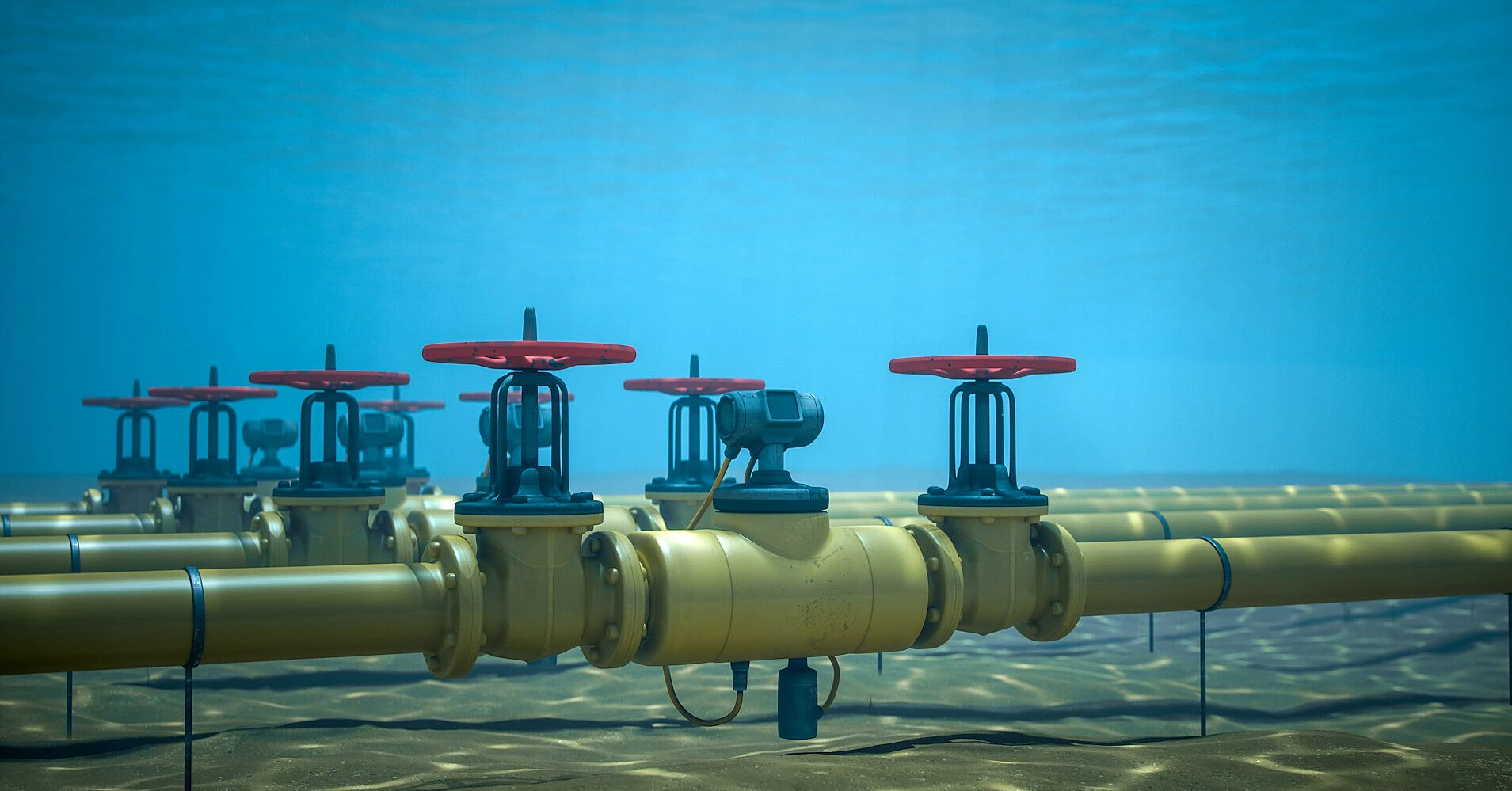
The administration of US President Donald Trump is considering restoring Russian gas supplies to Europe, including through the Nord Stream pipelines, as one of the economic incentives for Moscow in a possible peace settlement of the war against Ukraine. Washington is also discussing easing sanctions and expanding business relations with Russia.
The Economist reported this in an article on October 22 about the deteriorating relations between the US and Ukraine.
According to the publication, the American side is trying to form a package of political, territorial and economic agreements that could become the basis for ending the war.
For Russia, it envisages the possibility of concluding commercial deals with American companies, gradual easing of sanctions, and normalization of political relations with Washington. One of the areas of economic cooperation could be the return of Russian energy resources to the European market.
According to The Economist, Ukraine may be offered an investment package and the prospect of EU membership in exchange for renouncing NATO membership. Among possible conditions, the creation of a demilitarized zone in Donbas is also discussed.
At the same time, Ukrainian officials interviewed by the publication admit that they do not have full information about the latest version of American proposals. There is currently no officially agreed peace plan with such conditions.
The main obstacle to restoring Nord Stream remains European Union legislation. Back in July 2025, the EU banned operations related to the Nord Stream and Nord Stream 2 pipelines, including their maintenance, operation, and future use.
Additionally, in January 2026, the EU Council approved a phased ban on Russian gas imports. For long-term pipeline supply contracts, it is expected to fully come into effect by September 30, 2027, and under certain conditions no later than November 1, 2027.
Thus, even in the event of an agreement between Washington and Moscow, restoring the pipelines would require separate decisions by European states and changes to existing legal restrictions. The US cannot unilaterally permit the return of Russian gas across the Baltic Sea.
Earlier, "Kurs Ukrainy" reported, citing The New York Times, that American negotiators Steve Witkoff and Jared Kushner had already discussed restoring Russian gas transit with Ukrainian and European representatives. The initiative met with objections from European participants in the consultations, particularly from German officials.
Current negotiation efforts intensified after Witkoff's meeting with Vladimir Putin in St. Petersburg on October 21. According to Axios, the American representative conveyed updated proposals to Moscow on ending the war. The Russian side agreed in principle to resume trilateral talks involving Ukraine, the US, and Russia, but did not announce specific concessions.
According to The Economist, Ukrainian negotiators fear that American representatives may move to conclude lucrative economic deals with Moscow before reaching agreements on ending the war and security guarantees for Ukraine.
The publication also questions the Kremlin's readiness for a real compromise. Its analysts believe that Russia may use negotiations to stall the process while seeking sanctions relief and other economic concessions.
Separately, The Economist highlights political risks ahead of the US midterm elections scheduled for November 3. In the publication's view, Zelensky's public criticism of Trump's decisions may be based on the calculation that a possible defeat of the Republican Party would weaken the American president's position. However, journalists warn that such expectations may prove mistaken. This is presented as the publication's assumption, not a confirmed stance of Ukrainian leadership.
One congressman also warned in a comment to The Economist that even if Congress comes under Democratic control, that does not guarantee improved relations between Washington and Kyiv. He assessed that intensified parliamentary investigations against Trump could provoke an even harsher reaction from the US president. In that case, domestic political confrontation in the US may not reduce pressure on Ukraine, but rather complicate its position. At the same time, this is just one possible scenario that will depend on election results and subsequent decisions by the US administration.
Based on: The Economist, Axios, Council of the European Union
