
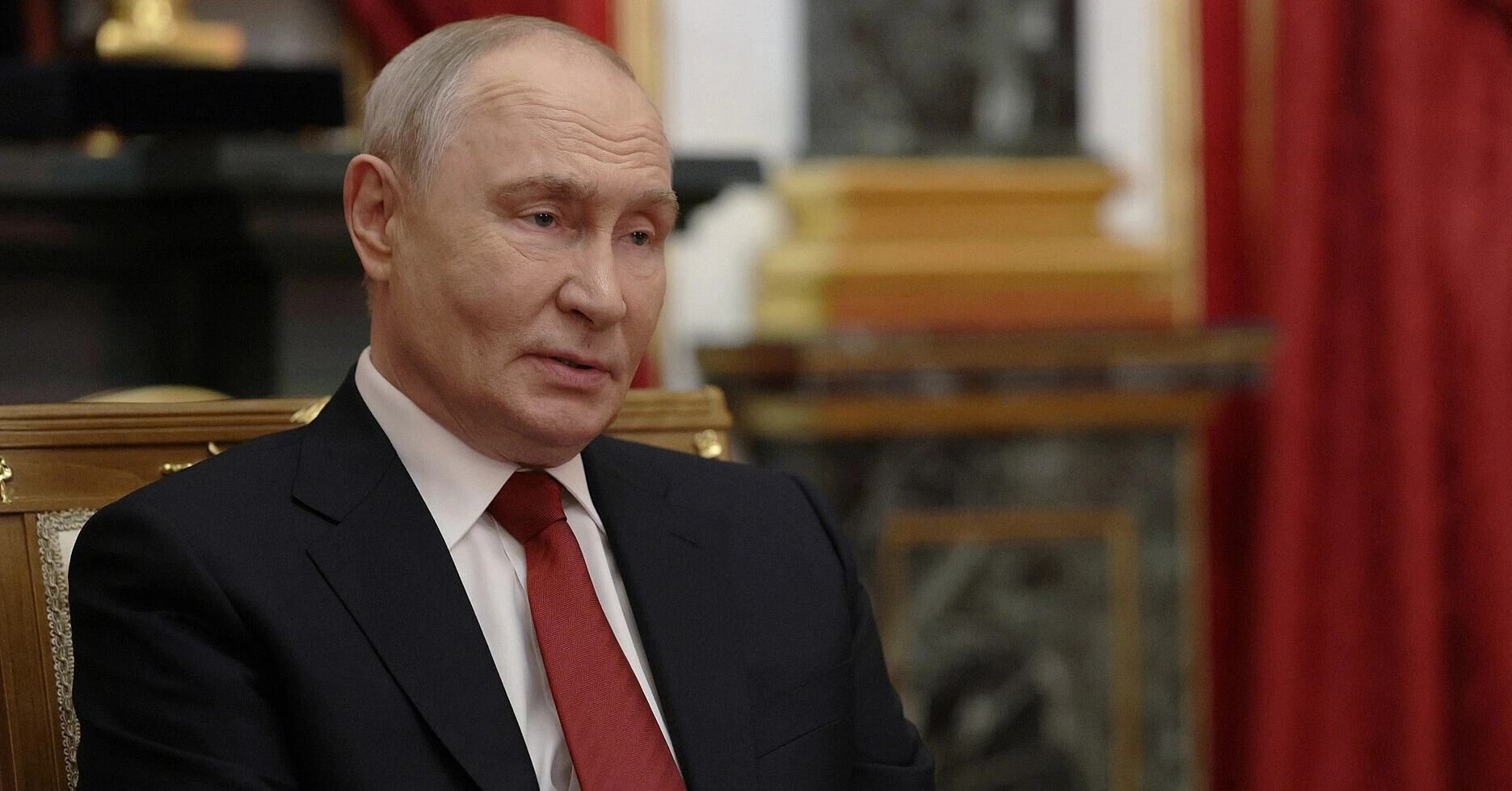
European leaders have intensified consultations on forming their own negotiating team for possible direct contacts with Vladimir Putin regarding ending the war in Ukraine. Among potential participants in the negotiations are the heads of five European states, and instead of one representative, an entire group may be appointed.
This was reported by The Telegraph on October 22, citing diplomatic sources. According to the publication, preliminary consultations have already been held with some possible candidates, but who exactly received such proposals is not specified.
The list of potential European negotiators includes:
- Prime Minister of Italy Giorgia Meloni;
- President of Finland Alexander Stubb;
- President of the Czech Republic Petr Pavel;
- Prime Minister of Denmark Mette Frederiksen;
- Prime Minister of Norway Jonas Gahr Støre.
According to one of The Telegraph's interlocutors, creating a group of negotiators is currently seen as a more acceptable option than appointing a single representative. This would avoid rivalry between European capitals and a situation where individual states block the candidacy of one politician or another.
At the same time, there is no final agreement on the format of the negotiations. According to the British publication, President of the European Council António Costa recently rejected a proposal to take on the role of chief negotiator. There is no official confirmation of this information.
Earlier, on October 21, Politico reported that Europe has intensified the search for a representative for possible contacts with the Kremlin. Diplomats paid particular attention to the candidacy of Alexander Stubb due to his experience in dealing with Russia and established relations with US President Donald Trump.
Petr Pavel, for his part, has significant military-diplomatic experience. Before being elected President of the Czech Republic, he headed the NATO Military Committee and participated in negotiations with Russian military representatives.
In an interview with the international journalistic network Axel Springer, the Czech President stated that Europe needs to identify a politician or a group of leaders who will receive a joint mandate for negotiations. In his assessment, Moscow does not perceive the leadership of EU institutions as full-fledged partners for dialogue.
As reported on October 23 by Czech public radio iROZHLAS, the spokesperson for the President of the Czech Republic, Vojtěch Šeliga, declined to comment on The Telegraph's information about Pavel's possible participation in the negotiations. The presidential office explained that they do not comment on matters related to non-public consultations.
Meanwhile, Alexander Stubb and Jonas Gahr Støre are already directly involved in international diplomatic consultations on Ukraine. On October 20, they held a meeting in Oslo with President of Ukraine Volodymyr Zelenskyy and US special envoy Steve Witkoff. Jared Kushner joined the negotiations remotely.
According to an official statement from the Norwegian government, the participants discussed security guarantees for Ukraine, territorial issues, and a post-war economic recovery plan. Representatives of the EU, NATO, the United Kingdom, Germany, and Italy were also involved in broader consultations.
A separate issue for possible negotiations could be economic relations with Russia and sanctions. President of the Czech Republic Petr Pavel believes that the prospect of resuming trade and cooperation with Western states could create an additional incentive for Moscow to negotiate.
Meanwhile, as reported by the Czech agency ČTK on October 22, Pavel emphasized that easing sanctions can only be a result of the peace process. He named Russia's readiness for a ceasefire and a return to compliance with international norms as prerequisites for this.
European countries seek to strengthen their participation in diplomatic settlement amid the resumption of American mediation between Kyiv and Moscow. According to The Telegraph's sources, European leaders fear that the Trump administration's position does not always take into account their security interests.
Currently, none of the possible European negotiators has been officially appointed. The composition of the future delegation, its powers, and the timing of possible contacts with Russia have also not been determined.
Earlier, "Kurs Ukrainy" reported about proposals to appoint a separate European representative for the peace process. The new The Telegraph publication contains an expanded list of candidates and details of the discussion of a collective negotiation format.
Based on materials from: The Telegraph, Politico, ČTK
