
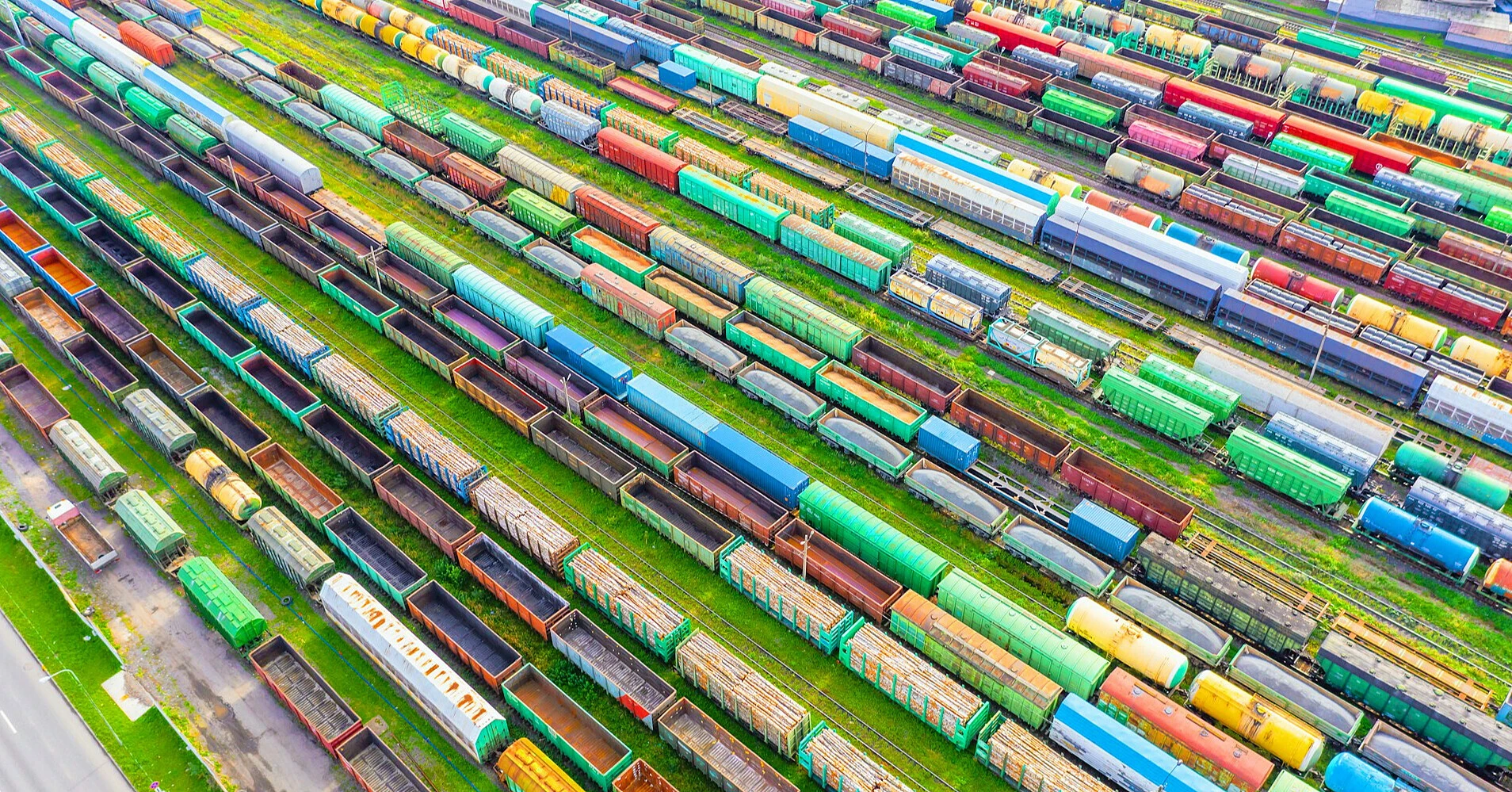
In September 2026, Ukrzaliznytsia transported 8.5 million tons of cargo - 38% less than in the same month last year. In total for nine months, the volume of transportation amounted to 106.4 million tons, decreasing by 11.8% year-on-year.
Such figures were presented on October 23 by Valeriy Tkachov, Deputy Director of the Department of Transportation Technology and Commercial Work of Ukrzaliznytsia, at an industry conference. The results of his report are reported by Rail.insider.
The situation worsened in the third quarter
New data indicate an acceleration of the decline in freight transportation in the second half of the year. For comparison, based on the results of January-June, Ukrzaliznytsia transported 74.7 million tons of cargo - 6.2% less than in the same period of 2025.
As reported by GMK Center with reference to Volodymyr Ivashchenko, a member of the board of Ukrzaliznytsia, already in the first half of the year, the transportation of raw materials for industry decreased the most.
In particular, over six months, the volume of transportation of iron and manganese ore decreased by 26.8%, to 16.7 million tons. Coal transportation decreased by 15.6%, and construction materials - by 9%.
At the same time, at the beginning of the year, some cargo segments showed growth. Thus, in the first half of the year, grain transportation increased by 18.4%, and oil and oil products - by 67%.
Blocking of ports and stoppage of metallurgy
One of the main reasons for the worsening situation was the actual blocking by Russia of the large Black Sea ports of Ukraine, through which a significant part of agricultural and metallurgical products was traditionally exported.
According to the Centre for Economic Strategy, maritime logistics played a critical role for Ukrainian producers: about 90% of agri-food exports, half of steel and iron ore exports, and the majority of pig iron supplies passed through the ports.
Restrictions on maritime transportation coincided with the intensification of Russian attacks on industry. In August, production in Ukrainian metallurgy decreased by 30-40% compared with July. Some of the largest metallurgical and mining and processing enterprises suspended operations.
This directly affected the freight base of Ukrzaliznytsia, since metallurgical plants, mining and processing enterprises, and the coal industry are among its largest shippers.
Earlier, Oleksandr Pertsovskyi, Chairman of the Board of Ukrzaliznytsia, reported that daily cargo loading decreased from approximately 450 thousand tons in July to less than 250 thousand tons at the beginning of October.
According to the head of the company, the current volumes no longer provide sufficient income to maintain the railway network. Because of this, Ukrzaliznytsia has begun reducing administrative expenses, in particular, it has introduced a four-day work week for management personnel.
Alternative routes do not compensate for the loss of maritime exports
Due to restrictions on the operation of the ports of Greater Odesa, Ukrainian exporters are more actively using railway crossings at the western border and Danube ports. However, their capacities are insufficient to fully replace the Black Sea logistics.
According to the Cabinet of Ministers, in September Ukraine was able to export only 2.4 million tons of agricultural products, or 46% of the potential volume.
Of this amount, 1.3 million tons were transported through Danube ports, 993 thousand tons - by rail, and another 120 thousand tons - by road.
Additional difficulties arise from the overload of alternative logistics routes. As Dmytro Kazanin, director of logistics company TEUS, explained in a column for the Centre for Transport Strategies, the reorientation of cargo flows leads to the accumulation of wagons on the network, an increase in the duration of trips, and a decrease in the efficiency of rolling stock use.
As a result, the railway industry simultaneously faces two problems: a reduction in the total volume of cargo and a deterioration in the throughput capacity of certain directions to which exports have been reoriented.
Based on materials from: Rail.insider, GMK Center, Centre for Economic Strategy, Centre for Transport Strategies
