
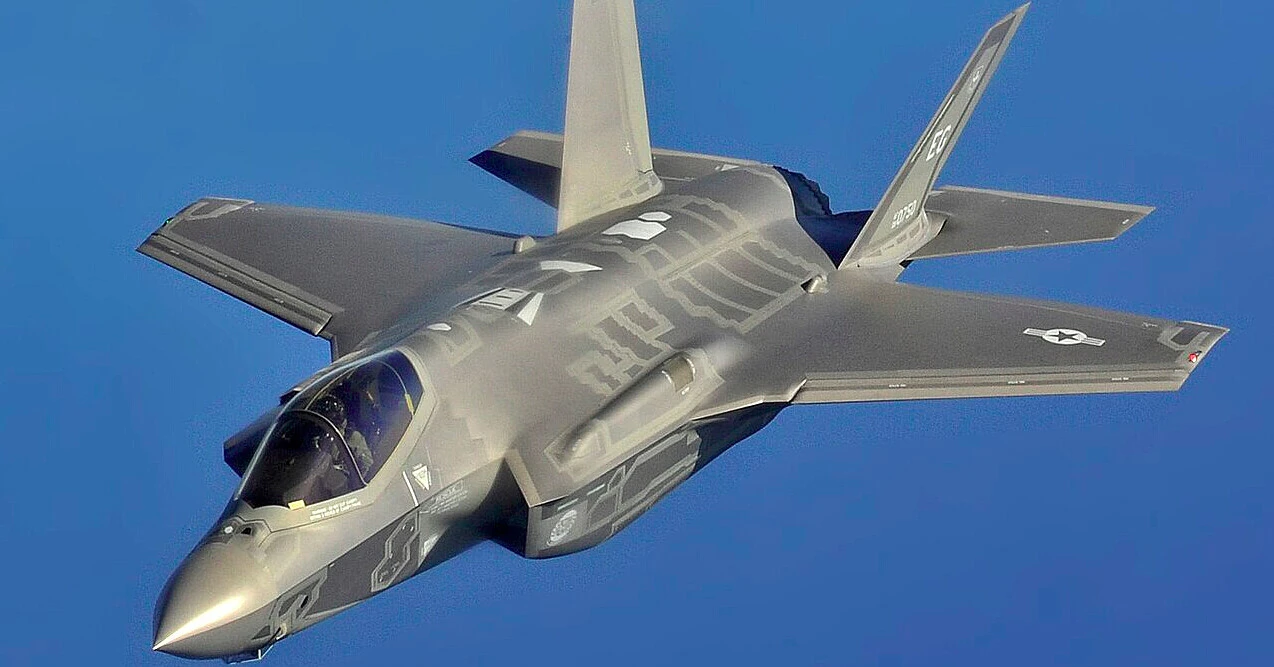
The Pentagon and the American defense corporation Lockheed Martin have entered into a ten-year framework agreement for the production and maintenance of fifth-generation F-35 Lightning II fighters. The arrangement provides for the procurement of at least 850 aircraft for the U.S. military, and the manufacturer commits to invest no less than $7 billion of its own funds in the program.
The Pentagon announced this on October 22. Details were also released by Lockheed Martin.
The agreement is for ten years and provides for the supply of at least 850 F-35 fighters to the U.S. Armed Forces. In addition to the aircraft themselves, it covers the purchase of initial spare parts kits, upgrade equipment, and technical maintenance for the international F-35 fleet.
The document applies to production Lots 21-30. The program also includes orders from foreign customers, and the overall production rate is planned to be maintained at 156 aircraft per year.
Lockheed Martin invests $7 billion in production
In exchange for long-term order guarantees, Lockheed Martin is to finance at least $7 billion of its own investments in the F-35 program.
The investments will be directed toward increasing production capacity, supporting suppliers, improving production processes, and reducing delays in the supply of components.
American authorities expect that moving from annual procurement to long-term planning will allow defense enterprises to order materials in advance, expand production, and reduce aircraft costs through larger batches.
According to Lockheed Martin's estimate, the new model could save billions of dollars over the life cycle of the F-35. However, the company has not yet named a specific figure for the expected savings.
A separate task is to increase the mission capability of already delivered fighters. Long-term contracts for spare parts and maintenance are intended to reduce aircraft downtime due to waiting for repairs.
Final contract depends on Congress
Despite the announcement of the ten-year agreement, the final contract for the purchase of 850 fighters has not yet been signed. Implementation of the framework agreement depends on U.S. Congressional approval for multi-year procurement and the corresponding appropriations.
After receiving the necessary authorities, the Pentagon and Lockheed Martin must finalize aircraft pricing, delivery schedules, and other contractual terms.
The parties have not yet disclosed the total value of the future purchases. Thus, the announced $7 billion is Lockheed Martin's own investment, not the price of the fighter contract.
As Defense News notes, the 850 aircraft stipulated by the agreement correspond to an average of 85 fighters per year for the U.S. military. That is exactly the number of F-35s the Pentagon requested in the draft budget for fiscal year 2027.
Meanwhile, in fiscal year 2026, Congress funded the purchase of only 47 fighters. Therefore, the implementation of the ten-year plan will mean a significant change in the approach to planning state defense orders.
Consequences for the international arms market
The F-35 is one of the key projects of the American defense industry. According to Lockheed Martin, over 1,375 of these aircraft are already in operation worldwide, and the total flight hours of the international fleet have exceeded one million hours.
The company expects that stable orders over a decade will help not only meet the needs of the U.S. military but also improve production and maintenance conditions for foreign customers and their fighters.
This could mean greater predictability of supply for U.S. international partners, better availability of spare parts, and potential reduction in maintenance costs for the aircraft. However, specific outcomes will depend on final contracts and execution of production plans.
