
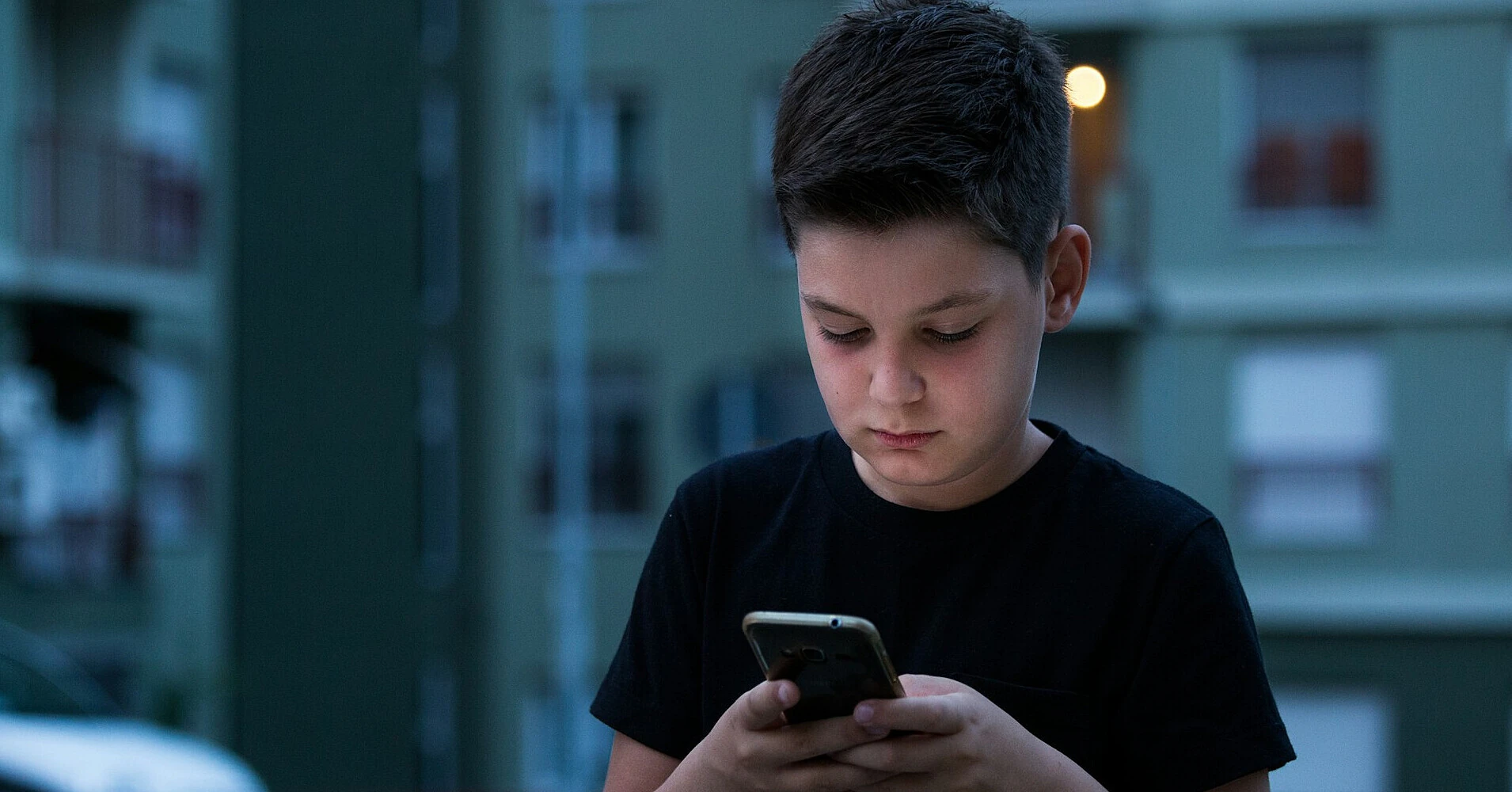
Greece has passed a law banning children under 15 from using Instagram, TikTok and other social networks. But there is an unexpected detail: for some 14-year-olds, the new ban will not be an obstacle. It's all about the unusual way of calculating age that lawmakers have prescribed.
The law was approved by the Greek parliament on 23 October. The restrictions will take effect on 1 January 2027 and will also apply to already created accounts. At the same time, simple parental permission will not allow bypassing the established age threshold.
Why some 14-year-olds will still be allowed social networks
The most unusual feature of the Greek law is that the age of a child for access to social networks will be determined not by their date of birth, but by the year.
The document explicitly states that for the application of the restriction, the date of birth of all people of a given calendar year is considered to be 1 January.
Let's imagine a child born in December 2012. In January 2027, they will actually be only 14 years old. But under the new law, they will already be considered to have reached 15 years of age and will be able to use social networks without waiting for their actual birthday.
However, children born in 2013 will have to wait until 1 January 2028. That's when they will reach the established age threshold under the special rules of the law.
Thus, from 1 January 2027, the ban will apply to children born in 2013 and younger.
This is not a loophole or an accidental mistake by legislators, but a specially provided mechanism that allows applying the same rules to all children born in the same year.
Which social networks will be banned for children
The restrictions apply to services intended for social interaction, publishing content and communicating with other users.
As examples, Greek authorities name Instagram, Facebook, TikTok and Snapchat. However, the law itself does not contain a closed list of apps: the determining factor will be what functions a particular service provides.
At the same time, the authorities do not intend to ban children from using the internet in general, owning smartphones or searching for information online.
Ordinary messengers intended for personal communication, such as WhatsApp and Viber, are not the main target of the restrictions. But for platforms that combine social networks, video services and messaging, the boundaries of the law's application may still require additional clarification.
What will happen to accounts children created earlier
The new ban applies not only to the registration of new users. If a child has already been using a social network for several years, that does not give them the right to maintain access until reaching the established age.
The Greek government expects platforms to implement age verification mechanisms and apply restrictions also to existing accounts.
But that does not mean that on 1 January all children's profiles will automatically disappear. The adopted law does not establish a single procedure for deleting accounts and does not determine the exact way each company should restrict access for minors.
Technical solutions will have to be implemented by the platforms themselves in accordance with current European rules.
How age will be verified without submitting a passport
The main problem with such bans is obvious: a child can simply enter someone else's date of birth when registering. Therefore, the authorities are relying on more reliable methods of age confirmation.
One of the proposed tools is the Greek state app Kids Wallet. A digital wallet for documents, Gov.gr Wallet, may also be used.
Their principle is to confirm reaching a certain age without transmitting all the user's personal data to the social network.
For example, a platform could receive confirmation that a person meets the established age threshold, but not learn their exact date of birth or other details from documents.
At the same time, the law does not oblige every family to install exactly Kids Wallet. Other suitable age verification methods are allowed, in line with European personal data protection requirements.
How exactly such systems will work in Instagram, TikTok and other major services will become clearer as platforms prepare for the new rules.
What if parents allow their child to use TikTok?
Parental consent does not override the ban. Greek law provides no special exception for children under the established age, even if adults fully control their account.
At the same time, penalising children themselves or their parents for violating the age restriction is not planned. The new law does not introduce separate monetary fines for them.
Responsibility for compliance rests primarily with the companies providing social networks.
Enforcement of the law will be monitored by competent Greek authorities within the framework of the European Digital Services Act (DSA). Oversight and sanction mechanisms are provided for platform violations, but the Greek law does not create a separate new system of fines.
Why authorities decided to restrict social networks
The Greek government explains its decision by growing concerns about the health of children and adolescents.
Particular attention is paid to endless feed scrolling, recommendation algorithms and other features that encourage users to spend more and more time in apps.
Authorities believe that excessive involvement with social networks can displace sleep, studying, physical activity and face-to-face communication. Other risks cited include cyberbullying, unwanted contacts and exposure to harmful content.
However, the ban itself has sparked controversy. Opposition parties criticised its strictness and doubted the effectiveness of age restrictions.
In particular, a softer approach was proposed: ban social networks for children under 13, and allow teenagers aged 13–14 to use them with restrictions and parental control.
The government chose a stricter approach. At the same time, the question remains open how effectively such restrictions will work in practice and whether they will drive children to less controlled services.
Could the same rules appear across the European Union
Greece is not the only country trying to restrict children's access to social networks. Australia has already introduced a ban for users under 16, and in Europe several countries are discussing similar initiatives.
In September 2026, the European Commission presented the draft EU KIDS Act, which provides common age rules for social networks across the EU.
The European approach differs from the Greek one. It proposes banning independent accounts for children under 13, and for teenagers aged 13 to 15, providing special restricted profiles under parental supervision.
However, the EU KIDS Act remains a legislative proposal for now, not an operative EU-wide ban.
Greece decided not to wait for the completion of this procedure and established its own rules. If an EU regulation governing the same issue comes into force in the future, the Greek law provides for the phasing out of the corresponding national provisions.
For now, the ban applies specifically to Greece and does not automatically introduce similar restrictions in other EU countries or in Ukraine.
The first major test of the new approach will be 1 January 2027. Then it will become clear whether social networks can actually restrict children's access by age without requiring millions of users to disclose excessive personal data.
Based on: Parliament of Greece, ERT News, ERT explanations, European Commission.
