
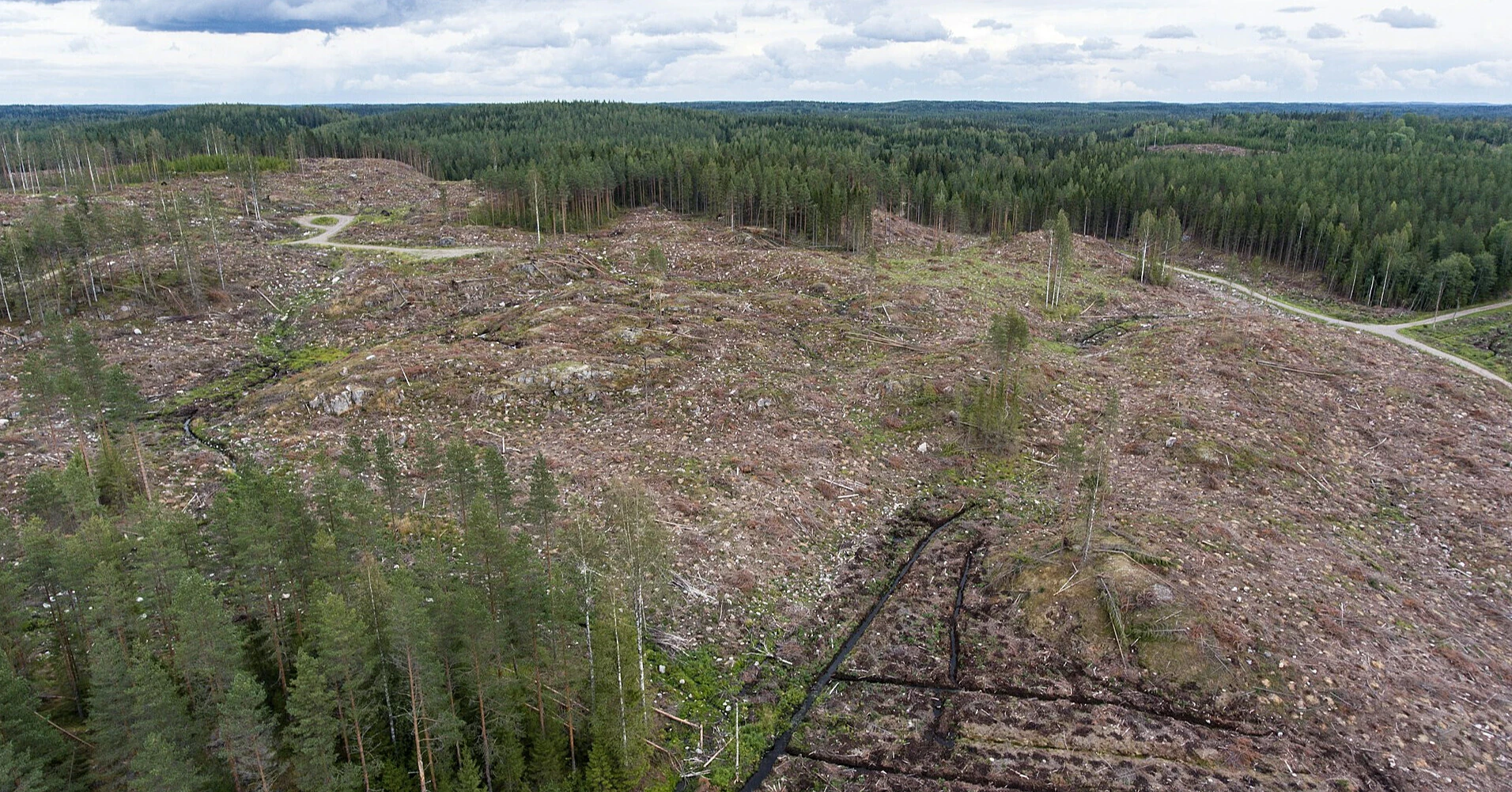
In northern Finland, 330 hectares of forest were cleared for the future Google data center. According to ecologists, about 250 thousand trees disappeared near the town of Muhos alone. Finnish authorities demanded a halt to preparatory work at two sites, and the oversight agency sent a request to the police.
The reason is that large-scale felling and earthworks began before the mandatory environmental impact assessment was completed. Google apologized, but claims it acted according to its understanding of the legislation.
The British publication The Guardian reported on the consequences of the construction and the outrage of local residents in an investigation published on October 22, 2026.
How many trees were cut down for Google data centers
Near the municipality of Muhos, about 330 hectares of forest were cleared for the construction of a data processing center — that is 3.3 square kilometers.
The former forested area now lies as a vast expanse of exposed soil, construction roads, ditches, and remnants of uprooted trees. The scale of changes is clearly visible in aerial photographs.
According to ecologists, approximately 250 thousand trees were destroyed here.
However, the felling affected not only Muhos. At Google's second site near the settlement of Otanmäki, in the area of the city of Kajaani, an ecologist from the Finnish Association for Nature Conservation, Mari Annala, estimates that about 150 thousand more trees were cut down.
Thus, the total number of destroyed trees at the two sites may reach 400 thousand. These are estimates by nature conservation specialists, not official state counts.
Why Finnish authorities stopped the work and contacted the police
On October 6, the Finnish Licensing and Supervisory Authority (LVV) demanded a halt to preparatory work that significantly alters the environment at both sites.
This includes tree felling, removal of topsoil, earthworks, road construction, and water drainage ditches.
The Finnish regulator explained that the mandatory environmental assessment of the projects has not yet been completed. Tuike Finland Oy, a company representing Google, informed the authorities on October 14 that it had complied and stopped the relevant work.
On October 22, the situation escalated: the oversight agency sent a request to the police to investigate the circumstances of the work at the Muhos site.
However, referring the matter to police does not mean the company has already been found guilty of an offense. According to the Finnish Broadcasting Company Yle, at the time of the report, the police had not yet begun a preliminary investigation of the requests.
Environmentalists fear water contamination
The impact of earthworks on local water bodies raises particular concern.
Residents told The Guardian that after the forest clearing, water in some streams turned brown. Conservation organizations worry about potential consequences for rivers, animals, and plants.
Yet the concerns go beyond visible changes. The Finnish oversight authority determined that about nine kilometers of new drainage ditches were planned for the Muhos site, most of which have already been dug.
According to the regulator, the area lies in a zone where rocks could, during earthworks, increase water acidity and metal content. The monitoring data submitted by the company already show signs of increased acidity.
Officials deem the planned protective measures insufficient and demand a separate permit for drainage work under water legislation.
Additionally, by November 5, 2026, Google must submit a detailed plan for protecting water bodies, including independent water quality monitoring.
Google's response and whether construction can resume
Google's Finland head, Antti Järvinen, publicly apologized for the situation. He said the company acted in good faith based on its understanding of existing legal requirements.
Google stated its readiness to cooperate with authorities and comply with regulator's orders. The company also plans to plant trees on about 130 hectares near Muhos.
But environmental organizations doubt that such plantings can compensate for the destruction of the existing forest.
The story has caused significant public outcry. According to The Guardian as of October 22, more than 93 thousand people signed a petition demanding stricter regulation of data center construction and compensation for local communities for environmental damage.
Meanwhile, Finland has become an attractive destination for digital infrastructure development due to its cool climate, availability of electricity, and land plots.
Google's projects in Muhos and Otanmäki are part of a 13 billion euro investment program for AI infrastructure. According to The Guardian, about 145 data center projects are in various planning stages in the country.
Finnish authorities count on new investments and jobs, but the incident has intensified debate over what environmental price the country is willing to pay for digital infrastructure development.
For now, large-scale preparatory work at Google's two sites remains suspended. When the company can resume construction will depend on completion of the environmental assessment and compliance with regulatory requirements.
Sources: The Guardian — investigation of October 22, 2026; Finnish Licensing and Supervisory Authority — official statement of October 22; Yle — Google's position and apologies from company management; Yle — regulator's appeal to the police.
