
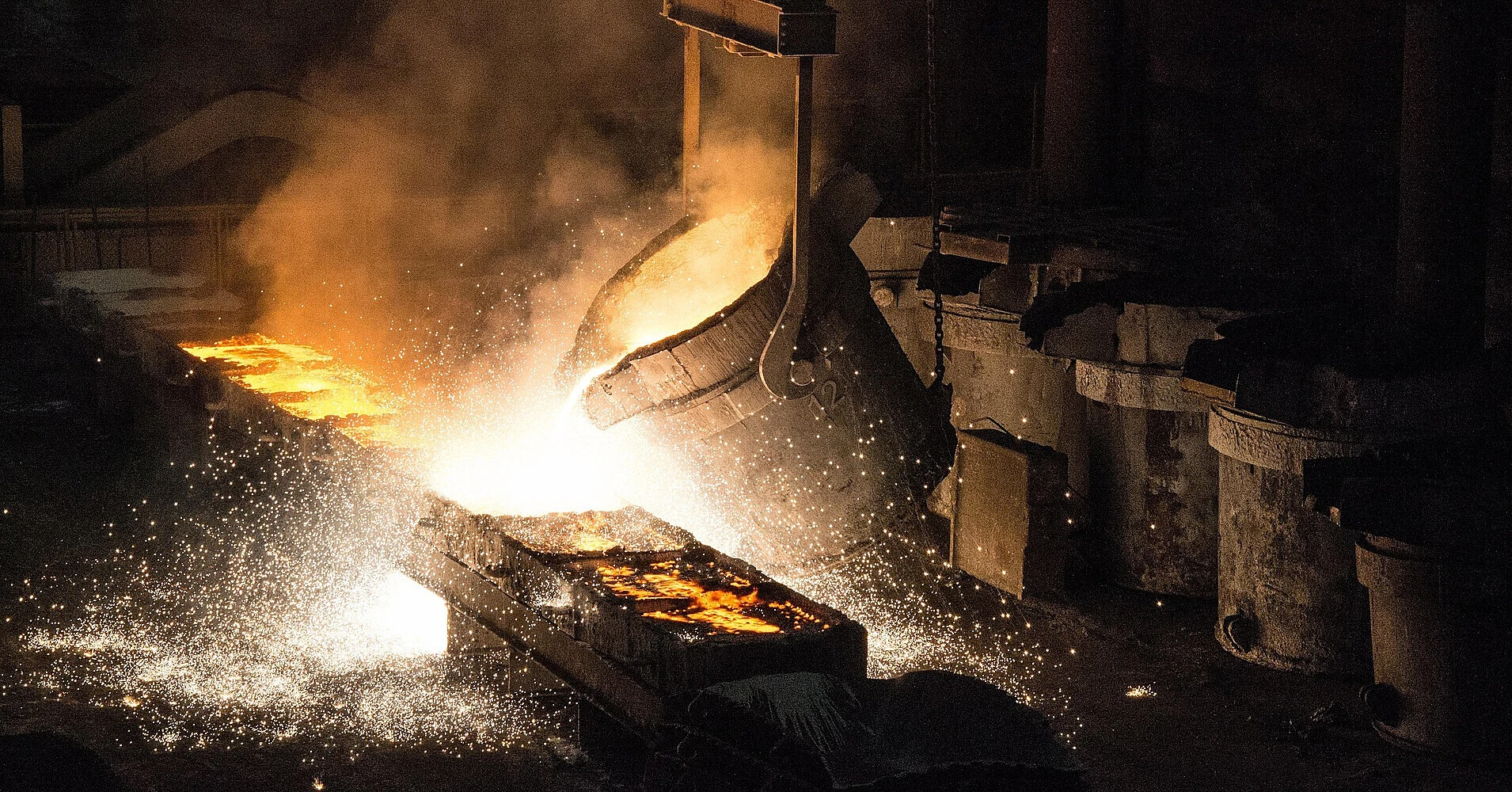
Ukraine's largest metallurgical enterprises, which accounted for about 90% of national steel production, have halted operations following Russian attacks and do not plan to resume work amid the ongoing war. The prolonged downtime of the plants could lead to additional losses for the Ukrainian economy in 2027.
This was reported on October 26 by the Centre for Economic Strategy (CES), presenting an assessment of the state of the metallurgical industry and the consequences of the plant shutdowns for the country's economy.
In September 2026, metallurgical production in Ukraine fell by approximately 80% compared to the same month last year. The main reason was Russian strikes on major industrial enterprises.
According to CES, seven blast furnaces were hit as a result of the September attacks: five at Metinvest Group enterprises and two at ArcelorMittal Kryvyi Rih. The shutdown of these production capacities led to a sharp reduction in metallurgical output.
Recovery of the enterprises is complicated by ongoing hostilities and the threat of renewed shelling. According to the think tank's assessment, the affected plants do not plan to resume production until the war ends.
An additional problem is the de facto blockage of traditional maritime export routes. Ukraine retains capabilities for iron ore mining and supplies, but redirecting large volumes of raw materials to alternative routes is too expensive.
Even before the September strikes, the situation of metallurgists worsened due to restrictions on the European market. From July 1, 2026, the European Union tightened the conditions for duty-free imports of Ukrainian steel products. Additional costs are associated with the European carbon border adjustment mechanism CBAM.
The operation of enterprises is also complicated by power supply disruptions. CES senior economist Natalia Kolesnichenko, in a comment to Deutsche Welle, emphasized that electricity is an essential component of metallurgical production, without which enterprises cannot function.
The consequences of the metallurgy shutdown extend far beyond the sector itself. In 2025, metallurgy together with related sectors accounted for more than 5% of Ukraine's gross domestic product.
According to the October forecast of investment company Dragon Capital, the cessation of steel production and the associated reduction in iron ore mining could cost the Ukrainian economy about 1.5% of GDP. This estimate was published on October 8 and is now cited by the Centre for Economic Strategy in its analysis of the industry's condition.
Dragon Capital also forecasts a contraction of Ukraine's real GDP by 0.5% in 2026 and a further 1% in 2027. Before the intensification of Russian attacks, the company expected economic growth of 1.5% and 0.5%, respectively.
CES warns that if metallurgical plants remain halted throughout the next year and production losses cannot be offset by other sectors, the economic downturn could be deeper than current forecasts.
Earlier Kurs.com.ua reported that in September, Ukrainian enterprises smelted only 131 thousand tons of steel – 78.5% less than a year earlier. Pig iron production fell by 83.5%, and rolled metal – by 77%.
Based on materials from: Centre for Economic Strategy, CES economic review, Forbes Ukraine.
