
Russia’s “Starlink analogue” is already passing over Ukraine: new capabilities for Russian drones
The first satellites of Russia’s Rassvet system are already creating extended communication windows over Ukraine. Coverage remains intermittent, and there is no evidence that combat drones are connected to the network. However, the expanding constellation could increase the capabilities of Russian drones operating over long distances.
Russia is accelerating the deployment of its own low-Earth-orbit satellite system, frequently described as a future analogue of Starlink. The project is being developed by Bureau 1440, a company within Russia’s ICS Holding.
According to satellite communications specialist Volodymyr Stepanets, the first commercial group of Rassvet spacecraft already provides at least two stable coverage windows over Ukraine each day. Each window may last for more than an hour.
Individual satellite chains pass over different regions of Ukraine approximately once every 90 minutes. Continuous communication is not yet available: after passing over the horizon, the satellites leave the terminal’s field of view and the connection is interrupted.
This fundamentally distinguishes the current Rassvet system from Starlink. SpaceX’s American network consists of thousands of satellites, allowing a user terminal to see several spacecraft almost continuously.
How many Russian satellites are already in orbit
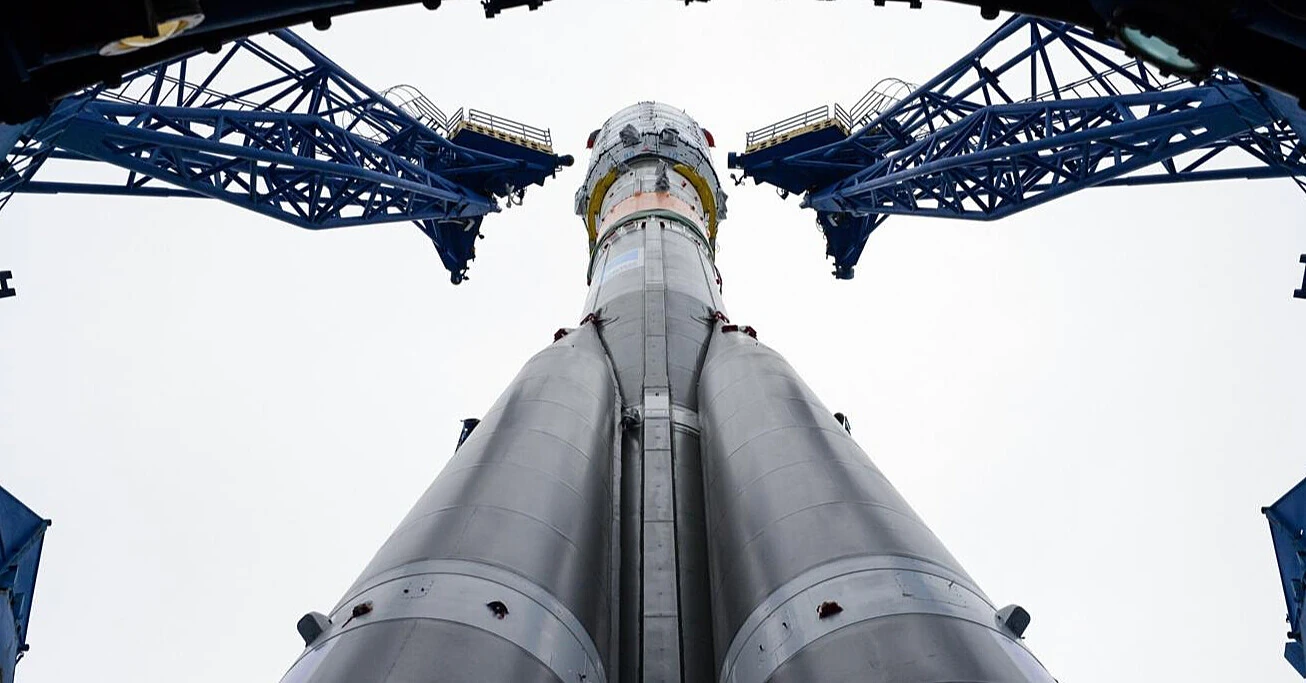
The first commercial batch of 16 Rassvet-3 satellites was launched on 23 March 2026 aboard a Soyuz-2.1b rocket.
Orbital tracking data indicate that one spacecraft later re-entered the atmosphere and burned up. Around 12 satellites reached an altitude of approximately 500–520 kilometres, while several others remain noticeably behind the main group.
A second batch launch took place on 19 July. Bureau 1440 did not officially disclose the number of spacecraft deployed, but industry publication ComNews estimates that the new batch also contained 16 satellites.
The spacecraft do not enter their operational orbits immediately after launch. They first undergo testing, activate their onboard systems and gradually raise their altitude using their own propulsion systems.
If the second group ascends at a similar pace, additional communication windows over Ukraine could appear as early as the autumn. The precise duration of coverage will depend on how the satellites are distributed across orbital planes.
When coverage could become continuous
Stepanets estimates that if Russia conducts regular batch launches approximately once every four months, it could theoretically approach continuous coverage of Ukraine by the summer of 2027.
This is a projection rather than an approved timetable. Achieving it would require the successful deployment of further batches, reliable spacecraft and an orbital configuration in which one satellite takes over the connection as another moves out of range.
Bureau 1440 has previously announced plans to create a constellation of more than 250 spacecraft and launch a commercial service in 2027.
Satellites, however, are only one part of the system. Practical use requires user terminals equipped with compact antennas capable of automatically tracking rapidly moving spacecraft.
The company has demonstrated prototypes of such equipment, but there is currently no confirmation of mass production or large-scale deliveries of the terminals to the Russian military.
Why satellite communications are particularly important for drones
A conventional drone control link is restricted by radio range and terrain. Operators use ground-based or airborne relays, as well as mobile networks, to extend the operating distance.
A satellite terminal could potentially transmit commands and receive video hundreds of kilometres away from the operator without requiring a chain of ground relays.
Such a link could be used by reconnaissance, maritime and heavy strike drones. Russian officials have already linked the development of the low-orbit constellation to the long-range control of unmanned aircraft.
Satellite communications could also complicate the work of electronic warfare systems. However, the connection would not be completely invulnerable: it could be detected, jammed or disrupted by targeting the terminal or the drone’s navigation systems.
A small drone would also have to carry an antenna, modem and additional power source. This would increase the aircraft’s cost, weight and energy consumption.
Previously unknown Russian drones appear on the front line
At the same time, radio communications specialist Serhii Beskrestnov reported the appearance of several previously unknown types of Russian drones. He published photographs received from Ukrainian military personnel, but the purpose of the aircraft has not yet been established.
Their flight range, warhead weight, navigation method and control channel remain unknown. It is also unclear whether they are serially produced systems, experimental prototypes or modified versions of previously known drones.
There is no direct evidence that these aircraft carry Rassvet terminals. It would therefore be premature to describe the new drones and the satellite constellation as parts of an already operational combat system.
The two developments instead indicate the broader direction of Russian research. Moscow is simultaneously expanding its range of drones and building infrastructure that could eventually provide communications far beyond the reach of conventional ground-based links.
Why Rassvet cannot yet be considered a second Starlink
The Russian system has moved beyond isolated experimental launches, but it remains incomparable with Starlink in scale.
Several dozen spacecraft can create separate extended coverage windows, but they cannot provide continuous access. Stable service would require many more satellites, ground stations, mass-produced terminals and a functioning traffic-distribution system.
The key indicator will not be the mere passage of satellites over Ukraine, but the confirmed appearance of compatible terminals on Russian military facilities, ships or drones.
Until then, Rassvet remains a rapidly developing technological threat that requires close monitoring, rather than an operational replacement for Starlink on the battlefield.
Based on materials from: Militarnyi, ComNews on the second satellite launch, ComNews on the first Rassvet-3 group, Serhii Beskrestnov
