
Putin signs law allowing blocking of accounts of Russians abroad
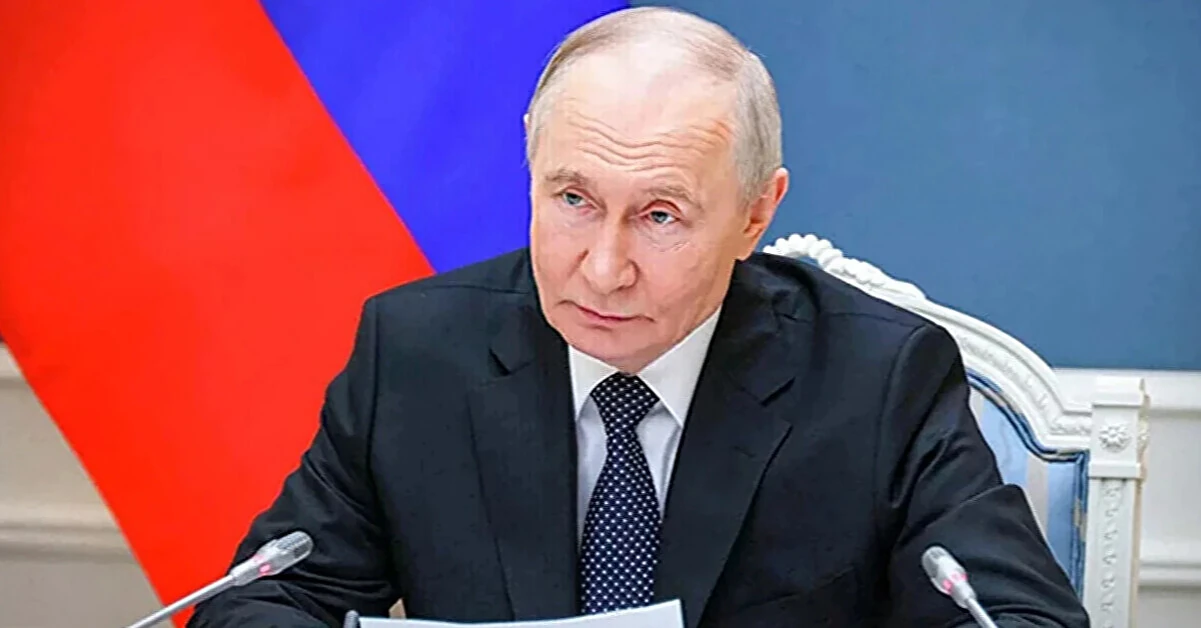
Russian President Vladimir Putin signed a law on August 4 that allows restricting access to bank accounts, property, and consular services of Russian citizens who are abroad and entered in a special registry.
The new measures apply to Russians who evade criminal or administrative punishment. The list may include individuals convicted in absentia by Russian courts or held liable under articles that the Russian authorities use against Kremlin critics.
Once included in the registry, a citizen's access to mobile and online banking may be blocked, remote money transfers prohibited, and operations with Russian bank accounts restricted.
The law also prohibits such persons from selling or registering real estate and vehicles in Russia, carrying out transactions by proxy, and freely disposing of income earned in the country. Money may be transferred to special accounts with limited access.
Restrictions will affect government and consular services. In particular, those in the registry will be unable to obtain or renew a foreign passport, certify a will or a power of attorney, register a marriage, or receive a number of other documents through Russian diplomatic missions.
Moreover, the authorities may suspend driving licenses, permits, authorizations, and professional accreditations. The special registry will be maintained by the Ministry of Justice of Russia.
The law may affect Russians prosecuted for the so-called discrediting of the Russian army, calls for sanctions, violation of legislation on "foreign agents," cooperation with "undesirable organizations," and calls for violating the territorial integrity of the Russian Federation.
The State Duma approved the bill in its second and third readings on July 22. Vyacheslav Volodin, the speaker of the lower house of the Russian parliament, said that the restrictions are aimed at people whom the Russian authorities consider "traitors" and accuse of acting against the state.
The human rights organization Amnesty International stated that the law creates an additional mechanism of pressure on journalists, activists, and other Kremlin critics who left Russia due to the threat of criminal prosecution.
Source materials: The Kyiv Independent, Euronews
