
A major solar eclipse will occur on August 12 – it will be visible in Ukraine as well
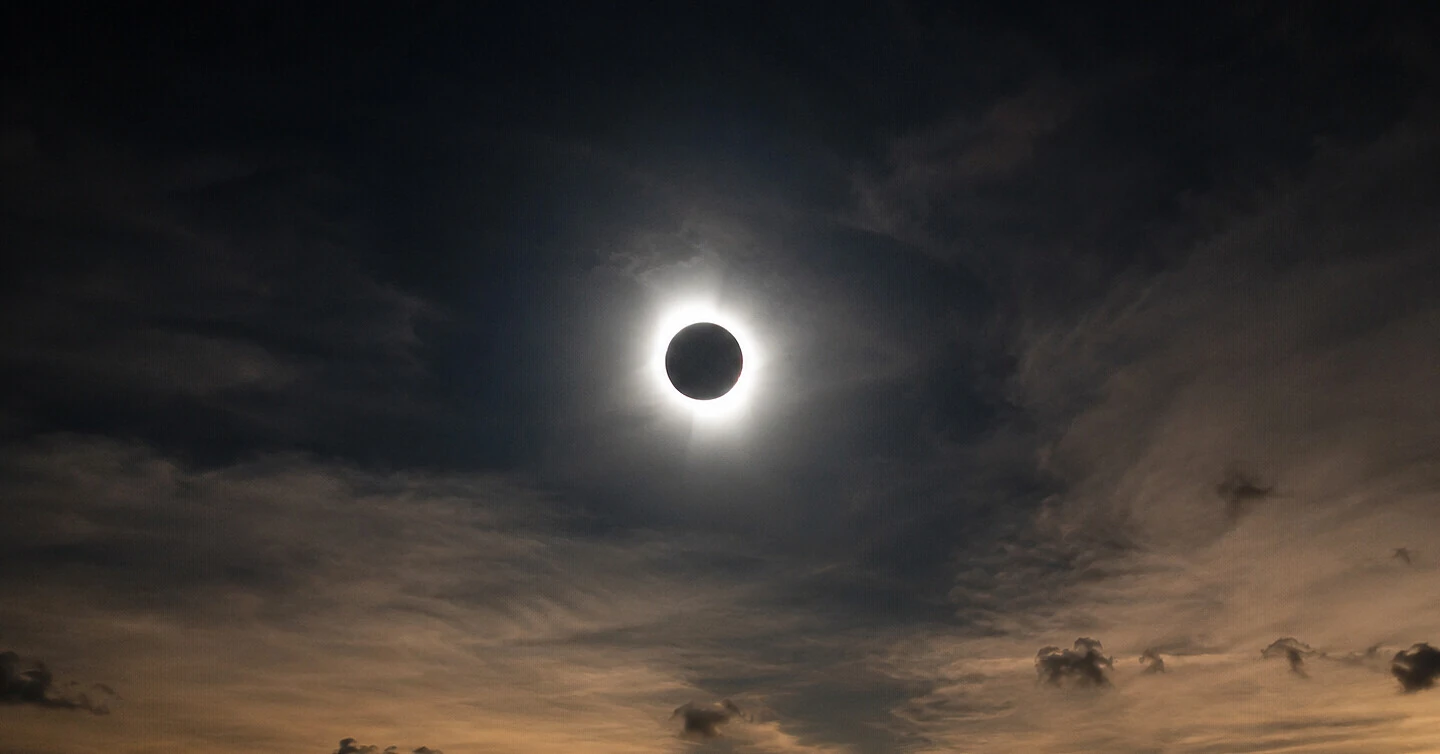
On Wednesday, August 12, residents of several regions of Ukraine will be able to observe a solar eclipse. On a global scale, it will be total, but in Ukraine, the Moon will cover only a part of the solar disk. The phenomenon will be best visible in the western regions of the country.
The path of totality will pass through northern Russia, Greenland, Iceland, the Atlantic Ocean, Spain, and a small part of Portugal. In most areas within this path, the Sun will be fully covered for less than two minutes, and the maximum duration of totality will be less than two and a half minutes. In many other European countries, the eclipse will be partial.
In Ukraine, the eclipse will begin in the evening, when the Sun is already approaching the horizon. Conditions will vary significantly from region to region. In Kyiv, the partial phase will start around 20:14, reach its maximum at approximately 20:18, and end around 20:23. The Moon will cover only about 2.7% of the solar disk area, so the effect will be minor.
The eclipse will be much better visible in the west of the country. In Lviv, it will begin around 20:17, with the maximum phase expected at about 20:43. There, the Moon will be able to cover about 40% of the solar disk area. In Uzhhorod, the maximum is expected at approximately 20:47. Observation will be limited by the sunset, so an open western horizon will be needed for viewing.
In eastern Ukraine, conditions will be much worse, and in some cities the phenomenon will not be visible at all because the Sun sets too early. For example, the eclipse on August 12 is not included in the list of visible solar eclipses for Kharkiv and Dnipro.
Observing a partial solar eclipse without proper eye protection is dangerous. NASA recommends using special eclipse glasses or solar viewers that comply with the ISO 12312-2 standard. Regular sunglasses, no matter how dark, are not suitable for this. Also, you should not look at the Sun through a camera, binoculars, or a telescope without special solar filters mounted in front of the optics.
Without special glasses, the eclipse can be viewed indirectly – for example, using a pinhole projector that casts an image of the Sun onto a surface. Do not look directly through the opening of such a device.
Based on materials from: NASA, Time and Date
