
Hungary finds emergency solution for nuclear plant due to Danube drying up
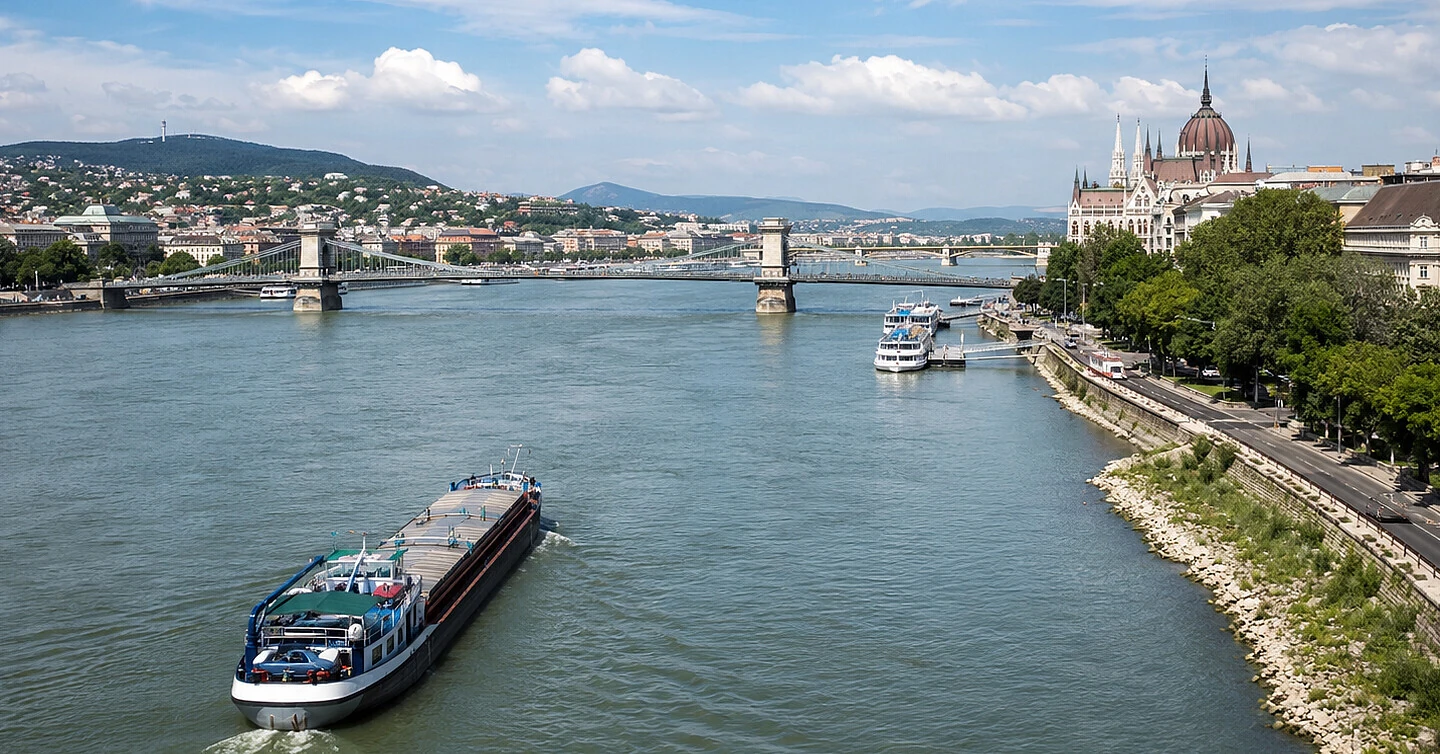
The Hungarian government has decided to urgently build a special bottom sill on the Danube, which should raise the water level near the Paks Nuclear Power Plant and ensure its stable operation amid the river's shallowing. Until the structure is completed, the authorities will prepare a temporary solution with two 80-meter barges, which will be deliberately sunk in the Danube bed if necessary.
The decision was announced on August 12 by Hungarian Prime Minister Peter Magyar after a government meeting and inspection of the area near the nuclear power plant. According to him, work on the bottom sill should begin as early as August 13 between the Paks Nuclear Power Plant and the settlement of Dunaszentbenedek.
Danube level to be raised by up to a meter
At the first stage, about 35,000 cubic meters of stone are planned to be used for the construction of the hydraulic structure; later the volume will be increased to 110,000 cubic meters. The government has granted the project priority status due to the urgency of the work. Its cost is estimated at about 6 billion forints.
After construction is completed, the bottom sill, according to the authorities' calculations, will be able to raise the Danube level near the plant by approximately one meter. The government expects to achieve, within a few weeks, that the water level near the cooling channel of the nuclear power plant does not fall below the critical mark of minus 90 centimeters.
This should allow the plant to operate at full capacity even if the river level continues to decline. The Danube is used by the Paks Nuclear Power Plant for cooling its units, so extremely low water has already forced the operator to significantly limit electricity production.
Two barges to be prepared before completion
Simultaneously with the main project, the government ordered two 80-meter-long barges to be placed near Paks. If the Danube again starts to dry up quickly, the vessels can be deliberately sunk as a temporary barrier.
According to Hungarian authorities, such a measure can temporarily raise the water level by about 20 centimeters. It is considered a backup option that will allow avoiding a complete shutdown of the nuclear power plant until the permanent bottom sill is finished.
The first barge is to be delivered to Paks from Mohács on the evening of August 12, and the second one the next day. The coordination of protective and construction works was assigned to Major General Pál Kádár, head of the Hungarian Defense Management Authority.
Nuclear plant had to sharply cut capacity
Problems at Paks worsened at the end of July due to the record low level of the Danube. The plant operator then warned that the water level was 28 centimeters below the previous minimum from 2018 and more than a meter below the historical minimum level that was taken into account when designing the plant.
MVM explained that there is physically enough water in the river to cool the shutdown units, but when the plant is operating, a significantly larger volume is required. An additional problem was the position of the water intake equipment: with extreme shallowing, the pumps could lose the ability to draw water from the Danube normally.
In early August, the plant's capacity dropped to about 230 MW, while its installed capacity is about 2,000 MW. A complete shutdown was ultimately avoided: after a slight rise in water, one of the previously disconnected turbogenerators was brought back into operation, but the authorities warned that the risk of new shallowing remains.
The Paks Nuclear Power Plant remains Hungary's key source of electricity. According to the operator, under normal conditions the plant provides about half of the country's electricity production, so a prolonged limitation of its capacity increases the energy system's dependence on imports and other generation sources.
Sources: Telex, Government of Hungary, Paks Nuclear Power Plant
