
Ukraine imposed sanctions on participants in schemes to export stolen grain
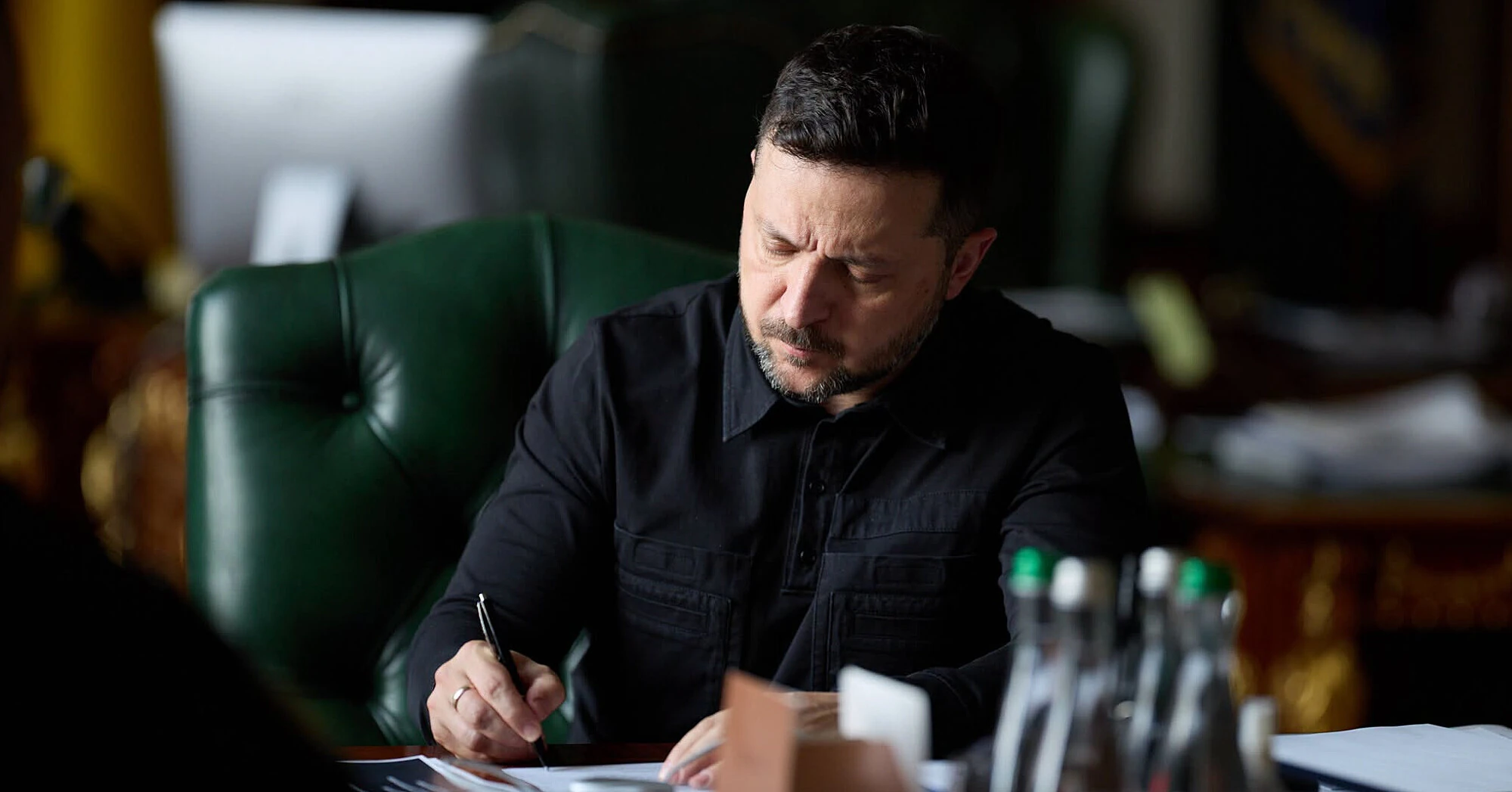
Ukraine has imposed new sanctions against individuals and legal entities involved in the illegal export of Ukrainian grain from temporarily occupied territories. President Volodymyr Zelenskyy enacted a corresponding decision of the National Security and Defense Council of Ukraine.
The restrictions target participants in the chain that allows Russia to export agricultural products from the seized territories, conceal their origin and sell them on foreign markets. Kyiv considers such operations not only as illegal appropriation of Ukrainian resources, but also as one of the sources of income that Russia can use to continue the war.
Ukrainian authorities have been consistently increasing pressure on the so-called shadow grain fleet. This system includes carriers, shipowners, captains, trading and intermediary companies involved in transporting products from the occupied areas and their further sale in third countries.
Various schemes are used to conceal the origin of cargoes. According to Ukrainian agencies, vessels may call at closed ports in the temporarily occupied territory, turn off the AIS automatic identification system, change route data and transship grain from one vessel to another. After that, the products are presented on the international market as goods of Russian origin. The Ministry of Foreign Affairs of Ukraine separately works on restricting access of such vessels to foreign ports, insurance and other maritime services.
The scale of this trade remains significant. Foreign Minister Andriy Sybiha previously reported that in 2025 alone, Russia illegally exported about 2 million tons of Ukrainian grain from occupied territories across the Black Sea for subsequent sale abroad.
Sanctions work against participants in these schemes has been ongoing for several years. In August 2025, Ukraine applied restrictions to 62 individuals and legal entities involved in asset appropriation in the occupied territories. Among them were figures directly connected to the export of grain from Kherson, Zaporizhzhia, Luhansk regions and Crimea, as well as to logistics through Russian vessels and foreign companies.
That package included, in particular, the captains of the vessels FEDOR, ZAFAR and MATROS SHEVCHENKO, as well as the companies Adamz Grain from Egypt, Gulf & Eastern Food Trading from Oman and the Russian entities "Terra Trade Company", "Crane Marine Contractor", "Idealprod" and "Kuban-Forward". According to the NSDC, they were directly involved in the export of Ukrainian grain.
Later, Ukraine expanded restrictions directly on maritime transport. In November 2025, Zelenskyy imposed sanctions against 56 vessels that in 2022–2025 illegally called at Russian-occupied Ukrainian ports and exported food products, including wheat and sunflower seeds, from there.
Kyiv is also trying to achieve practical consequences beyond its own jurisdiction. One of the most notable precedents was the case of the bulk carrier Caffa. In 2026, a court in Sweden supported measures against the vessel, which the Ukrainian side links to an illegal call at occupied ports and export of agricultural products. Ukraine expects that similar decisions will be made in other countries.
A separate area of work concerns the states where such cargoes arrive. In the spring, Ukraine appealed to Israel after the vessel ABINSK called at the port of Haifa with grain that Kyiv considered stolen from the temporarily occupied territories. The Ukrainian side submitted materials of criminal proceedings and sought the arrest of the vessel and its cargo.
The new sanctions step continues this strategy: Ukraine seeks to influence not only the vessels themselves, but also the entire trade infrastructure—from owners and captains to intermediaries and buyers. At the same time, Kyiv is seeking synchronization of restrictions with the European Union, the United States and other partners, since international sanctions can significantly complicate access for the entities involved to ports, bank settlements, insurance and global maritime logistics.
Based on materials from: Office of the President of Ukraine, Ministry of Foreign Affairs of Ukraine
