
Russia shifts trade with China to the Arctic: how sanctions-listed tankers are using an alternative route
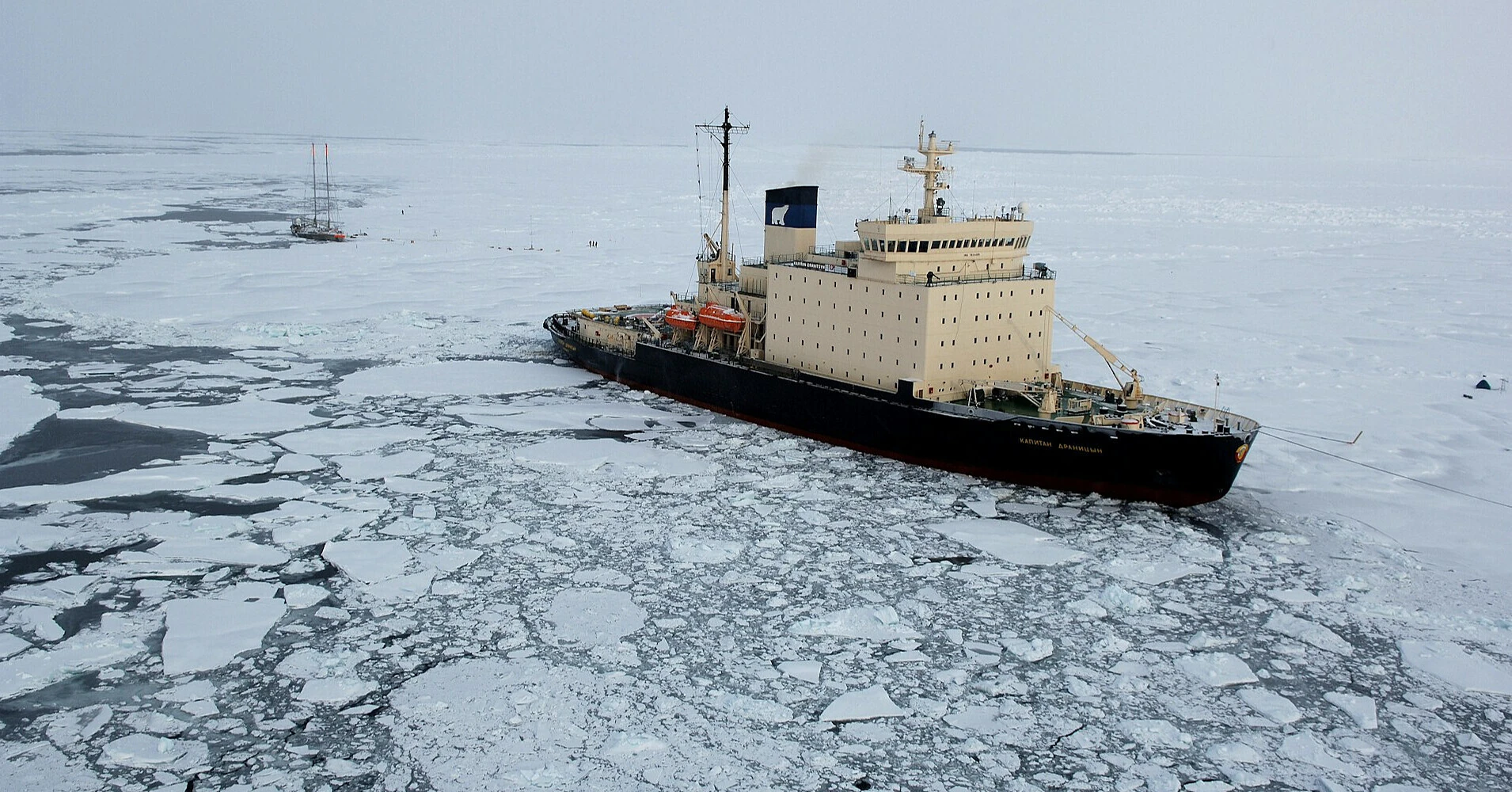
Russia is increasingly using the Northern Sea Route for trade with China, turning the Arctic route not only into a shorter connection between the two countries, but also into a separate channel for shipping cargo targeted by Western sanctions.
After the start of the full-scale war against Ukraine, China became the main foreign destination for international transit along Russia's Arctic coast. According to CNN, based on statistics from Norway's Centre for High North Logistics, all eight oil tankers that completed a full transit of the Northern Sea Route toward China last year were under U.S. sanctions. This shows that the Arctic is gradually becoming yet another element of Russia’s sanctions-evasion system.
Key points:
- China is the main transiter: since 2022, international shipments along the Northern Sea Route have effectively concentrated around trade between Russia and China.
- Sanctioned fleet: all tankers that made full voyages to China last year were on U.S. sanctions lists.
- A new Silk Road: China is launching its own weekly container service via the Arctic to the UK, cutting transit time nearly in half.
What is the Northern Sea Route
The Northern Sea Route runs along Russia's Arctic coast – from the Kara Sea to the Bering Strait. It is about 5,600 kilometers long. The route’s main advantage is that it can significantly shorten the distance between northern Russia and Asia compared to voyages through the Suez Canal.
But there is a serious limitation: for most of the year the Arctic seas are covered with ice. Without icebreaker escort, many sections of the route are only accessible during a short summer navigation season. Russia controls a large part of the Northern Sea Route infrastructure and has the world’s largest fleet of nuclear-powered icebreakers.
Why China became Russia’s main partner in the Arctic
After Russia’s invasion of Ukraine, European markets for Russian energy resources shrank sharply, and Western sanctions complicated the use of ordinary shipping, insurance and financial infrastructure. As a result, Moscow accelerated its pivot of supplies to Asia.
China became a natural partner: the country needs large volumes of oil and gas, and Russian producers are ready to supply fuel on terms that account for sanctions risks.
How sanctioned deliveries work through the Arctic
One illustrative example involves Russia’s Arctic LNG 2 project, which is under U.S. sanctions. In the spring, the tanker Christophe de Margerie departed from the area of the Russian Arctic LNG project and traveled along the Northern Sea Route toward Kamchatka.
There, according to satellite data and vessel-tracking information, the gas was transferred to a floating storage unit. After that, another sanctioned LNG carrier – Arctic Mulan – approached the same facility. The vessel temporarily switched off its transponder and then headed to the Chinese port of Beihai. Later, a similar scheme was repeated.
Such operations make it possible to break a long transport chain into several stages and use different ships on the Arctic and Asian legs.
Why sanctioned tankers are used
Western restrictions on Russian energy exports target not only oil and gas producers. Sanctions are also imposed on vessels, their operators and companies that help transport Russian energy resources. For Moscow, this creates a shortage of ships willing to service such projects.
As a result, Russia is increasingly assembling a so-called shadow fleet – a network of tankers with opaque ownership structures, frequent changes of flag, owners and management companies. In the Arctic, this scheme is especially risky: many ships operate in harsh climatic conditions, where an accident or a spill could have much more serious consequences than on ordinary sea routes.
China is also building its own “Ice Silk Road”
China’s interest in the Arctic goes far beyond Russian oil and gas exports. In August, the Chinese shipping company Sea Legend will launch the first regular weekly container service between China and Europe via the Northern Sea Route. The route has been named the Ice Silk Road.
The ships are to sail between Ningbo in China and Felixstowe in the UK along Russia’s northern coast. According to the Financial Times, such a voyage could take about 20 days – roughly half the time of the traditional 40-day route via the Suez Canal, although the actual duration will depend heavily on ice conditions. Last year, 23 international vessels completed a full transit of the Northern Sea Route, up from 15 a year earlier.
Why the Arctic matters for sanctions policy
The Northern Sea Route is still incomparable in volume to the Suez Canal and other major world trade routes. But its importance for Russia lies not so much in absolute volumes as in the possibility of creating an alternative logistics system.
If traditional routes become riskier because of vessel detentions, insurer scrutiny or sanctions against ports and operators, the Arctic gives Russia an additional corridor to its largest Asian buyer. For China, it is also a way to diversify supplies and reduce dependence on routes through the Suez Canal, the Red Sea and other geopolitically vulnerable points.
Why this matters for Ukraine
For Ukraine, the issue of Arctic shipping is directly linked to the effectiveness of energy sanctions against Russia. Oil and gas remain the most important sources of hard currency for Moscow. The more alternative routes and buyers Russian exports get, the harder it is for sanctions to completely cut off those revenues.
At the same time, the restrictions continue to create costs for Russia: Moscow is forced to use more complex transshipment schemes, specialized terminals, a limited circle of buyers and ships with heightened sanctions risks.
KURS Ukraine previously reported that China is preparing another terminal to receive LNG shipments from the sanctioned Arctic LNG 2 project. Another article described the expansion of Russia’s shadow fleet for transporting liquefied gas. The Arctic route demonstrates the next stage of this adaptation: Russia is trying to build not just individual evasion schemes, but an entire parallel logistics system between its northern fields and the Asian market.
Based on materials from: CNN, Centre for High North Logistics, Financial Times
