
Magnitude 7.7 earthquake strikes eastern Indonesia: death toll rises, damage reported
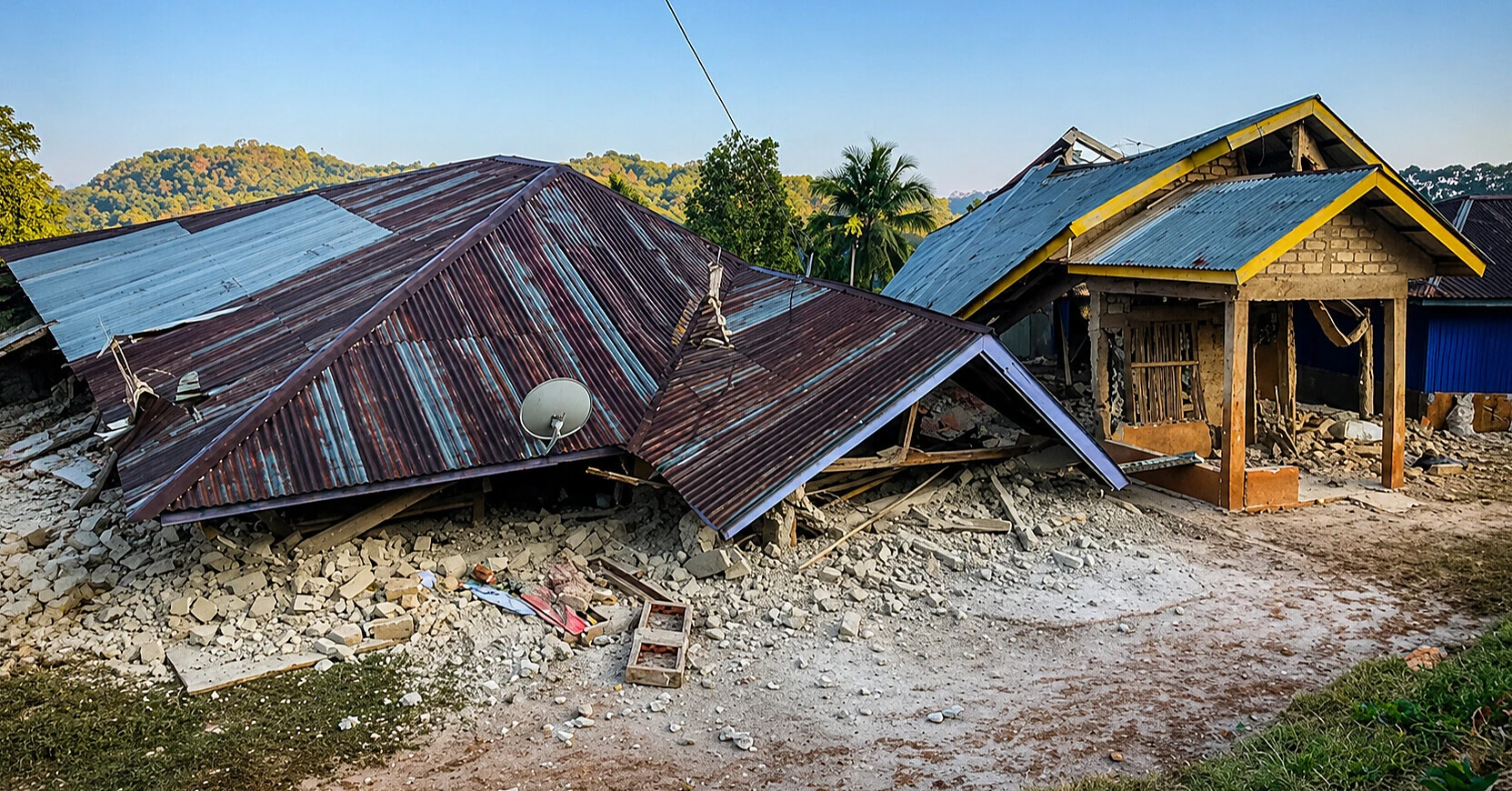
A powerful magnitude 7.7 earthquake struck on the morning of August 15 off the coast of Flores Island in eastern Indonesia. The tremors killed people, destroyed homes and other buildings, triggered landslides, and thousands of residents temporarily left their homes.
According to updated data, the death toll from the earthquake has risen to at least 38 people, with at least 23 injured. This was officially announced by the head of Indonesia's National Agency for Disaster Management (BNPB) Suharyanto. Earlier, the head of the search and rescue agency in Maumere, Fatur Rahman, reported 20 dead and ongoing search for people under mud and debris.
What is known so far:
- the main earthquake had a magnitude of 7.7;
- the epicenter was at a depth of 10 km off Flores Island in East Nusa Tenggara province;
- confirmed deaths of at least 38 people, dozens injured, some missing;
- residential houses, passenger terminals, medical and educational facilities damaged;
- about 2,000 residents evacuated or temporarily left their homes;
- tsunami warning was cancelled after waves did not exceed 94 cm.
Where the earthquake occurred
According to the US Geological Survey (USGS), the earthquake occurred at 05:58 local time. Its epicenter was in the sea about 68 kilometers north-northwest of the town of Ende on Flores Island. The depth of the focus was about 10 kilometers.
The Indonesian Agency for Meteorology, Climatology and Geophysics (BMKG) also estimated the magnitude at 7.7 and linked the earthquake to the activity of local tectonic faults. After the main shock, a series of aftershocks occurred, the strongest of which had a magnitude of 6.1.
The earthquake caused landslides and damage
The strong tremors were felt in various parts of Flores Island. There are reports of collapses and severe damage to buildings in the districts of Sikka, Manggarai, East Manggarai, and other parts of the province.
In the village of Reok in Manggarai district, several people died as a result of a landslide (rescuers recovered 8 bodies). Specialists continue to search for residents who are believed to be buried under tons of mud that came down from the surrounding hills.
Landslides also blocked sections of the Trans-Flores highway—the main 700-kilometer mountain road connecting settlements of the island from Labuan Bajo to Larantuka. Power outages and communication problems seriously complicate the collection of information about the aftermath of the disaster and the work of rescue services.
Hospital patients were moved outside
After the strong tremors, in several hospitals, patients were evacuated from buildings as a precaution due to fears of aftershocks. Medical staff carried beds, oxygen tanks, and IV stands outside, setting up temporary emergency aid zones.
Port facilities in Maumere also sustained serious damage: the waiting hall of the sea terminal collapsed, injuring passengers who were there. In the Catholic seminary in Ritapiret, the roof of the assembly hall collapsed, causing panic and injuries among students and clergy.
Thousands of people left their homes
Immediately after the earthquake, authorities issued a tsunami warning and urged residents of coastal areas, including East Nusa Tenggara, South Sulawesi and Southeast Sulawesi, to move away from the sea to higher ground. In Nagekeo district alone, about 2,000 people evacuated to temporary shelters.
BMKG recorded small tsunami waves—the highest level was 94 centimeters. The agency later cancelled the warning, as further monitoring showed no significant changes in sea level that would threaten the coast. A helicopter has been deployed to support logistics and possible air evacuations.
Why Indonesia is so often affected by earthquakes
Indonesia is located in the so-called Pacific Ring of Fire—a zone of high tectonic and volcanic activity. Several tectonic plates (Eurasian, Pacific, and Indo-Australian) interact within the archipelago, so strong earthquakes occur regularly here.
Flores Island already experienced one of the worst such disasters: in 1992, a powerful earthquake triggered a devastating tsunami.
The death toll is still being clarified
Search and rescue operations on Flores continue. Authorities are still trying to establish contact with remote areas where roads are damaged, power supply is cut off, and communication is unstable.
Due to these difficulties, the final scale of destruction and the exact number of victims remain unknown. Rescuers continue to survey damaged settlements and search for people under debris and in landslide areas.
Based on: Associated Press, BMKG, USGS
