
Queues on Russian border with Georgia grew on background of rumors about mobilization
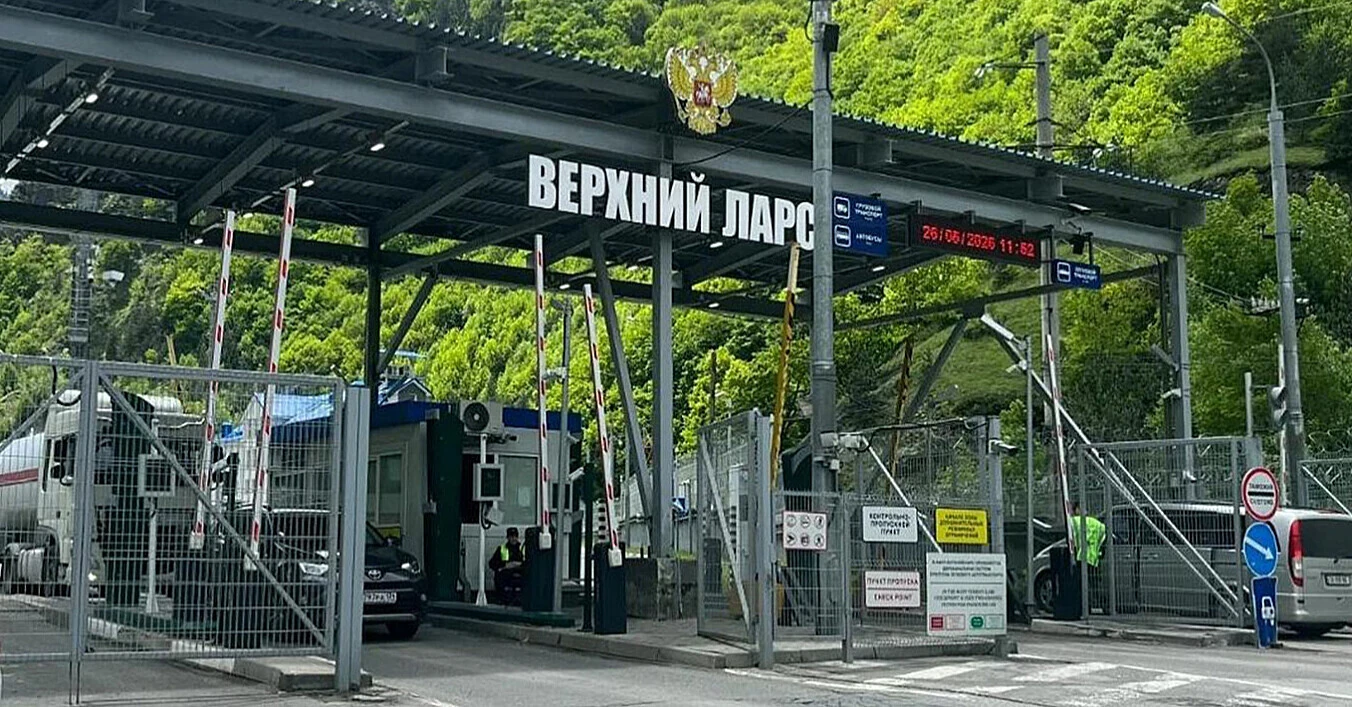
At the Russian-Georgian border, passenger traffic sharply increased, and queues formed at the Verkhny Lars checkpoint. This happens against the backdrop of rumors circulating in Russia about a possible new wave of mobilization after the September elections to the State Duma; however, a direct link between the increase in flow and these fears has not yet been established.
The Federal Customs Service of Russia reported that in some days more than 20 thousand passengers passed through Verkhny Lars, calling the figure a recent record. On August 15 and 16, more than 19 thousand people per day crossed the checkpoint. According to the agency, the current load significantly exceeds the indicators of analogous periods in previous years.
Witnesses also report a large queue of cars on the Russian side. According to the Telegram channel "Ostorozhno, Novosti", movement was at times so slow that cars advanced about 100 meters in two hours. Customs services reinforced shifts and brought in additional staff to speed up border crossing.
Georgia presented different data on border crossings
Meanwhile, the claim that over 20 thousand Russians entered specifically Georgia in a day is not confirmed by Georgian statistics. The Ministry of Internal Affairs of Georgia reported on August 19 that in the previous day 7,880 citizens of various countries entered the country via the checkpoint from Russia, while another 8,406 people traveled in the opposite direction.
Thus, the Georgian agency counted 16,286 border crossings in both directions and emphasized that these are citizens of different countries, not exclusively Russians. The Russian Federal Customs Service, on the other hand, reported the total passenger flow through its checkpoint and did not assert that all the more than 20 thousand people were Russian citizens entering Georgia.
Another factor that may have affected the border situation was the weather. On August 13, traffic through Verkhny Lars was temporarily halted entirely due to deteriorating weather conditions on the territory of Georgia. After normalization, the checkpoint was reopened for all types of transport.
Russia discussing new mobilization after elections
The growth in queues occurs against the backdrop of stronger talk of a possible new mobilization in Russia in the fall of 2026. Earlier, Russian independent media citing sources reported that the authorities are considering various scenarios after the parliamentary elections, including mobilization measures. Russian authorities have not announced any official decision on a new mass mobilization.
"Kurs Ukrainy" previously wrote that, according to Russian media, the Kremlin discussed possible introduction of martial law or its individual elements and a new wave of mobilization after the elections. Sources then emphasized that no final decisions had been made.
Ukrainian intelligence also allowed for such a scenario. In July, Andriy Chernyak, representative of the Main Intelligence Directorate of the Ministry of Defense of Ukraine, said that the Russian authorities have the infrastructure for a large-scale mobilization and may decide to do so after the parliamentary elections. However, in early August, the Foreign Intelligence Service of Ukraine noted the absence of signs of immediate preparation for mass conscription in the near future.
Elections of State Duma deputies are scheduled for September 20, 2026. The Central Election Commission of Russia decided to hold voting for three days — September 18, 19 and 20.
In 2022, Verkhny Lars was already a route of mass departure
A similar picture was observed at the Russian-Georgian border in autumn 2022. After Vladimir Putin announced a so-called partial mobilization, thousands of Russians tried to leave the country through Georgia, and the queue near Verkhny Lars stretched for many kilometers.
However, it is too early to directly compare the current situation with September 2022. No new mobilization has been officially announced yet, and the statistics do not allow establishing what share of Russians crossing the border are leaving precisely because of fears of conscription. Along with queues at the border, there have appeared other signs of growing anxiety: relocation services report an increase in requests to move out of Russia, with clients citing the fear of a new mobilization among the reasons.
Based on materials from: Federal Customs Service of Russia, Ministry of Internal Affairs of Georgia, The Moscow Times
