
North Korea expands military aid to Russia with drone operators
The new group of North Korean military personnel sent to Russia includes about 400 drone operators who can use drones for reconnaissance and strikes against targets on the territory of Ukraine. The total number of the new DPRK contingent in Russia has already reached approximately 8,500 people.
This was reported by Deputy Chief of the Main Intelligence Directorate of the Ministry of Defense of Ukraine Vadym Skibitsky to CNN. According to Ukrainian intelligence, North Korean units are predominantly located in the Kursk region of the Russian Federation.
In addition to 400 UAV operators, the new contingent includes about a thousand engineers and sappers. Some North Korean military personnel already have experience using drones or gained it through previous rotations of DPRK units in Russia.
Skibitsky believes that North Korean operators will be able to use drones both for surveillance and directly for attacks on targets on the territory of Ukraine. However, according to the assessment of the Main Intelligence Directorate, the new DPRK units are not planned to be sent en masse directly into Ukrainian territory.
Instead, they are intended to strengthen Russian positions in rear areas. This approach will allow Moscow to free up some of its own servicemen and redeploy them to participate in offensive actions in Ukraine.
North Korean military personnel have previously used drones in the war. In February 2026, the Main Intelligence Directorate reported that DPRK units were using combat drones, electronic reconnaissance and electronic warfare assets. Intelligence noted that participation in the war allows the North Korean army to gain practical experience in modern technological warfare.
About 25,000 DPRK military personnel have passed through the Russian army
According to Skibitsky's estimate, since the start of cooperation, about 25,000 North Korean servicemen have already been sent to Russia or passed through the relevant rotations.
The first large deployment of DPRK units began in autumn 2024. At that time, about 10,000 North Korean soldiers arrived in the Kursk region to take part in battles against Ukrainian units.
Pyongyang did not officially acknowledge the participation of its soldiers in the war for several months and confirmed it only in spring 2025. North Korean units suffered significant losses, but their returning military personnel simultaneously brought back practical combat experience, including the use of unmanned systems.
By early 2026, the DPRK contingent continued to operate in the Kursk region. According to Ukrainian intelligence data, North Korean units used tube artillery and multiple launch rocket systems, conducted aerial and artillery reconnaissance, and adjusted strikes.
Russia may request tens of thousands more military personnel
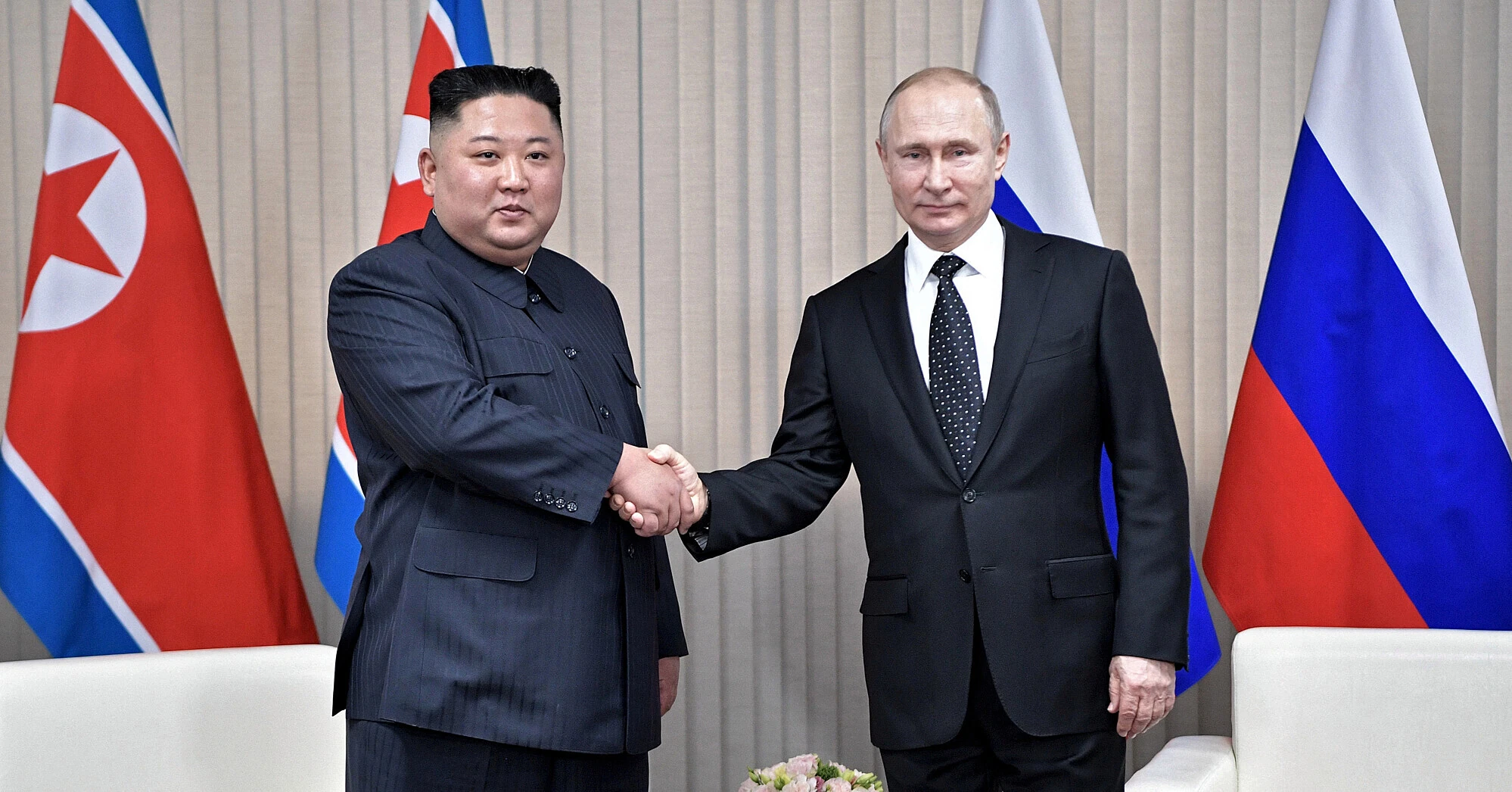
Ukrainian intelligence assumes the possibility of a further significant increase in the North Korean contingent. According to Skibitsky, during the expected meeting between Vladimir Putin and Kim Jong Un in September, Moscow may ask Pyongyang to provide up to 50,000 additional servicemen.
The sister of the DPRK leader, Kim Yo Jong, previously rejected reports about the possible sending of tens of thousands of new servicemen to Russia, calling such claims unfounded.
The increase in the contingent is occurring simultaneously with the expansion of military-technical cooperation between Russia and the DPRK. Pyongyang supplies Moscow not only manpower, but also artillery ammunition and ballistic missiles.
According to Skibitsky, Russia has previously received at least 150 KN-23 and KN-24 ballistic missiles from the DPRK, after which Pyongyang promised to transfer another 120. From this additional batch, according to Ukrainian intelligence, approximately 40 missiles have already been delivered.
In addition, about 90 North Korean specialists were sent to the Voronezh region to assist in the operation of missile systems. Ukrainian intelligence also recorded cargo flights from the DPRK to Russian military airfields.
Thus, North Korea's participation in the Russian war is gradually changing: from the supply of ammunition and the first infantry units, cooperation is expanding to technical specialists, missile operators, and drone system operators.
