
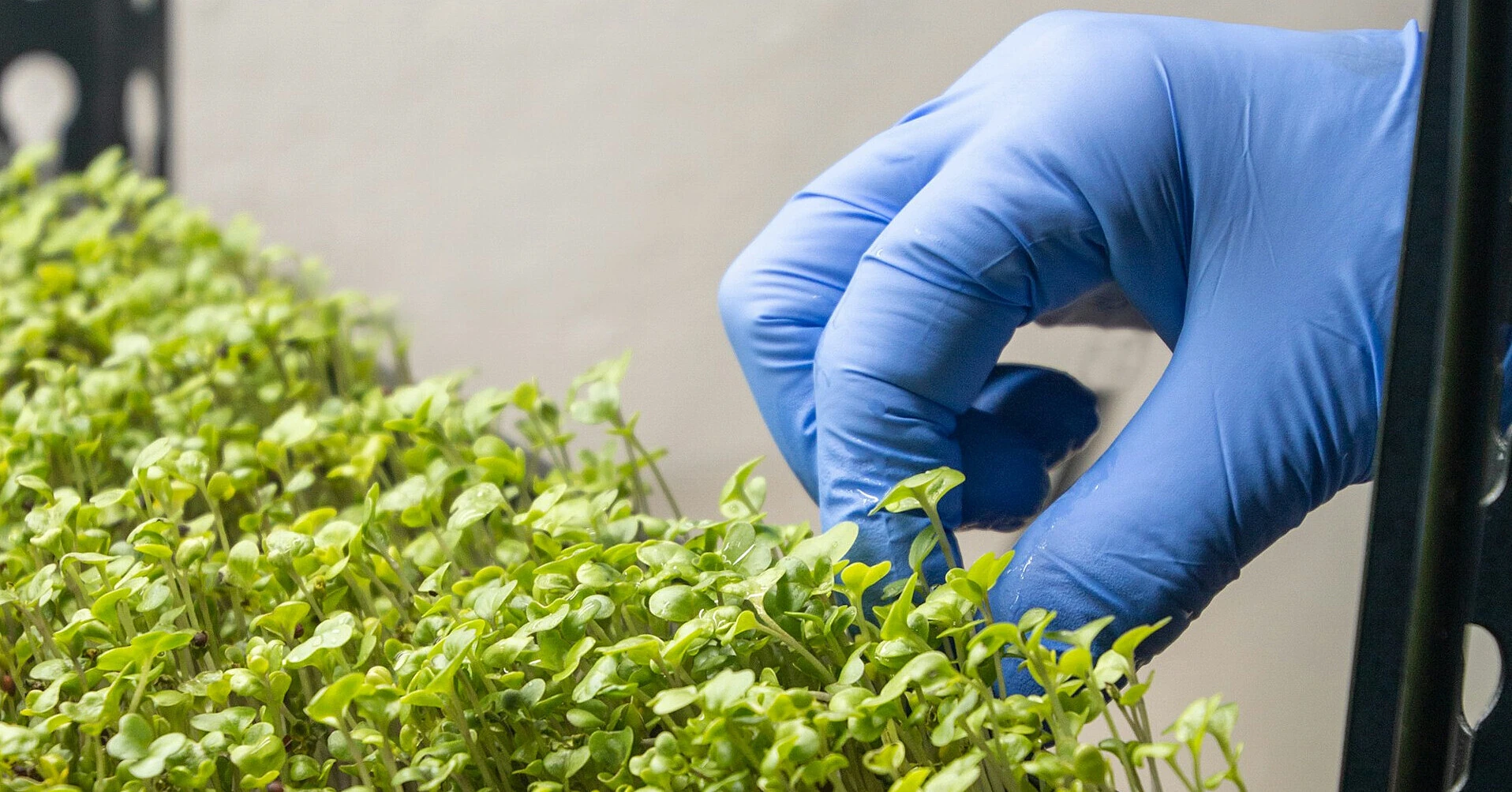
In medical institutions of the system of the Ministry of Internal Affairs of Ukraine, an unusual direction of veteran rehabilitation has appeared — growing microgreens. Small containers with arugula and peas have become an effective tool of occupational therapy for fighters after amputations, severe wounds, and contusions.
Why plants were chosen for therapy
Rehabilitation often takes months, which makes it difficult for the patient to notice progress. The growth cycle of cress, broccoli, or sunflower is only 10–14 days. A serviceman quickly sees the result, and the harvest can be eaten or given to loved ones. Containers fit on a hospital nightstand, which is convenient for patients with limited mobility.
For a 25-year-old serviceman with the call sign Uncle, who lost his right arm in the Dobropillia direction in January 2026, planting seeds became a real challenge. Holding a tiny seed with injured fingers and distributing it precisely replaces monotonous hospital exercises with a meaningful action.
What skills microgreens restore
- Fine motor skills: grasping seeds requires precise, coordinated finger movements.
- Tactile sensitivity: interaction with soil, water, and sprouts stimulates nerve endings.
- Attention and memory: the plant needs regular control of lighting and humidity.
- Planning: building the correct sequence of actions is critically important for fighters with acoustic trauma and traumatic brain injuries.
- Independence: the patient relearns to take responsibility for the process from beginning to end.
Scientific data versus real practice
| Aspect | Research data | Application in rehabilitation |
|---|---|---|
| Mental health | A 2025 meta-analysis (960 participants) showed a reduction in depression, but the level of evidence is still low. | Does not replace working with a psychologist, but reduces stress and improves socialization. |
| PTSD and anxiety | Pilot studies with veterans record improvements, but large-scale data is still insufficient. | Helps to ground oneself, focus on the task “here and now”. |
| Physiology | Gardening cannot be an independent treatment for injuries. | Serves as an adaptive trainer within evidence-based occupational therapy. |
Over two months of the program, specialists conducted dozens of sessions. The main task of the occupational therapist in this process is not to get a perfect harvest, but to return to a person the ability to control their movements and confidently perform everyday tasks after discharge from the hospital.
