
HUR reveals 35 enterprises involved in production of Iskander-M
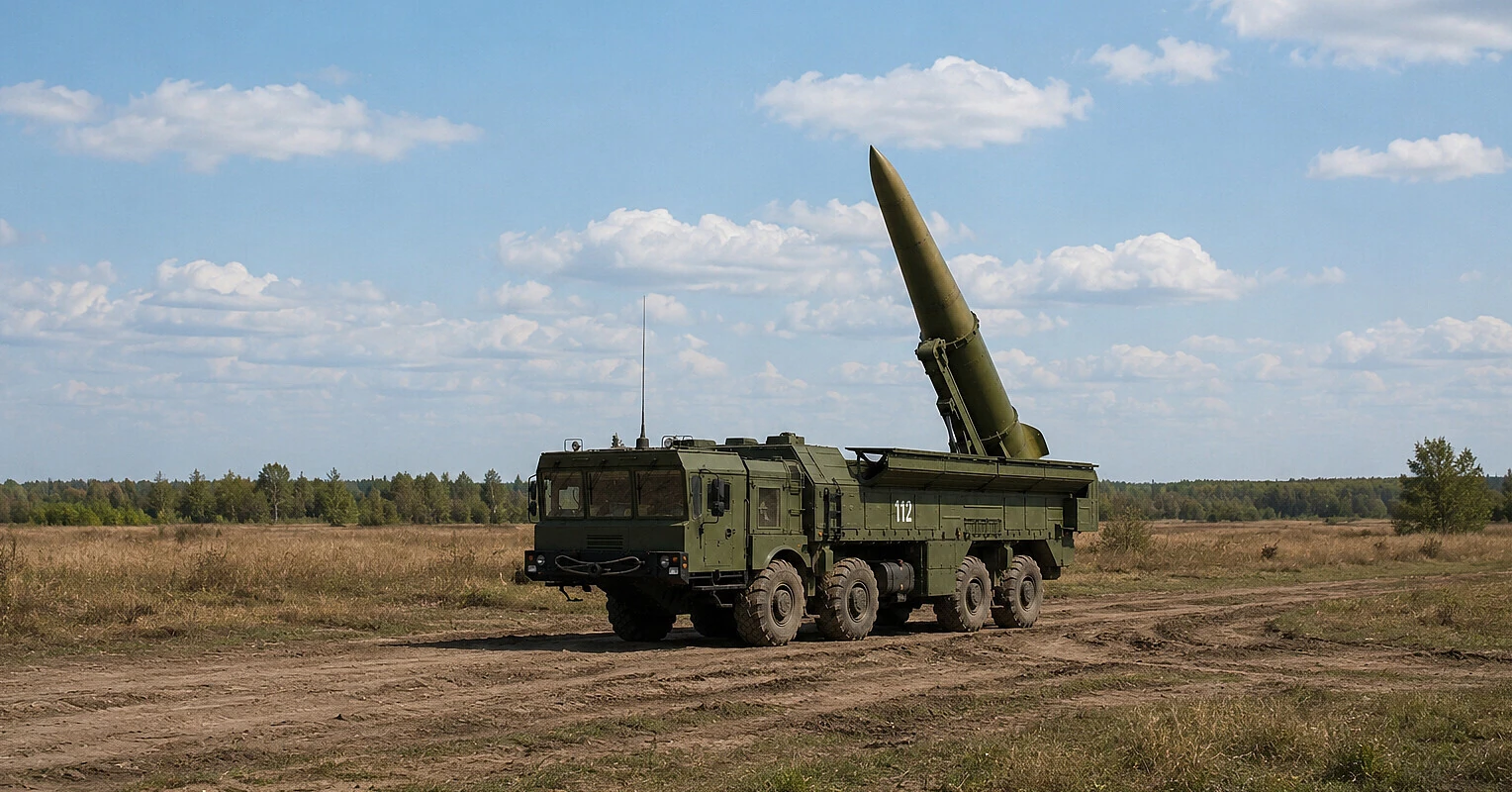
The Main Directorate of Intelligence of the Ministry of Defense of Ukraine has revealed new data about the production chain of Russian 9M723 ballistic missiles of the Iskander-M complex. Intelligence has for the first time published information about 35 enterprises, 140 missile components, and 108 people associated with their production.
Overall, the HUR database on Iskanders is much broader. It contains data on more than 170 Russian and foreign components found in the missiles used by Russia, 82 Russian and two Belarusian enterprises of production cooperation.
In addition, intelligence identified 108 key leaders and employees of these enterprises, as well as 121 units of foreign technological equipment used by Russian manufacturers.
Most revealed components are produced outside Russia
According to HUR, despite Moscow's attempts to localize production of ballistic missiles, the Iskander-M still significantly depends on imported component base.
Of the 140 components, information about which intelligence published on August 27, only about a quarter are produced by Russian enterprises.
63 components are of American origin. Another eight each are produced by companies from Switzerland and Belarus, four each from Germany and Taiwan, and three from China.
A particularly high dependence on imports was found in one of the most important elements of the guidance system — the flight information processing unit receiving data from a laser gyroscope. Of the 43 components of this unit, only five are produced in Russia.
Among the critically important foreign parts, HUR names microprocessors, programmable logic integrated circuits, memory, as well as digital-to-analog and analog-to-digital converters.
Intelligence identified products of American and Taiwanese companies DM&P Electronics, Xilinx, which is part of AMD, Atmel from Microchip Technology group, Winbond Electronics, Micron Technology and Analog Devices.
HUR also reported on the modernized version of the Iskander
At the same time, Ukrainian intelligence revealed additional information about the new Russian ballistic missile 9M723-2, conventionally called "Iskander-1000".
According to HUR, Russia first used such missiles during one of the combined strikes on Kyiv in the summer of 2026. The missile is part of the complex that intelligence calls "Bora-M".
Due to an enlarged engine and a corresponding change in the launcher, the range has increased to 550 km versus approximately 390 km for the 9M723-1 version. The other main parts of the missile, according to intelligence, remained identical to the previous modification.
HUR considers the revealed enterprises, equipment, and participants of the production chain priority targets for further international sanctions. Intelligence notes that limiting Russia's access to foreign components and production equipment should complicate the increase in ballistic missile production.
Based on materials: HUR of the Ministry of Defense of Ukraine, War&Sanctions
