
Heat reaches French cheese: why Comté and Beaufort may change taste due to drought
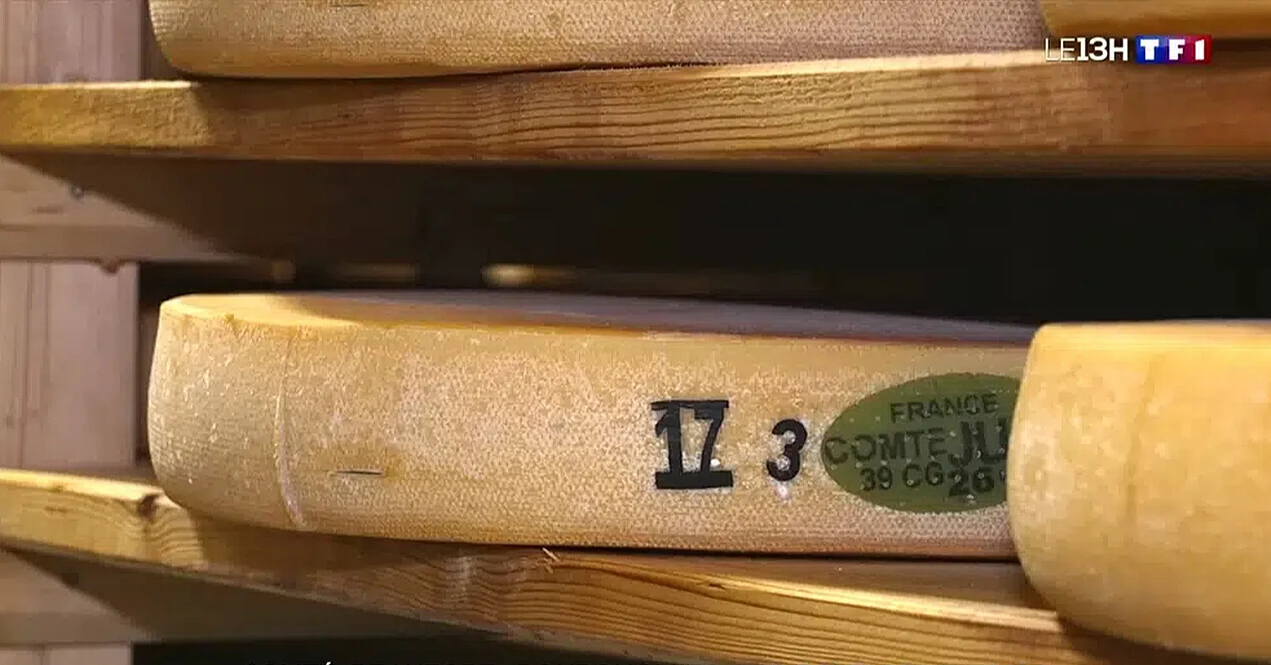
France has temporarily changed the production rules for several famous cheeses with protected origin due to unusually severe heat and drought. For producers of Comté, Beaufort and Abondance, authorities have allowed deviations from some cattle feeding requirements — traditional pastures simply lack enough grass.
At first glance, this is a technical change in agricultural rules. But for French cheese it touches the very idea of terroir: the taste of Comté and Beaufort depends not only on production technology, but also on what cows eat in a specific area.
Therefore, cheese made from milk of this summer may indeed differ somewhat from the usual. But it will not be noticeable immediately — both varieties undergo months of aging.
Why France allowed changes to AOP rules
Comté and Beaufort are products with protected designation of origin — AOP (Appellation d'Origine Protégée). This status means that a producer cannot simply make a similar cheese anywhere and call it Beaufort or Comté.
The rules define the production area, cow breeds, cheese-making methods and even animal diet.
But in summer 2026 the system encountered a climate problem. Drought affected most of mainland France, and a series of heat waves dried out alpine and Jurassic pastures.
According to the French Ministry of Agriculture, by August 10 grass growth on permanent pastures was about one third lower than the average of 1989–2018.
In some farms, farmers began feeding animals hay that is usually saved for winter. Others had to bring cows back from high mountain pastures earlier than usual.
Rules for Beaufort changed quite significantly
Especially notable relaxation was given to the production system of Beaufort — one of France's most famous alpine cheeses.
Under normal conditions, at least 75% of the herd's hay and pasture feed needs must be provided within the AOP geographical zone.
Due to the drought, this threshold was temporarily lowered to 50%. The rule applies from July 27, 2026 until animals go to pasture in 2027, but not later than May 31.
Additionally, until October 31, the basic summer diet may include not only fresh grass but also hay.
The permitted amount of supplementary feed was also increased. Under normal conditions, on high mountain pastures it is limited to 1.5 kg per lactating cow per day, and on other pastures — 2.5 kg. During the drought, up to 4 kg per day is allowed.
This is a rather substantial change for a product whose identity has been built for decades on feeding on local alpine grasses.
Comté change is more targeted
With Comté the situation is slightly different from what reports of broad cheese standard relaxation might suggest.
The official decree does not cancel the entire local feed system. From August 1 to October 31, one specific requirement is temporarily removed: that green corn used for cattle feeding must be 100% grown on the farm itself.
Thus, Comté rules are relaxed far less than Beaufort rules.
But the very fact of the exception is important: one of France’s most strictly regulated cheese sectors is forced to adapt the product origin standard to weather.
Why feed can change cheese taste
For ordinary industrial cheese, changing the feed source may pass almost unnoticed. With Comté and Beaufort it is more complicated.
Beaufort producers note that on alpine pastures one can find up to 60 plant species per square meter. It is this diversity of local vegetation that is considered one of the factors of the cheese’s characteristic color and fruity aromas.
For Comté, the link between grass and taste is also part of the official production philosophy. The cheese is made from raw milk, and industry research shows a connection between the vegetation composition of different Jura areas and the aromatic profile of finished wheels.
Therefore, changing the diet does not mean the cheese will become worse, but its profile may shift slightly.
Experts interviewed by British press suggest that cheese made from milk of a dry summer may be closer in character to winter cheese: less grassy and softer, with nutty notes.
But it is impossible to say in advance that all 2026-vintage Comté or Beaufort will taste different. The result depends on the specific farm, diet composition, milk, cheesemaker's work and subsequent aging.
Buyers will feel consequences only after several months
This story has an unusual time delay.
Comté must age for at least four months, and many wheels remain in cellars for 12, 18 or even 24 months.
Minimum aging for Beaufort is five months.
Therefore, the consequences of the July and August 2026 heat may appear on shelves only in winter or already in 2027.
That is when cheese experts will be able to compare the aromatic profiles of batches made from milk of this unusual summer.
The problem is not limited to taste
For farmers, a more serious issue is production economics.
If their own pastures and hayfields do not provide enough feed, it has to be bought and brought from other regions. This increases costs.
At the same time, some farms are already using up hay reserves intended for winter.
Heat affects animals directly as well. According to French producers, on some farms during the most difficult periods milk yields dropped by about 20%: cows eat less and struggle more with high temperatures.
This produces a double blow — less milk at higher feeding costs.
Relaxations already extend beyond the three famous cheeses
The problem turned out to be much broader than Comté and Beaufort.
The French National Institute of Origin and Quality (INAO) has already approved or is considering temporary changes to standards for a whole range of AOP products.
Among cheeses, the list includes:
- Comté;
- Beaufort;
- Abondance;
- Reblochon;
- Cantal;
- Bleu d'Auvergne;
- Fourme d'Ambert;
- Fourme de Montbrison;
- Rocamadour;
- Bleu du Vercors-Sassenage.
The relaxations also affected some wines, ciders and other agricultural products with protected origin.
What if such summers become the norm
For now, France sees the changes as a temporary response to an exceptional drought. INAO emphasizes that they do not cancel the fundamental characteristics of protected products.
But here a more complex question arises.
AOP is built on the assumption that a certain territory gives a product a stable set of natural characteristics: climate, plants, soil and traditional production methods.
If the climate of that territory itself changes, complying with unchanged rules becomes increasingly difficult.
French cheesemakers are already discussing not only emergency exceptions but also long-term adaptation — managing feed reserves, changing pasture organization and reducing farms' vulnerability to recurring droughts.
Thus, the summer of 2026 became an unusual experiment for French cheese: for the first time the question is not only whether a farm can withstand the heat, but also whether these famous cheeses will retain their familiar taste if heat and drought are changing the very conditions in which they are produced.
