
Jellyfish again shutdown reactors at France's largest nuclear power plant: why natural risks are increasingly impacting energy
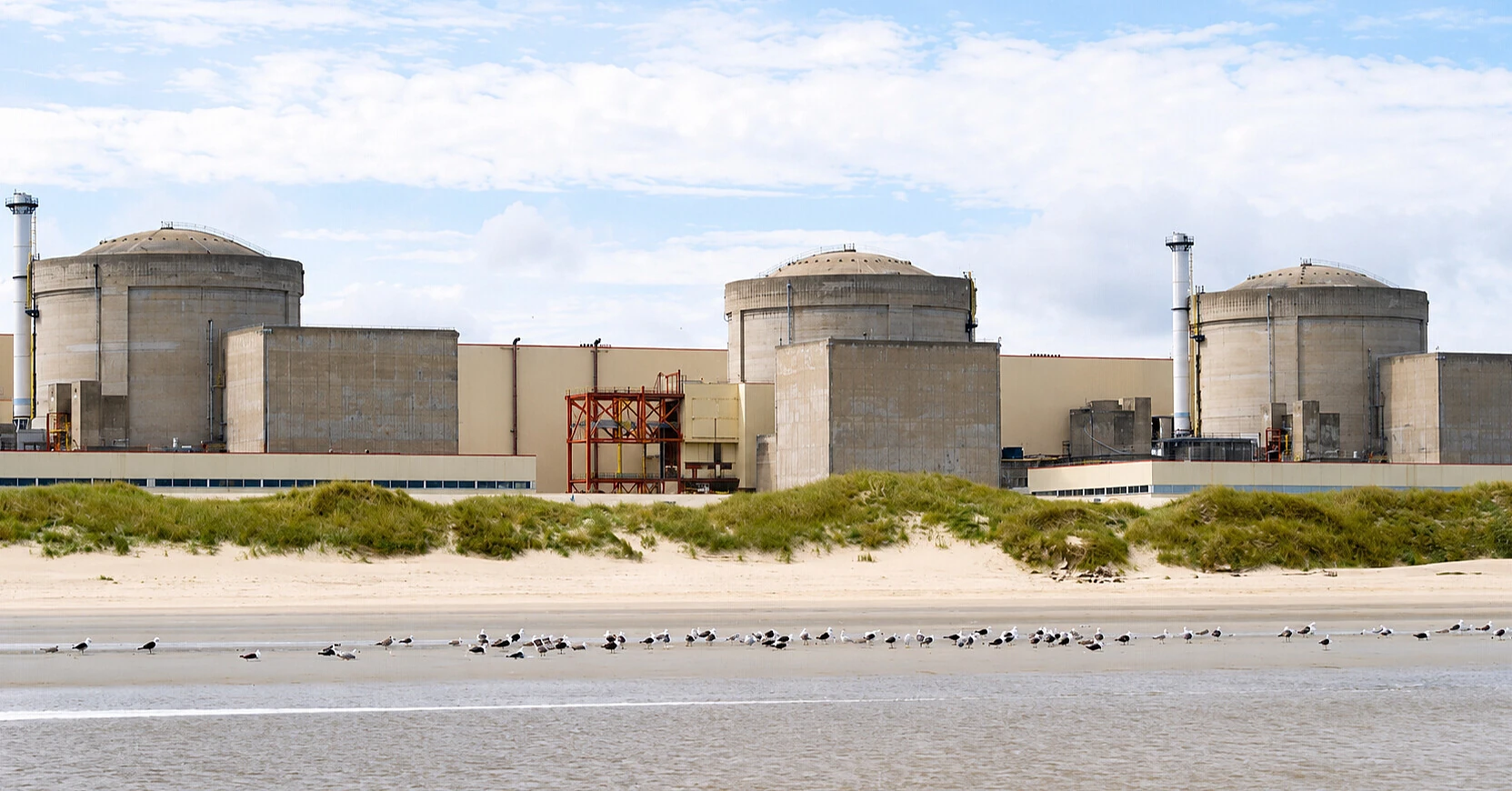
France's Gravelines nuclear power plant has faced a massive jellyfish invasion for the second time in August. A new wave has led to the shutdown of two power units and a reduction in capacity at two others.
As of the latest EDF update, none of the six reactors at the largest nuclear power plant in Western Europe was operating at full capacity: units no. 3 and no. 6 were shut down due to jellyfish, no. 1 and no. 2 were operating at reduced capacity, no. 4 remained unavailable after a technical problem during a restart attempt, and no. 5 was undergoing a scheduled ten-year maintenance.
At the same time, no nuclear safety threat arose. The reactors are shut down precisely in order to prevent problems with the cooling system.
What happened at Gravelines
A new massive wave of jellyfish approached the plant on 26 August. At around 16:00, EDF preemptively shut down unit no. 3 after marine organisms began to accumulate in the filtering system of the seawater intake station.
Simultaneously, the operator reduced the capacity of unit no. 2.
Overnight from 26 to 27 August, the situation worsened. EDF also shut down reactor no. 6, and the capacity of unit no. 1 was reduced as a precautionary measure.
According to the German news agency dpa, citing an EDF representative, more than 200 tonnes of jellyfish appeared in the vicinity of the plant overnight.
To combat accumulations of marine organisms near the plant, several vessels operate around the clock. Jellyfish are caught near the water intake and moved further out to sea.
How jellyfish can shut down a nuclear reactor
The problem does not arise within the nuclear part of the plant.
Gravelines is located on the coast of the North Sea and uses huge volumes of seawater for cooling. Water enters through a special channel to the pumping station, passes through preliminary gratings and rotating drum filters, and is then used in the cooling system.
If a large number of jellyfish approach the water intake at the same time, the filters start to become clogged.
As a result, water flow decreases and there is a risk of disruption to the normal operation of the pumps. The plant's automation reacts to such a situation by reducing capacity or shutting down the reactor.
This was exactly what happened on 10 August, when an accumulation of jellyfish gradually clogged the filters of units no. 3 and no. 4 and led to the loss of some circulation pumps. Safety systems automatically shut down both reactors.
The French regulator classified that episode at level zero on the International Nuclear Event Scale (INES) — below the level of events that have significance for nuclear safety.
This is the second invasion in one month
The current episode is particularly notable because the plant had only just begun to return to normal operation after the previous massive appearance of jellyfish.
On 10 August, units no. 3 and no. 4 shut down automatically. Unit no. 2 was then also shut down preemptively, and the capacity of unit no. 1 was reduced by about half.
Unit no. 3 was reconnected to the grid on 18 August — but just eight days later it had to be shut down again for the same reason.
A similar situation occurred in August 2025. Then, due to a sudden arrival of jellyfish, four Gravelines reactors shut down in succession.
Thus, for the plant, the problem no longer appears to be a completely isolated event.
After last year's incident, EDF invested in protective measures
After the events of 2025, EDF conducted a separate analysis and enhanced its sea monitoring system.
Cameras were installed on the filters and water intake channel, allowing operators to continuously monitor the situation from the control room. Personnel training was strengthened, and a sea observation system involving local fishermen was established.
The partnership with the organization France Pêche Durable et Responsable is set for three years and costs EDF about €1.5 million. In addition, the company pays approximately €30,000 per year for surveillance involving the French sea rescue service SNSM.
If the concentration of jellyfish becomes dangerous, sampling and targeted fishing by trawlers are planned.
However, the events of August 2026 have shown the limits of such measures: monitoring allows earlier detection of the threat and safe reduction of the plant's load, but it does not necessarily stop a huge swarm moving towards the water intake.
Can climate change be blamed?
Caution is needed here. EDF has not yet determined the cause of this particular jellyfish invasion and states that it continues to study the phenomenon together with specialists.
Jellyfish are regularly found along the northern coast of France, and the size and movement of their swarms depend on several factors at once — water temperature, currents, food availability, wind and the state of the marine ecosystem.
At the same time, French specialists note that reports of large accumulations in this area are becoming more frequent, and some of the factors contributing to jellyfish proliferation may be intensified by warming seas.
Therefore, it would be incorrect to claim that the specific 200 tonnes of jellyfish appeared solely due to global warming. But recurring events clearly highlight another problem: energy infrastructure is increasingly faced with natural conditions that go beyond previous operating ranges.
This summer, French nuclear power plants have problems beyond jellyfish
At the other end of France, nuclear stations are facing the opposite situation — there is not too much water, but it is too warm.
For example, in August EDF shut down an operating reactor at the Golfech nuclear power plant due to a rise in temperature of the Garonne River. According to environmental regulations, when the average daily water temperature exceeds 28°C, production must be reduced or temporarily stopped to prevent the plant from overheating the river with additional heat discharges.
The Bugey nuclear power plant also had to change its operating mode due to high temperature of the Rhône.
The result is an unusual picture: coastal Gravelines is limited by jellyfish in seawater, while river-based plants are limited by heat, temperature and water levels.
Why water is becoming one of the key risks for the energy sector
Power plants may seem primarily like engineering structures made of steel, concrete and fuel, but their operation is closely tied to the surrounding environment.
According to EDF's own data, around 90% of the group's electricity production depends directly on water.
For nuclear power plants, it is needed primarily for heat removal. Therefore, changes in river temperatures, droughts, low water levels, floods, storms and biological phenomena in the sea can limit production even when the reactors themselves are technically sound.
EDF already considers climate risk as one of the priority risks for its business. The company estimates spending and investments for adaptation of its nuclear, hydropower and island assets in France at around €8.7 billion by 2040.
Why Gravelines is especially important for France
The Gravelines site operates six reactors with a capacity of about 900 MW each. The total installed capacity of the plant exceeds 5.4 GW.
In 2025, the plant generated 32.27 TWh of electricity — a volume equivalent to roughly 60% of the annual consumption of the Hauts-de-France region.
Therefore, even the temporary loss of several power units is no longer a local technical problem of a single enterprise.
EDF states that the current jellyfish invasion does not pose a threat to the stability of the French power system. But the repetition of such episodes makes the issue of resilience increasingly economic: the plant has to invest in additional monitoring, protection of water intakes and backup scenarios, and lost operating hours mean lost generation.
The history of Gravelines shows a new type of energy risk: a reactor may be fully operable, there may be enough fuel, there may be demand for electricity — but production still has to be curtailed because the sea around the plant has changed.
