
Death toll from floods in Nepal and China approaches 600
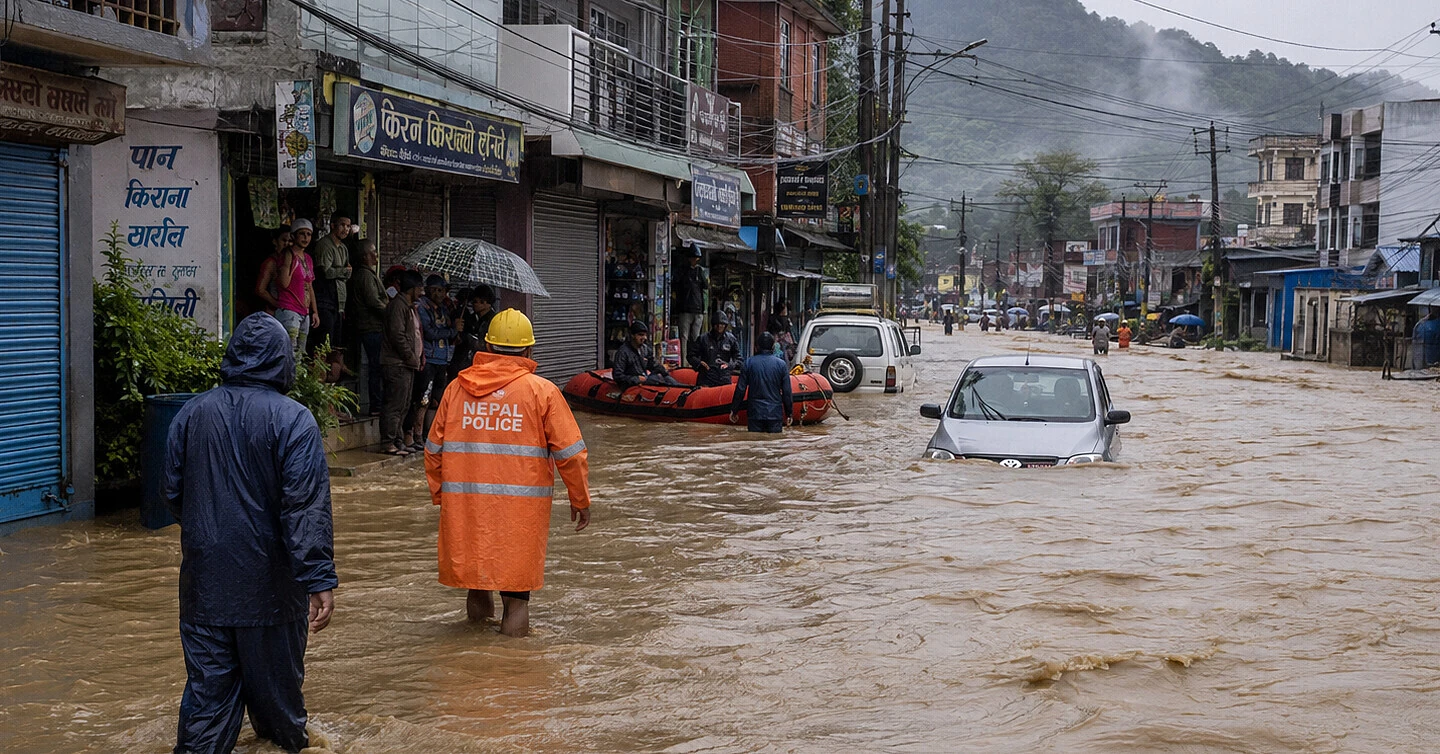
The death toll from catastrophic floods and mudslides on the border between Nepal and China has approached 600. According to the latest data from the authorities of both countries, at least 584 people have been confirmed dead, and around 2,500 are listed as missing.
The most severe situation has developed in Nepal. The National Disaster Risk Reduction and Management Authority reported 579 dead and 1,924 missing. More than 3,700 people were rescued.
On the Chinese side, in the Tibet Autonomous Region, authorities confirmed the deaths of five people. Another 558 people are missing after a mudslide in the Gyirong border crossing area.
Thus, according to confirmed data from the two countries as of the evening of August 28, the death toll has reached at least 584, and the missing — 2,482. Search operations are ongoing, so the figures may change significantly.
Ukrainians remain among the missing
Among the people whose fate remains unknown in Nepal are citizens of Ukraine.
The Ministry of Foreign Affairs of Nepal reported that 53 Ukrainians were in the disaster zone, and as of the data update on August 28, none of them had yet been removed from the missing persons list.
Earlier, the Ukrainian Foreign Ministry also reported that the Nepalese tourist police consider 53 Ukrainian citizens missing. Diplomats maintain contact with local authorities and relatives of the tourists.
In total, Nepalese authorities were checking information about 632 foreigners from 33 countries who were in the affected region. By the time of the official update, 121 people had been found, and another 511 foreign citizens remained on the missing lists.
The disaster may have been caused by a glacier collapse
The natural disaster occurred on August 26 in a high-altitude area near the Nepal-China border.
Preliminary data and analysis of satellite images indicate that the cause of the disaster was a massive collapse of rock and part of a glacier. A huge mass of ice, stones, and soil fell into the valley, causing a sudden rise in water and a flow of mud and debris.
The flood affected the basins of the Bhote Koshi and Trishuli rivers. In some areas, the powerful flow washed away houses, cars, roads, and bridges.
Critical infrastructure was also severely damaged. Nepalese authorities reported damage to roads, bridges, and hydropower facilities. Some settlements were cut off from the outside world, so rescuers and victims have to be transported by helicopters.
New flooding threat emerges
After the collapse in the mountains, a temporary lake formed, held back by a mass of soil and rocks. Rescue services fear that the natural dam may not withstand the water pressure and cause a new flood wave.
Due to this threat, constant monitoring of water levels is underway, and residents of potentially dangerous areas are urged to move to safe places.
On the Chinese side, the main destruction was recorded near the Gyirong border crossing. The mudslide destroyed some roads, disrupted power supply and communication. Chinese authorities sent rescue and medical units to the region.
In Nepal, the army, police, and other security services are involved in the search and rescue operation. According to authorities, nearly 15,000 personnel from security and rescue structures were mobilized to deal with the consequences of the disaster.
International humanitarian organizations estimate the number of people who may need assistance at tens of thousands.
Sources: Associated Press, Nepal Ministry of Foreign Affairs, Government of China
