
US begins new wave of strikes on Iran in the Strait of Hormuz area
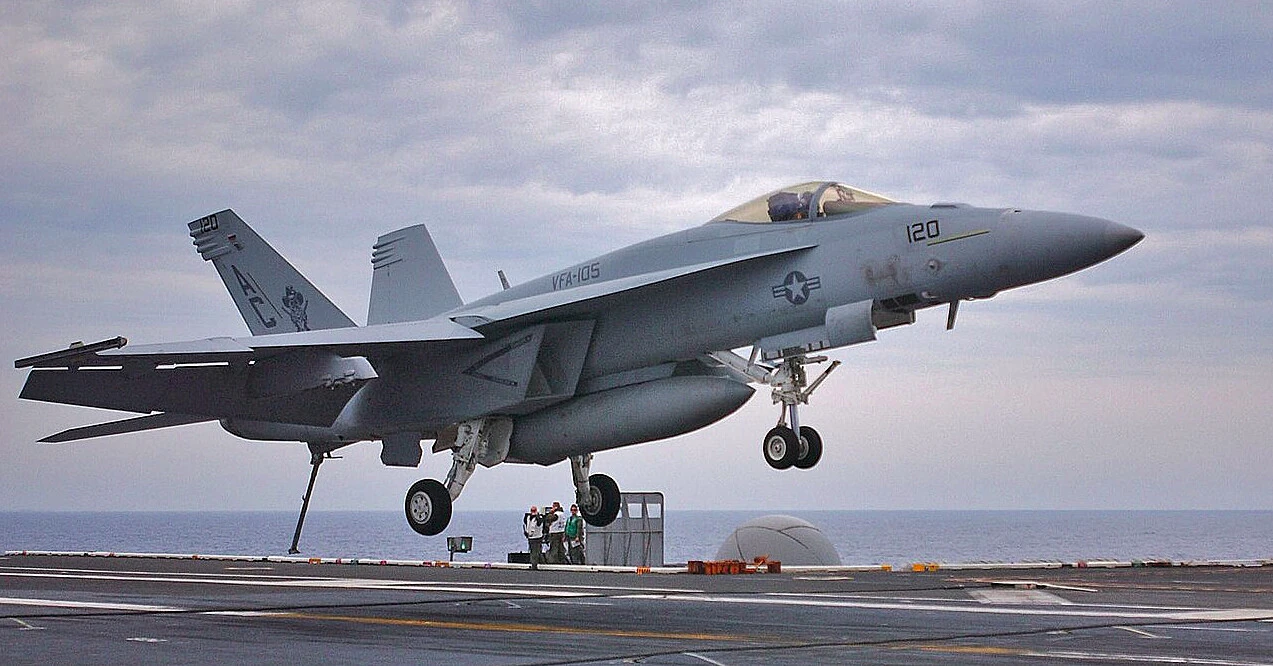
The US armed forces on Tuesday, September 1, began a new wave of strikes on Islamic Revolutionary Guard Corps (IRGC) targets in Iran. Washington called the operation a response to attempts to attack commercial vessels in the Strait of Hormuz and US military personnel in the region.
The US Central Command (CENTCOM) said the strikes began at 12:00 p.m. US East Coast time (7:00 p.m. Kyiv time). The command initially did not disclose the exact number of targets hit or the aircraft or missiles involved.
According to Axios, American forces are striking targets along the southern coast of Iran near the strategically important Strait of Hormuz. Among the areas where potential targets are located, the publication named Bandar Abbas, Jask, Chabahar, Konarak, Minab and Sirik, as well as Qeshm Island. The aim of the operation is to prevent Iran from rebuilding radar, air defense and anti-ship capabilities that could be used against ships in the strait.
Trump called strikes "large-scale and powerful"
US President Donald Trump confirmed the operation and said American forces were striking Iranian targets near the Strait of Hormuz. According to him, the reason was two recent escalation attempts by Tehran.
The first was linked to an attempt by Iranian forces to re-lay naval mines in the Strait of Hormuz. Trump stressed that American forces had previously cleared international routes of mines and would not allow Iran to again block shipping.
The second reason the president cited the launch of eight missiles at US military facilities in Jordan. Jordanian armed forces previously confirmed intercepting eight missiles that had entered the country's airspace. According to American data, there was no serious damage or casualties from this attack.
Trump warned that if Iran retaliates again, the US will deliver a significantly stronger strike. He also said that Washington still has the option of an even larger-scale military operation if the current escalation continues.
Exchange of strikes resumed after a month-long pause
The current operation was preceded by a new exchange of strikes between the US and Iran in late August — the first in about a month. American forces struck two Iranian missile launchers on Larak Island in the Strait of Hormuz.
CENTCOM said IRGC units were preparing to use these launchers to deploy naval mines. The American command called the operation limited and precise and stated that Iranian forces posed an immediate threat to civilian shipping.
Following the strike on Larak, Iran fired ballistic missiles at sites hosting American forces in Jordan. The IRGC claimed the targets were King Hussein and Al-Azraq airbases. Jordan said eight missiles were destroyed by air defense systems.
Tehran also claimed an attack on American forces in the United Arab Emirates. UAE authorities confirmed intercepting an Iranian drone but denied the claim that Al-Minhad airbase had been hit.
US tries to keep Strait of Hormuz open
The Strait of Hormuz remains the central arena in the six-month US-Iran confrontation. During the summer, American forces struck Iranian coastal surveillance systems, anti-ship missiles, air defense sites, command posts and mouvements for laying naval mines.
In late August, CENTCOM announced that internationally recognized shipping channels in the strait had been cleared of Iranian mines. American forces simultaneously organized a protected route for tankers passing through Hormuz. According to US officials, millions of barrels of oil are transported through it daily.
The new escalation has already increased pressure on energy markets. Amid the US strikes and reports of tanker attacks, Brent crude rose above $94 a barrel on Tuesday. The Strait of Hormuz remains one of the key routes for world oil supplies, so any prolonged disruption to shipping can quickly reflect on commodity prices.
Based on materials from: CENTCOM, Axios, Associated Press
