
Estonian Parliament elects Ülle Madise as new president of the country
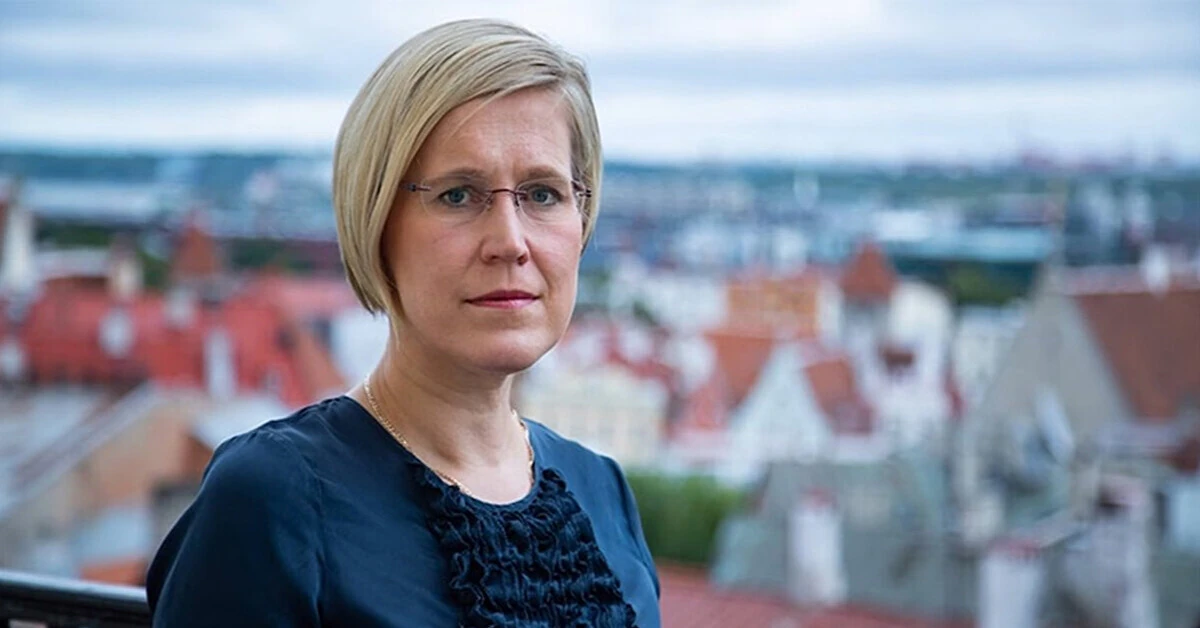
The Estonian Parliament elected Chancellor of Justice Ülle Madise as the country's next president. She received 71 votes from deputies, with the required 68. Madise won in the first round and will replace Alar Karis as head of state on October 12.
The election took place on September 2 at an extraordinary session of the Riigikogu. The vote was secret. Of the 101 deputies, 78 received ballots: 71 voted for Madise, while seven ballots were left blank. There were no invalid ballots.
To be elected president in the parliament, a candidate must obtain the support of two-thirds of the full composition of the Riigikogu — at least 68 deputies. If Madise had not received the required number of votes, a second and, if necessary, a third round would have been held on September 3. In case of failure in parliamentary voting, the president would have been elected by an electoral college. However, the result of the first round completed the procedure.
Madise was nominated by 75 deputies
Madise approached the election essentially as the sole candidate of the parliamentary majority. Her official nomination on August 24 was supported by 75 deputies — representatives of the Reform Party, Eesti 200, Isamaa, the Social Democratic Party, and deputies not in factions. The signatures of 21 deputies were sufficient to register a candidate.
The ruling coalition of the Reform Party and Eesti 200 did not have the 68 votes required to elect the president, so the candidacy needed opposition support. The turning point was the support from Isamaa, after which Madise formed a sufficient cross-party majority to win in the first round.
During the discussion stage, other possible contenders were considered, notably the rector of Tallinn University of Technology, Tiit Land. However, his candidacy was not officially registered, and Madise ultimately became the sole candidate on the ballot.
The Centre Party did not support her nomination. Seven deputies from the Centre Party faction announced in advance that they would be present in the hall during the election but would not receive ballots. Some deputies from other factions were also absent. At the start of the session, 89 parliamentarians registered, while only 78 participated in the vote.
EKRE tried to challenge her participation in the election
The presidential campaign was preceded by a legal dispute over whether the incumbent Chancellor of Justice could run for head of state without first resigning from office.
Nine deputies of the Conservative People's Party of Estonia (EKRE) appealed the registration of Madise as a candidate on August 27. They argued that her participation in the presidential election while retaining the office of Chancellor of Justice contradicted the principles of separation of powers and the requirement of independence of this institution.
However, the Supreme Court of Estonia rejected the appeal on September 1. The court found that legislation does not require the Chancellor of Justice to resign before being nominated for president. At the same time, Madise is obliged to maintain political independence while performing the duties of Chancellor of Justice until she takes the new office. The court found no signs of violation of this requirement.
Madise called for increasing trust in society
Before the vote, Madise spoke to the deputies. One of the central themes of her speech was trust between the state and society. She opposed excessive state interference in the lives of citizens and entrepreneurs and emphasized that the state cannot assume that it always knows better than a person how to live or run a business.
After the results were announced, Madise thanked the deputies for their support and trust and said she would try to justify it.
Who is Ülle Madise
Ülle Madise is 51 years old, born on December 11, 1974 in Tartu, and is a lawyer by education. A significant part of her professional career is related to constitutional and state law.
She worked at the Ministry of Justice, was an adviser and head of the secretariat of the constitutional commission of the Riigikogu, held a leadership position in the National Audit Office, and was a legal adviser to the President of Estonia. Madise also taught state and constitutional law at the University of Tartu and Tallinn University of Technology.
Since 2015, Madise has served as Chancellor of Justice — an independent constitutional institution that monitors the compliance of normative acts with the Constitution and protects the fundamental rights of citizens. In December 2021, the parliament appointed her Chancellor of Justice for a second seven-year term, which began in April 2022.
Current President of Estonia Alar Karis earlier decided not to run for a second term. The president's term is five years, and one person may hold the office for no more than two consecutive terms.
Madise will officially take office on October 12 after taking the oath before the Riigikogu. From that moment, Alar Karis's powers will terminate, and her five-year presidential term will begin.
Based on materials from: ERR, Riigikogu, Electoral Commission of Estonia, Supreme Court of Estonia
