
The Economist: Ukraine prepares for the toughest winter campaign by the Russian Federation
Ukraine is preparing for the possibility that the Russian campaign targeting the energy sector in the winter of 2026–2027 may prove even more destructive than the previous one. The country is rapidly strengthening its power grids, building reserve generation capacity, and protecting key facilities; however, the main weak spot remains the shortage of missiles to intercept Russian ballistic weapons.
This is reported by The Economist, which examined Ukraine's energy sector preparations for the heating season and spoke with officials, energy industry professionals, and experts.
According to the publication, Ukraine is now better prepared for winter than at any time since the start of the full-scale war. A large-scale program to enhance the resilience of the energy system is ahead of schedule, and approximately half of the planned work has already been completed.
At the same time, the country has accumulated the necessary gas reserves. According to the latest data from the Ministry of Energy, underground storage facilities contain 14.6 billion cubic meters — the target for the base-case winter scenario was reached a month ahead of plan.
Efforts are being made to reduce the dependence of the energy system on large facilities
After the difficult winter of 2025–2026, Ukrainian authorities developed new energy resilience plans. They include creating sufficient local generation for critical infrastructure in major cities, enhancing the physical protection of key sites, and decentralizing heating and power supply.
Separately, backup water supply systems are being worked out, because a prolonged power outage could simultaneously disrupt water supply, sewage systems, and district heating.
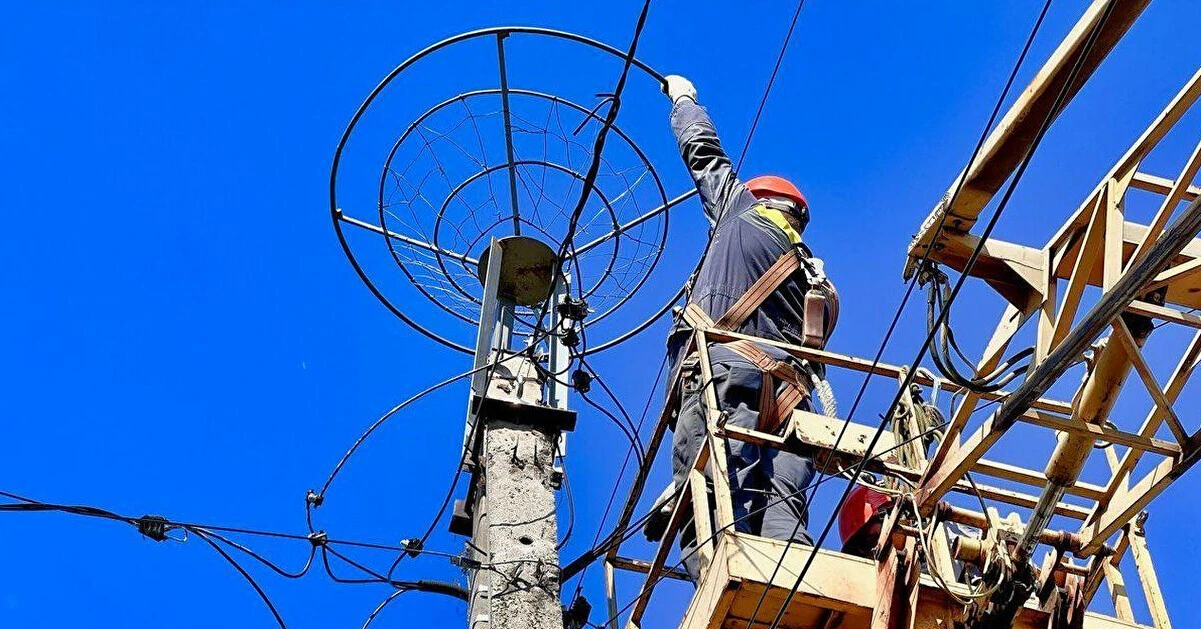
The Economist notes that work has accelerated especially noticeably in Kyiv. Until this year, the capital's 110 kV transformers had almost no real physical protection. Now the State Agency for Restoration has reinforced about two dozen such facilities with meshes and concrete structures.
Agency head Serhiy Sukhomlyn states that the protection created can withstand most attacks, except for a direct missile hit.
The main problem remains Russian ballistic missiles
Physically protecting the largest power plants is much more difficult. DTEK CEO Maksym Timchenko noted that large thermal power plants are too big for complete coverage and a concentrated strike with several ballistic missiles can knock out such a facility.
At the same time, Russia continues to ramp up production of ballistic missiles. According to Ukrainian estimates, Moscow aims to reach about 100 such missiles per month. Volodymyr Zelenskyy previously stated that Russian stockpiles may amount to about 600–630 ballistic missiles.
Meanwhile, Ukraine's missile defense situation has worsened. In August, Zelenskyy reported that since the beginning of 2026 the country has been receiving almost three times fewer anti-ballistic missiles than before.
To get through the winter, Ukraine is trying to secure a stockpile of 300–360 missiles for Patriot systems. However, global production capacity is limited, and part of the American stockpile was needed due to the war in the Middle East.
Russia has also changed its drone tactics
Another growing threat cited by The Economist is new Russian jet-powered drones. They are much faster than ordinary Shahed drones and harder for mobile fire teams to intercept.
According to the publication's sources, the cost of one such drone has already dropped to around $50–70 thousand and may decrease further as production scales up.
In recent months, the intensity of Russian air attacks has also increased. According to Timchenko, the number of strikes has set new monthly records for four months in a row.
Kyiv, Odesa, and Kryvyi Rih remain especially vulnerable
The Economist suggests that one of the main targets of Russia's winter campaign may be around 140 large substations of Ukrenergo, which convert high voltage for distribution networks.
However, a general shortage of electricity may not occur in winter: due to reduced industrial consumption, Ukraine could potentially have a surplus of generating capacity. The main issue could be delivering electricity to specific cities after local generation and transmission nodes are destroyed.
The publication names Kyiv, Odesa, and Kryvyi Rih as the most vulnerable.
Particular risks exist for the capital. Some substations around Kyiv lack full redundancy, and damage to the lines connecting the city to nuclear power plants could significantly limit electricity transmission.
Municipal utilities are also vulnerable. According to The Economist, around 2.5 thousand of Kyiv's approximately 15 thousand buildings still have no backup heat source. That is why the capital's authorities are simultaneously preparing plans for targeted assistance to people with limited mobility and other vulnerable populations in case of prolonged utility disruptions.
At the same time, Ukrainian authorities emphasize that preparations for winter continue on several fronts. In April, Zelenskyy reported more than 400 new facilities for energy and infrastructure resilience, and in August the National Security and Defense Council separately approved a comprehensive resilience plan for Kyiv.
Thus, Ukraine enters the next winter with larger gas reserves, additional generation, and much better protected infrastructure. However, the development of Russian strike capabilities is progressing simultaneously with the strengthening of Ukraine's energy system, and the shortage of anti-missiles for Patriot systems remains a factor that cannot be compensated solely by concrete shelters and backup generation.
Based on materials from: The Economist, Office of the President of Ukraine, Cabinet of Ministers of Ukraine
