Two major electrical substations attacked in Germany within 24 hours
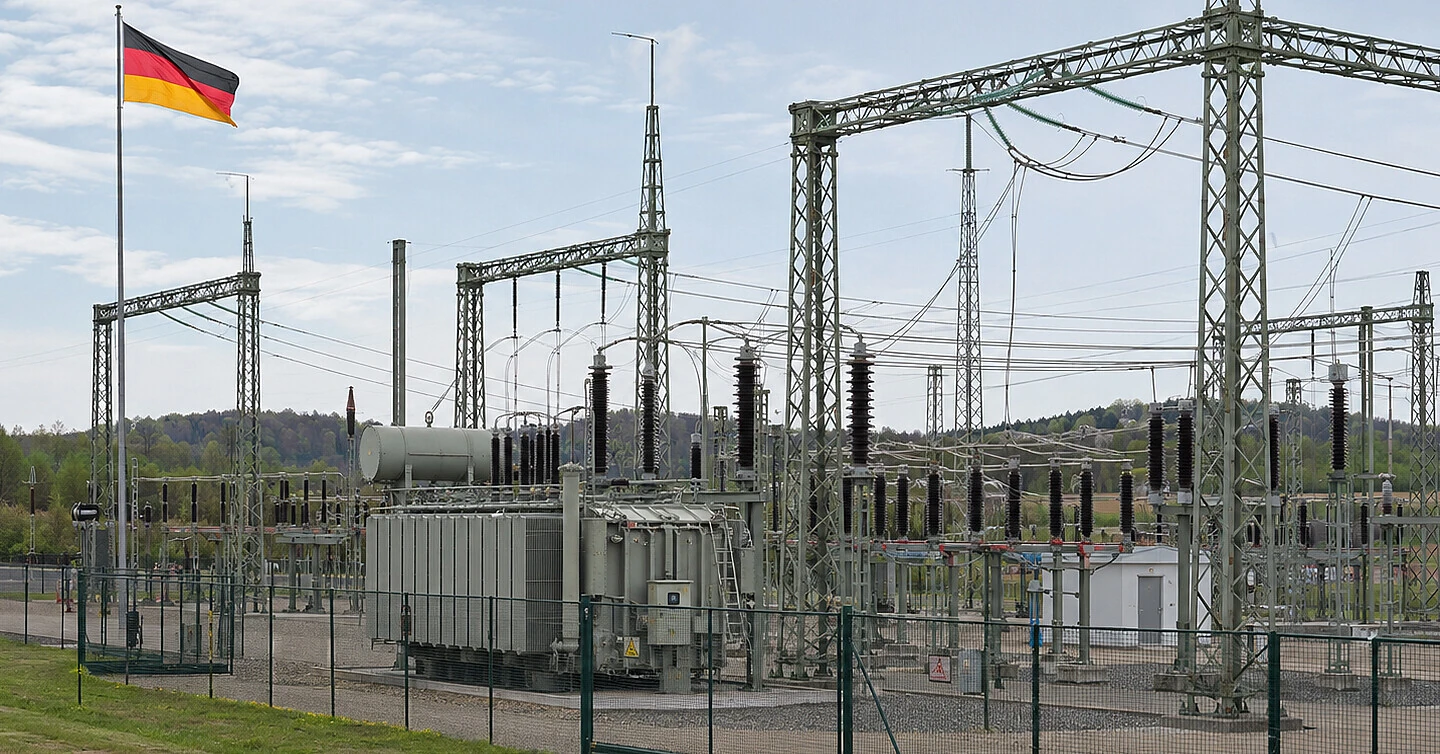
In Germany, unknown individuals attacked two major electrical substations in Brandenburg and North Rhine-Westphalia within 24 hours. In both cases, the perpetrators used launching devices to throw conductive material onto high-voltage lines and cause a short circuit. Investigators found substantial similarities between the acts of sabotage and are checking whether they could be part of a coordinated attack on the German power grid.
This was reported by Tagesschau, citing the police, prosecutors, and authorities of the two federal states.
The first attack took place on the morning of September 1 near the Turnow-Preilack substation, not far from the Jänschwalde coal-fired power plant in Brandenburg. That evening, a nearly identical incident occurred at a facility operated by the transmission system operator Amprion in Bergheim, near Cologne.
More than a dozen homemade devices found near Jänschwalde
In Brandenburg, unknown individuals placed homemade devices resembling rockets, equipped with launching charges, under the power lines.
According to state Interior Minister Jan Redmann, by the morning of September 2, investigators had found more than a dozen such devices. Some had not gone off, and launchers and remnants of already fired projectiles were also found.
The attack mechanism was to use a pyrotechnic charge to throw conductive material onto a high-voltage line and thereby create a connection to the ground. This was intended to cause a short circuit and disrupt the power supply.
At least two devices went off. Electrical discharges occurred near the lines, after which one of the units of the Jänschwalde power plant automatically shut down.
However, backup systems operated normally, so there was no large-scale power outage.
According to Redmann, installing the devices required certain technical knowledge and prior preparation. The investigation assumes that the perpetrators may have been at the site several days before the attack.
Police have initiated proceedings, in particular, on suspicion of disrupting public utilities, causing an explosion, destroying essential means of production, and forming a terrorist organization.
A similar attack occurred near Cologne in the evening
At around 8:00 PM on September 1, police received a report of a technical malfunction at a substation in Bergheim-Rheidt in North Rhine-Westphalia.
After a short circuit, several lines went out of service. However, investigators quickly concluded that this was not a technical accident but deliberate interference.
In a nearby cornfield, police found several launching devices. According to the investigation, the perpetrators used them to launch wire or other conductive material toward the power lines.
Witnesses reported loud bangs and bright flashes. As a result, automatic protection of the energy infrastructure was activated, and some generating units at the Niederaußem and Neurath power plants were disconnected.
Meanwhile, significant power outages in neighboring cities and towns were also avoided.
Some generating units began returning to service as early as September 2. Full restoration of the disconnected capacity is expected within a few days.
Investigators saw an almost identical pattern
Prosecutors and police in Germany have already officially confirmed parallels between the two episodes. In both cases, homemade launching devices with pyrotechnics were used, and the aim was to place conductive material on high-voltage lines.
Brandenburg's Interior Minister Jan Redmann said that signs of a possible connection between the attacks are strengthening. According to him, it cannot be ruled out that both episodes are part of a coordinated operation against Germany's energy infrastructure.
In this regard, the Federal Public Prosecutor's Office is examining whether to take over the investigation.
Investigators in different federal states have begun exchanging information. Specialists have also been brought in to examine the found devices for DNA and other traces.
In North Rhine-Westphalia, police intend to determine which mobile phones were in the vicinity of the substation at the time of the attack. Law enforcement is also collecting photos and video recordings from witnesses.
Foreign involvement and left-wing extremism being examined
North Rhine-Westphalia's Interior Minister Herbert Reul said that the investigation is being conducted on suspicion of "anti-constitutional sabotage."
Main leads include sabotage organized or directed by a foreign state, as well as activities by left-wing extremists. At present, none of the leads have been confirmed, and the specific perpetrators have not been identified.
Authorities therefore have not yet attributed responsibility for the two attacks to any country or organization.
After the incidents, security measures at similar critical infrastructure facilities in Germany were heightened.
The attacks occurred against the backdrop of a series of incidents involving Germany's critical and defense infrastructure. Earlier, the German government officially held Russia responsible for an attempted drone attack near Leipzig/Halle Airport. In Poland, on September 2, it was also stated that a fire at the WB Electronics plant, which produces components for unmanned systems, was deliberate sabotage.
However, German investigators have not yet claimed a proven connection between the attacks on the substations and these events.
Sources: Tagesschau, Tagesschau, Brandenburg Police, Essen Police