
Hungary welcomed the Rada's decision on Soviet repressions in Transcarpathia
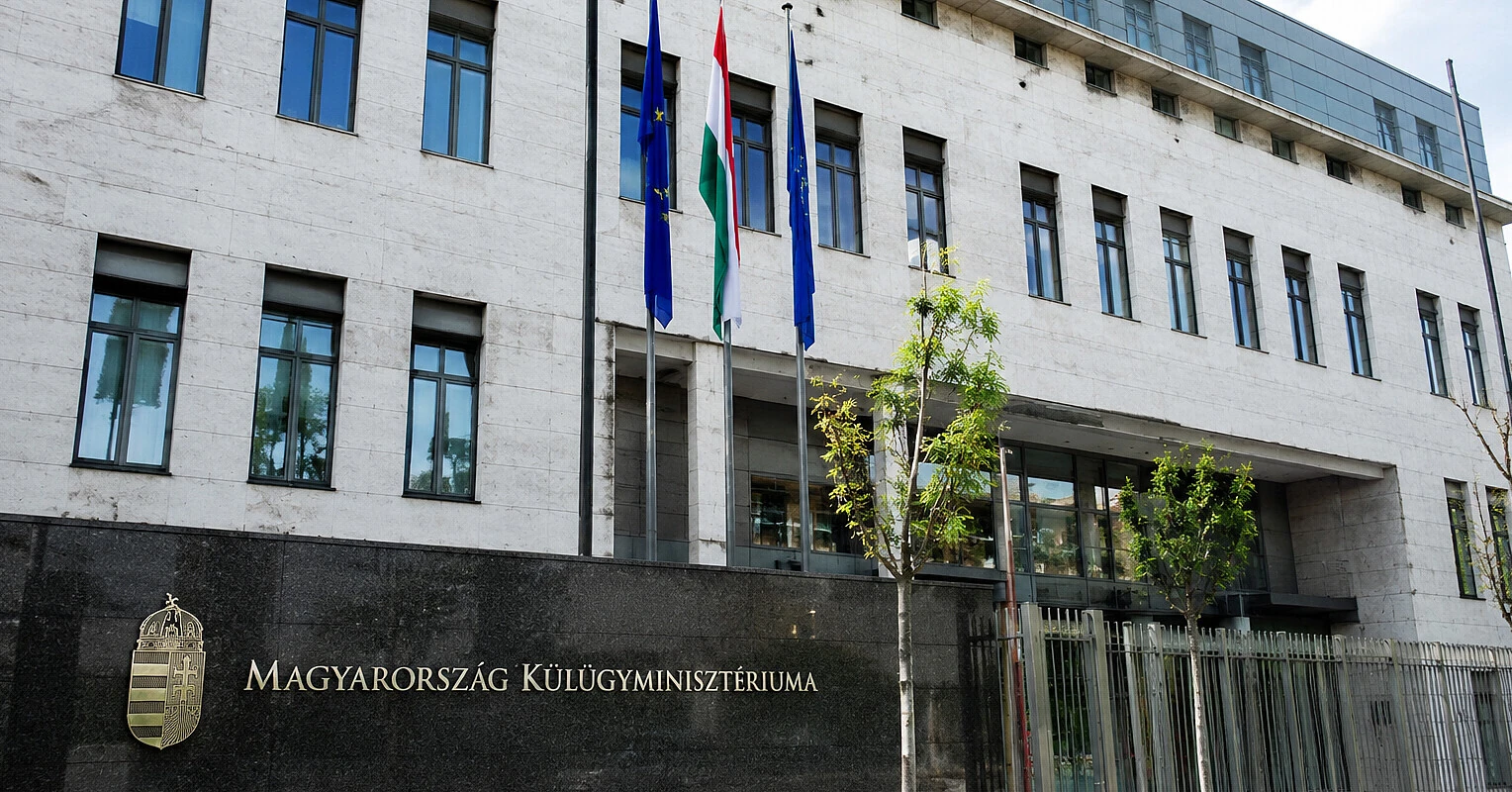
The Ministry of Foreign Affairs of Hungary welcomed the decision of the Verkhovna Rada to officially recognize and condemn the crimes of the Soviet military administration against the residents of Transcarpathia in 1944–1946. Budapest called the decision of the Ukrainian parliament an important step towards restoring historical truth.
This is stated in a statement by the Hungarian foreign policy department.
The Hungarian Foreign Ministry reminded that in 1944–1946 the Soviet occupation authorities carried out mass detentions and deportations of local residents in Transcarpathia.
In particular, tens of thousands of Hungarian- and German-speaking men aged 18 to 50 were arrested and sent deep into the Soviet Union for forced labor.
These deportations were called the "little robot" — from the distorted Russian expression "little work," which Soviet soldiers used to explain to the men the need to appear supposedly for short-term work.
In reality, many of the detainees were sent to camps. Due to harsh conditions of detention, forced labor, disease, and hunger, thousands of people died.
Budapest called the Rada's decision a "worthy tribute" to the victims
The Hungarian foreign policy department positively assessed the decision of the Ukrainian parliament.
"Today's decision of the Ukrainian parliament is a worthy tribute to the memory of the victims and an important step towards understanding the Soviet past and establishing the truth about these events," — says the statement of the Hungarian Foreign Ministry.
Budapest also emphasized that it opposes any forms of persecution and discrimination on ethnic grounds.
Hungary declared its readiness to cooperate with Ukraine both in further research into the events of the Soviet period and in preserving the memory of their victims.
The Rada unanimously supported the resolution
The Verkhovna Rada on September 3 adopted resolution No. 16005 on the recognition and condemnation of the crimes of the Soviet military administration in Transcarpathia in 1944–1946.
The document was supported by 261 people's deputies. No one voted against, and there were no abstentions.
The parliament's statement says that after the Soviet military administration established control over Transcarpathia in the autumn of 1944, the NKVD and SMERSH organs began mass detentions of civilian men aged 18 to 50.
Thousands of residents of the region were deported to Gulag camps without court decisions.
The Ukrainian parliament officially recognized the mass repressions against the civilian population of Transcarpathia, including against local Hungarians, as crimes of the communist totalitarian regime.
The Rada also condemned forced deportations, extrajudicial executions, and persecution on national, religious, and social grounds by the NKVD and SMERSH.
Ukraine intends to declassify more archival materials
The resolution provides for further work to perpetuate the memory of the victims of Soviet repressions, conduct scientific research, and include these events in educational programs.
The parliament also advocated for the further disclosure of archival materials about the events of 1944–1946 and documentation of the crimes of the communist regime both in Transcarpathia and in other regions of Ukraine.
The statement separately draws a parallel between Soviet repressions and the crimes that Russia commits in the temporarily occupied Ukrainian territories.
The Verkhovna Rada called on the international community, scientific institutions, and archives of democratic states to cooperate with Ukraine to establish the historical truth about the crimes of Soviet totalitarianism.
Based on materials: Hungarian Foreign Ministry, Verkhovna Rada of Ukraine
