
Volkswagen Plant in Germany to Be Converted to Defense Production
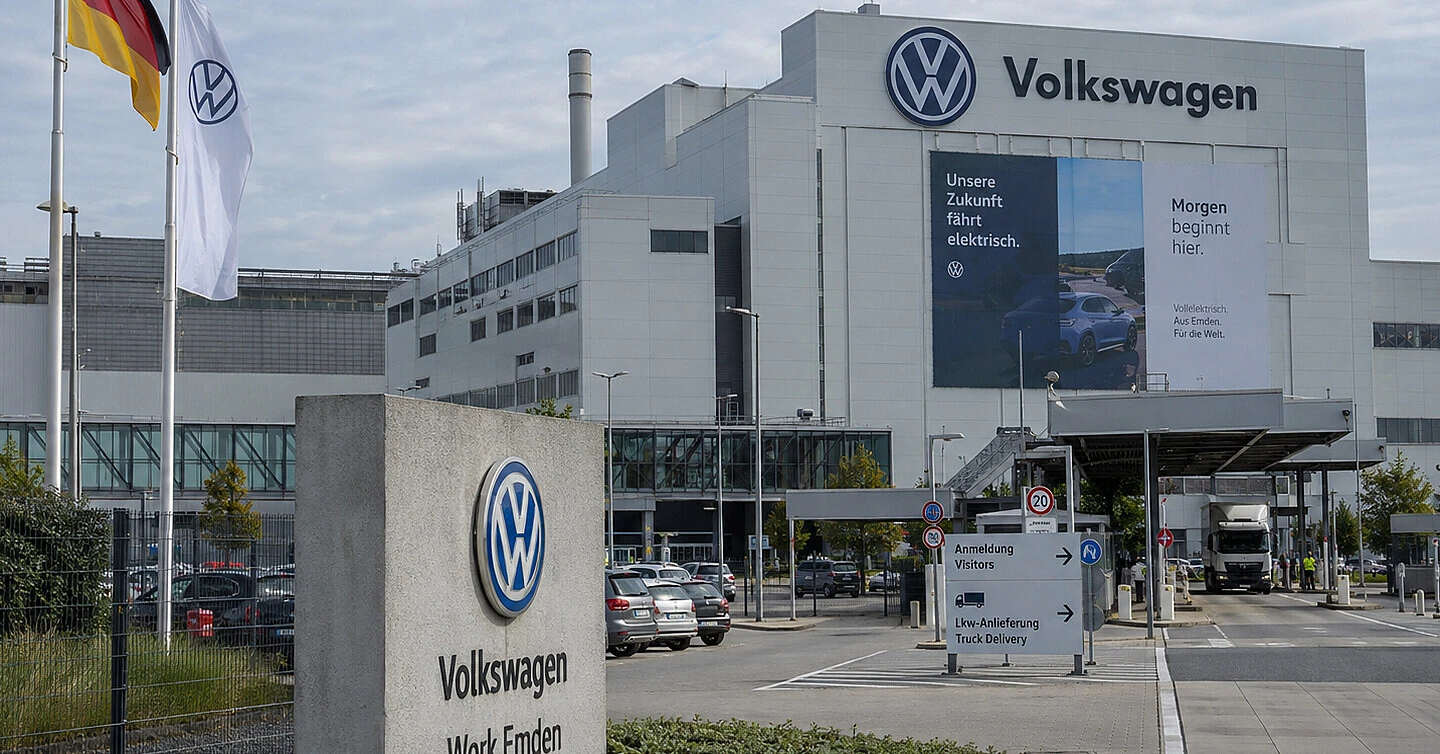
Volkswagen has agreed to sell its plant in Osnabrück, Germany, where after the end of vehicle production it is planned to set up production for the defense industry. The first major project should be the localization of air defense systems and components together with Israel's Rafael Advanced Defense Systems.
This was reported by Volkswagen Group. The main terms of the deal were agreed on September 7 by the automaker, the authorities of the federal state of Lower Saxony, and the Israeli investment company Aurelius Capital.
According to the plan, Aurelius will become the majority owner of Volkswagen Osnabrück GmbH, and Lower Saxony will also join the ownership structure. The current automotive plant is intended to be gradually transformed into a competence center for security and defense technologies.
The first anchor project will be the cooperation of the future owners of the site with Rafael Advanced Defense Systems. It concerns the possible production of systems and components for air defense means intended for Germany and other European countries.
Financial Times and German Tagesschau specify that the site is planned to produce components for the missile defense systems of the Israeli company Rafael, including those related to the Iron Dome complex. Potential products named include launch equipment, generators, and specialized vehicles.
At the same time, Volkswagen will gradually withdraw from vehicle production in Osnabrück. Back in 2024, the group decided to stop producing cars there in the summer of 2027. Currently, the plant manufactures, among others, the Volkswagen T-Roc Cabriolet, for which the company has not found a successor model.
After the end of automotive production, Volkswagen intends to help with the transition of the plant to a new structure by providing accumulated experience in development, organization of serial production, and industrialization.
One of the main goals of the deal is to preserve jobs. Currently, about 1,800 people work at the Osnabrück plant. According to Volkswagen, the prospect of continuing to work at the site should be given to more than 1,200 employees. German media report that the new model may preserve about three-quarters of the current jobs.
The plant in Osnabrück has a more than 120-year history of automotive production. After the reform, it should move from producing small series and specialized vehicles to defense and security-related projects.
Prime Minister of Lower Saxony Olaf Lies stated that the changing security situation requires Germany and Europe to build up their own defense capabilities and reduce dependence on external suppliers. According to him, Osnabrück can become one of the sites of such industrial development.
Volkswagen emphasizes that the current agreement does not yet mean the final closing of the deal. The parties still need to agree on the structure of the new company, allocation of responsibilities, and financial conditions. The sale also requires approval from relevant authorities and passage of regulatory procedures.
Subsequently, on the plant's territory it is planned to launch other defense projects with new industrial partners. Thus, the former Volkswagen automotive site can become a full-fledged production cluster of the European defense industry.
Based on materials from: Volkswagen Group, Tagesschau, Financial Times
