
Russia and North Korea opened the first road bridge between the countries
Russia and North Korea opened the first road bridge between the two countries on September 7. The new crossing over the Tumen River should expand freight traffic between the Russian Federation and the DPRK amid the rapid deepening of their economic and military cooperation.
The opening ceremony took place on the Russian–North Korean border. Permission to start traffic was given via video link by Russian Prime Minister Mikhail Mishustin and Chairman of the DPRK Cabinet of Ministers Pak Thae Song.
Previously, Russia and North Korea were connected at the border by the Friendship railway bridge. The new structure became the first permanent road crossing between the states.
The two-lane bridge is about one kilometer long. Together with access roads, the length of the new transport infrastructure reaches about 4.7 km. According to the Russian side, up to 300 vehicles per day will be able to pass through the crossing.
Along with the bridge, the Khasan road checkpoint with ten lanes has been built. At the first stage, the crossing will be used for freight transport, and its full operation, including passenger traffic, is planned to be launched by the end of 2026.
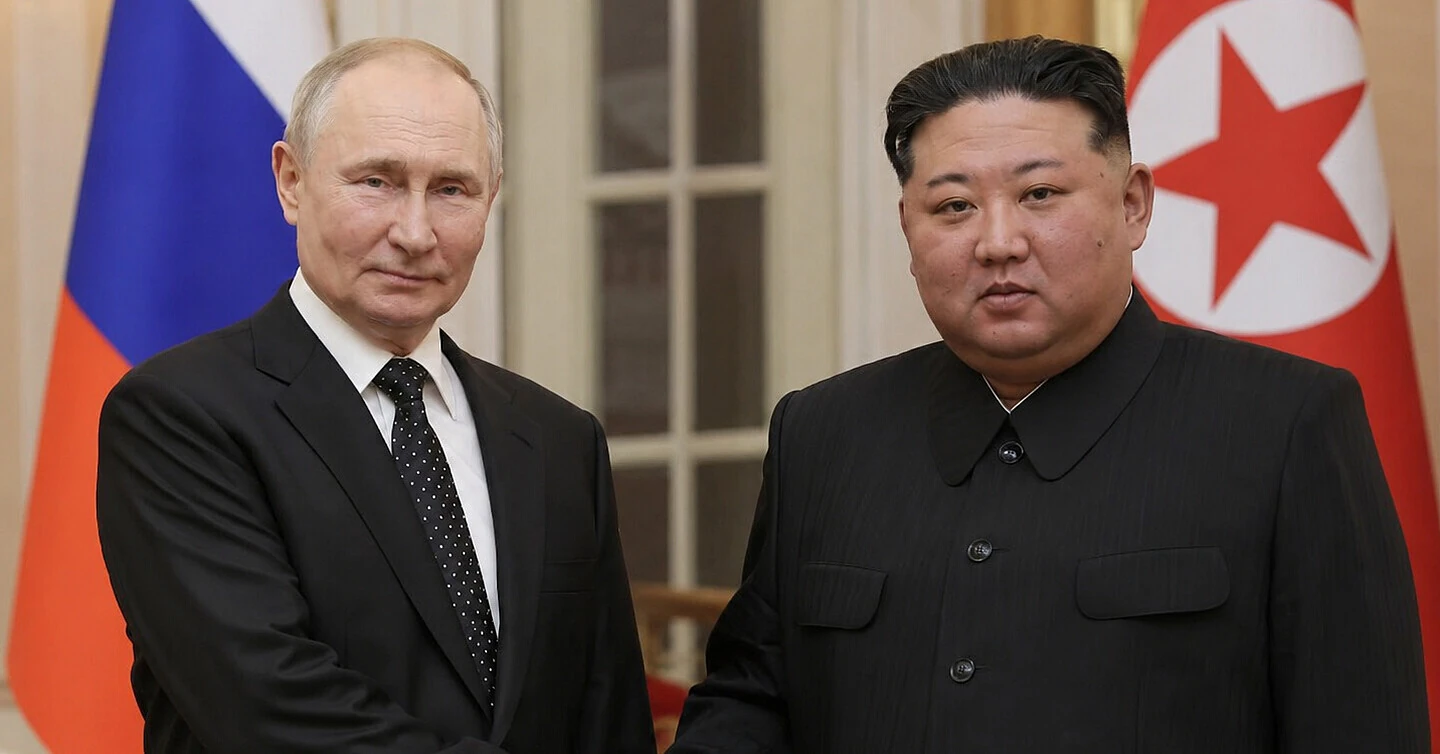
The construction of the crossing began in April 2025. The project was agreed after Vladimir Putin's visit to North Korea in 2024, when Moscow and Pyongyang sharply intensified political, economic and military cooperation.
Mishustin stated that the new crossing should give additional impetus to trade-economic, scientific-technological and cultural cooperation between the two countries, as well as the development of tourism.
The opening of the road connection also expands capabilities for cargo transportation between Russia and the DPRK. Previously, the main land connection was a railway route, so the new crossing creates an additional transport channel directly across the common border.
The new infrastructure appears against the backdrop of close military cooperation between Moscow and Pyongyang during Russia's war against Ukraine. North Korea supplied Russia with ammunition and weapons, and North Korean military personnel participated in hostilities on the side of the Russian Federation.
Ukrainian human rights defenders previously drew attention that the road bridge could be used not only for civilian trade, but also as an additional logistics route between the two countries. At the same time, officially Moscow and Pyongyang position the project primarily as a tool for the development of trade and transport ties.
The bridge was named after Soviet serviceman Yakov Novichenko, who, according to the official version, in 1946 saved the founder of the DPRK, Kim Il Sung, during an assassination attempt in Pyongyang.
Based on materials from: Russian Ministry of Transport, Associated Press, The Guardian
