
Merkel called AfD's victory in Saxony-Anhalt a historic turning point
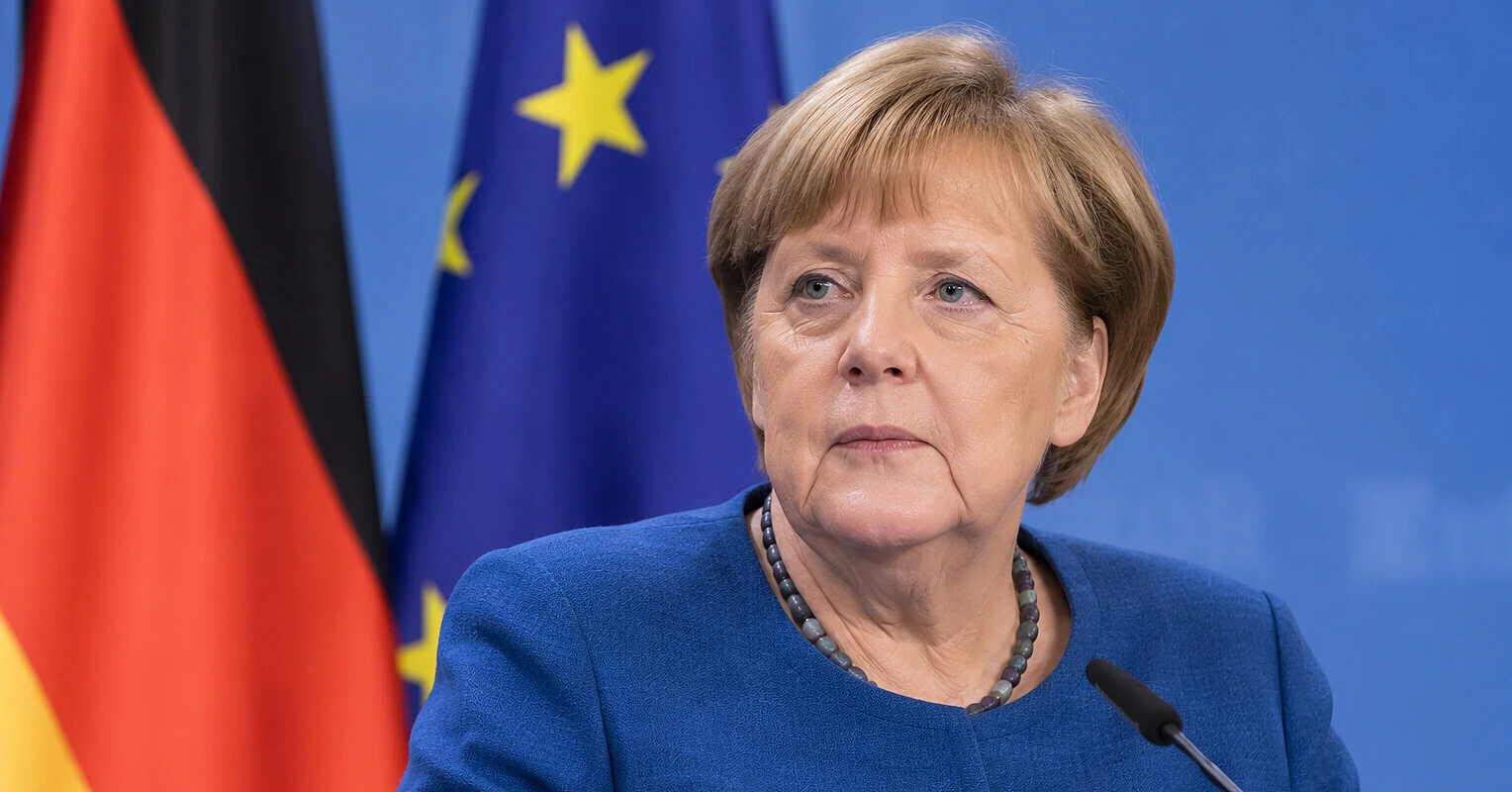
Former German Chancellor Angela Merkel said that the victory of the far-right "Alternative for Germany" (AfD) in the elections in Saxony-Anhalt was a serious turning point for the country. At the same time, she criticized the approach in which the fight against the AfD is reduced to creating a political "firewall" around the party.
Merkel said this on Tuesday, September 8, during a speech at the Digital X digital exhibition in Cologne. The former chancellor, who remains a member of the Christian Democratic Union (CDU), admitted that the election result shocked her.
"As a CDU member, my heart bleeds," Merkel said.
According to her, what happened is a "real turning point" in the history of the Federal Republic of Germany.
The state parliament elections in Saxony-Anhalt took place on September 6. According to the preliminary official results, the AfD received 43.8% of the second votes, improving its result compared to the 2021 elections by 23 percentage points. The CDU, which had been the largest political force in the state until now, received only 17.2 % compared to 37.1% five years ago. Thus, the support for the Christian Democrats has more than halved.
In the new Landtag, the AfD won 39 of the 83 seats. An absolute majority requires 42 seats, so the party will not be able to form a one-party government on its own. The CDU won 15 seats, the Left, SPD and Greens — eight each, and the Sahra Wagenknecht Alliance (BSW) — five. In the previous elections, the CDU had 40 seats and the AfD 23.
Merkel criticized the idea of a "firewall"
Separately, the former chancellor commented on the so-called "firewall" — the principle by which leading German parties refuse to cooperate with the AfD. Merkel stressed that she did not introduce the term herself and does not consider it a successful way to convince voters.
In her opinion, it is not enough for democratic parties to constantly explain why they are not prepared to cooperate with the AfD. Instead, they should clearly tell citizens what they want to achieve for the country and offer concrete solutions — for example, in pension policy. It is the substantive differences, Merkel believes, that should show voters why cooperation with the AfD is impossible.
Thus, the former chancellor did not call on the CDU to abandon the political isolation of the AfD. Her criticism concerned the approach itself: instead of being constantly fixated on the far-right party, traditional political forces should more actively promote their own program and directly address voters.
Merkel warned of facts being replaced by feelings
Another cause for concern for Merkel was the change in political discussion, in which factual indicators, in her opinion, are increasingly giving way to citizens' subjective feelings.
As an example, she cited the situation in Saxony-Anhalt. Merkel said that unemployment has fallen and individual prosperity has increased in the state, but the AfD's top candidate in the election, Ulrich Siegmund, claims that residents do not feel these improvements.
According to the former chancellor, democracy faces a serious problem if society stops recognizing a common set of facts from which different political positions can then be formed. If emotions take precedence over facts, this means "civilizational steps backward", she said.
Merkel believes that democratic parties need to change their communication with voters. In particular, she called for more direct appeals to citizens and better explanations of the changes achieved, since previous methods of political communication may no longer be sufficient.
AfD tries to find majority for government
The AfD's victory does not yet mean automatic transfer of power to the party. Its candidate Ulrich Siegmund announced his intention to claim the post of state premier if he can secure a stable majority in the Landtag.
After the election, the AfD announced its intention to invite other parliamentary forces to talks. Most parties rule out cooperation with it. The BSW allows talks on individual issues, but its representatives stated that they are not currently considering a coalition with the AfD.
The election result was the AfD's greatest success in Saxony-Anhalt and at the same time a historic defeat for the CDU in the state. The German domestic security service classifies the AfD's regional branch in Saxony-Anhalt as a confirmed right-wing extremist organization.
Sources: Spiegel, Handelsblatt, Statistical Office of Saxony-Anhalt
