
US and Iran stage largest series of attacks on tankers since the start of the war
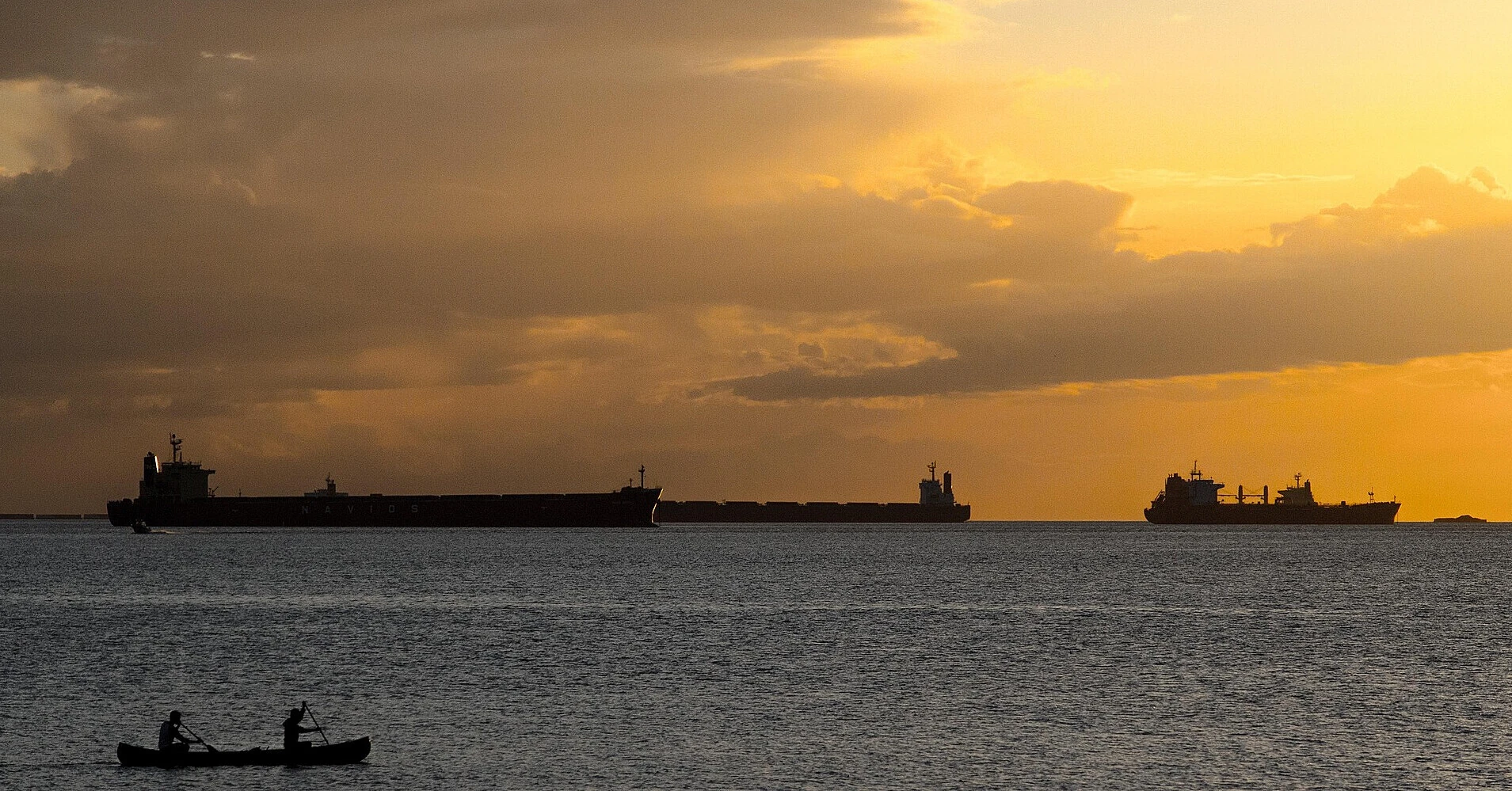
The United States destroyed five Iranian oil tankers, after which Iran announced strikes on two American ships and eight tankers near the Strait of Hormuz. This became the largest claimed series of mutual attacks on shipping in six months of war. Amid the escalation, Brent crude exceeded $100 per barrel for the first time since July.
Reuters reports this. The new series of strikes occurred on September 8–9 in the Persian and Oman Gulfs and affected both Iranian oil vessels and commercial shipping near the Strait of Hormuz, which is key to the global oil market.
The U.S. Central Command stated that on September 8, U.S. forces destroyed five Iranian crude oil tankers. In the Gulf of Oman, the Kaviz, Charminar, Horizon 1, and Riesco were hit, and near Khark Island — the Derya. According to CENTCOM, crews were ordered to abandon the ships before the strikes, after which the tankers were disabled.
Washington called the operation a response to two attempts by the Islamic Revolutionary Guard Corps to attack an American warship with ballistic missiles over the previous two days. According to the U.S., the ship evaded the strikes and American military personnel were not harmed.
This was already the second such American operation in several days. On September 5, the U.S. destroyed three more Iranian oil tankers after IRGC attempts to attack an American aircraft carrier and a destroyer. Thus, within several days CENTCOM claimed the destruction of eight Iranian oil vessels.
U.S. Secretary of State Marco Rubio indicated that Washington intends to continue this tactic. According to him, each new Iranian attempt to attack American warships will result in Tehran losing tankers.
In response, Iran announced strikes on ten vessels — two American ships and eight oil tankers that, according to the IRGC, were attempting to pass through a zone declared closed by Tehran near the Strait of Hormuz. Reuters could not independently confirm the hits on all targets claimed by Iran.
Meanwhile, reports of damage to commercial ships came from several areas at once. The British maritime security service UKMTO received data on several merchant ships hit in the northern part of the Persian and Oman Gulfs. The agency also reported a vessel near Port Rashid in the UAE that listed after being struck by an unknown projectile.
One of the most serious incidents was the hit on the product tanker Hercules Star, anchored near Dubai. The chartering company Peninsula reported the death of one crew member, and another sailor is listed as missing. According to a preliminary assessment by maritime security sources, the vessel may have been attacked by a drone.
Another tanker, the Panama-flagged New Andros, was attacked by a drone in Iraqi territorial waters. On board were about 2 million barrels of Iraqi fuel oil. After the hit, a fire broke out, which was extinguished by Iraqi rescue vessels. All 22 crew members survived.
A Reuters source in maritime security also reported damage to an LNG tanker in the UAE port of Khor Fakkan. In addition, the Iranian side threatened to attack oil tankers in the ports of Kuwait and Bahrain.
Simultaneously, the IRGC claimed the launch of 20 ballistic missiles at a base near Al-Azraq in eastern Jordan used by American forces. Jordan reported that its air defense intercepted 18 missiles, and two more fell in unpopulated areas. There were no deaths or injuries, and American military personnel were not harmed.
The escalation around the Strait of Hormuz immediately affected the oil market. On September 9, Brent reached $100.19 per barrel in trading — above the psychological mark of $100 for the first time since July 24. Since the beginning of August, prices have risen about a quarter amid fading hopes for a quick end to the U.S.–Iran conflict.
The Strait of Hormuz remains the main risk for the global energy market. Before the war, about a fifth of global oil supplies passed through it. Now traffic has sharply decreased: according to preliminary data, only six vessels crossed the strait with transponders on in the last 24 hours.
The IRGC also announced further expansion of the closed-to-navigation zone. Iran claims that the new restricted area will extend well beyond the Strait of Hormuz — towards the Gulf of Oman and the coast near Chabahar. Tehran intends to announce exact coordinates separately.
Additional market pressure is coming from the Red Sea. In recent days, fighting between Saudi Arabia and Iran-backed Houthis has sharply intensified. On September 8, the Houthis attacked four Saudi cities, and fires broke out, including on oil infrastructure. Saudi authorities reported 73 injured.
Thus, two of the most important export routes for energy resources from the Middle East — the Strait of Hormuz and the approaches to the Red Sea — were simultaneously threatened. Continued strikes on tankers and energy infrastructure increase the risk of further supply reductions and sustained high oil prices.
