
16 tons of dietary supplements disguised as aid to the Armed Forces of Ukraine: case of goods worth 58 million hryvnias sent to court
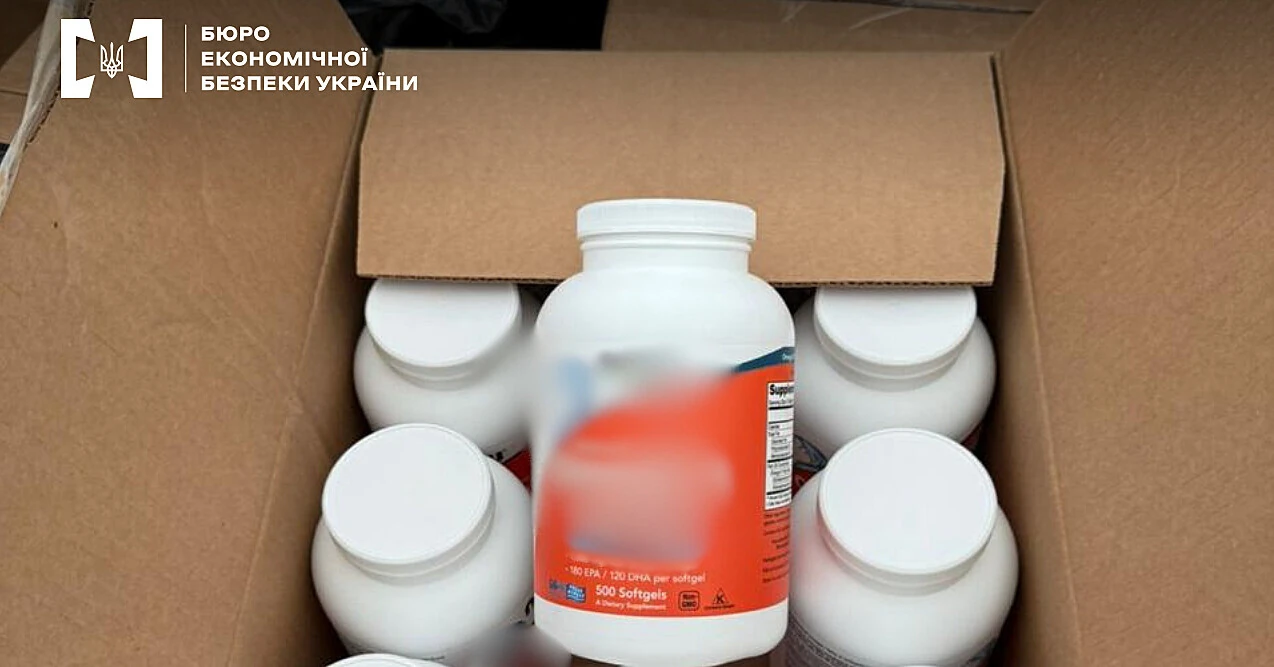
Ukraine has completed the investigation into the import of more than 16 tons of food and sports supplements worth almost 58 million hryvnias, which, according to investigators, were declared as humanitarian aid for the Armed Forces.
On September 11, the Territorial Department of the Bureau of Economic Security in Volyn Oblast announced that the indictment had already been sent to court. Together with it, a plea agreement has been submitted.
It concerns a batch of approximately 400 product names — vitamins, dietary and sports supplements, amino acids and other goods.
What, according to investigators, happened at the border
The investigation considers a resident of Volyn Oblast to be the organizer of the scheme.
The goods were moved through the customs post "Yahodyn" on the Ukrainian-Polish border. The man engaged two citizens of Poland for transportation.
The BES separately notes that the carriers were not aware of the allegedly illegal nature of the cargo.
During customs clearance, the products were declared as humanitarian aid. According to the investigation, the documents contained false information, which allowed the commercial goods to be imported without the required customs payments.
After crossing the border, law enforcers believe, the supplements were planned to be sold on the Ukrainian market.
Why the investigators had questions about the "humanitarian" cargo
During the investigation, detectives checked the organizations that appeared in the documents.
The charitable foundation that was listed as the recipient of the products, according to the BES, was not present at its registered legal address.
Its head had been outside Ukraine since 2023.
Another participant in the documentary chain was a company from Hungary, indicated as the donor of humanitarian aid. The investigation established that at the time of the goods' import it was not actually carrying out any activities.
These circumstances became part of the evidence base for the version that the status of humanitarian aid was used to import ordinary commercial goods.
About 400 types of products were found in the truck
During a court-ordered search of the vehicle, law enforcers discovered more than 16 tons of products.
Among the seized items were:
- vitamins;
- sports supplements;
- dietary supplements;
- amino acids;
- other nutrition and sports products.
In total, the investigation counted about 400 product positions.
Law enforcers estimate the value of the entire batch at almost 58 million hryvnias. The goods themselves and the accused's property have been seized.
The first stage of the case became known back in spring
This investigation did not start today.
At the end of March 2026, a resident of Liuboml was notified of suspicion of smuggling goods on a large scale. In early April, the BES publicly disclosed the main circumstances of the case.
At that time, law enforcers reported 16 tons of supplements, a value of about 58 million hryvnias, and the alleged use of humanitarian documents to evade customs payments.
The court imposed a preventive measure of house arrest on the suspect, and the investigation continued.
The new fact on September 11 is precisely that the case has moved to the next stage: the pre-trial investigation has been completed and the materials have been sent to court.
The charge is related to smuggling of goods
The man's actions are qualified under Part 2 of Article 201-3 of the Criminal Code of Ukraine — smuggling of goods committed on a large scale.
In the spring, the Ukrainian prosecutor's office reported that under this qualification the defendant could face up to ten years of imprisonment.
However, the final decision on guilt and punishment is made only by the court.
What the plea agreement means
Along with the indictment, a plea agreement has been sent to court.
This is an important procedural detail, but it does not equal an already rendered guilty verdict.
The court must examine the agreement and decide whether it complies with the requirements of the law and can be approved.
Until the court's decision enters into legal force, a person is considered innocent.
Why the humanitarian aid scheme is particularly sensitive
The status of a humanitarian cargo allows aid to be moved across the border under special conditions and without the usual commercial burden.
During the war, this mechanism is necessary for the rapid delivery of equipment, medicines, clothing, food and other goods to military and civilians.
But using humanitarian status for commercial import creates two problems at once.
The state loses mandatory payments, and the aid mechanism itself is used for other than its intended purpose. In addition, the documents create the impression that the goods are intended for the military or a charitable organization, when in reality they may go to ordinary sale.
In this case, the BES asserts exactly this version: products worth almost 58 million hryvnias were supposed to enter Ukraine as aid, and then be sold as commercial goods.
What will happen next
After the indictment is sent, the case moves to judicial consideration.
The court will have to assess the investigation materials and separately consider the plea agreement.
The investigation was conducted by detectives of the Territorial Department of the BES in Volyn Oblast. Operational support was provided by the regional department of the SBU, procedural guidance by prosecutors of the Volyn Oblast Prosecutor's Office.
Thus, the story of the batch of 16 tons of supplements has moved from the suspicion stage to court: law enforcers claim that commercial goods worth almost 58 million hryvnias were attempted to be passed through the border as aid to the Armed Forces of Ukraine, to avoid customs payments and then sell them in Ukraine.
