
Old driver's licenses can be exchanged online: state service centers and Cyberpolice explain how not to fall for fake "helpers"
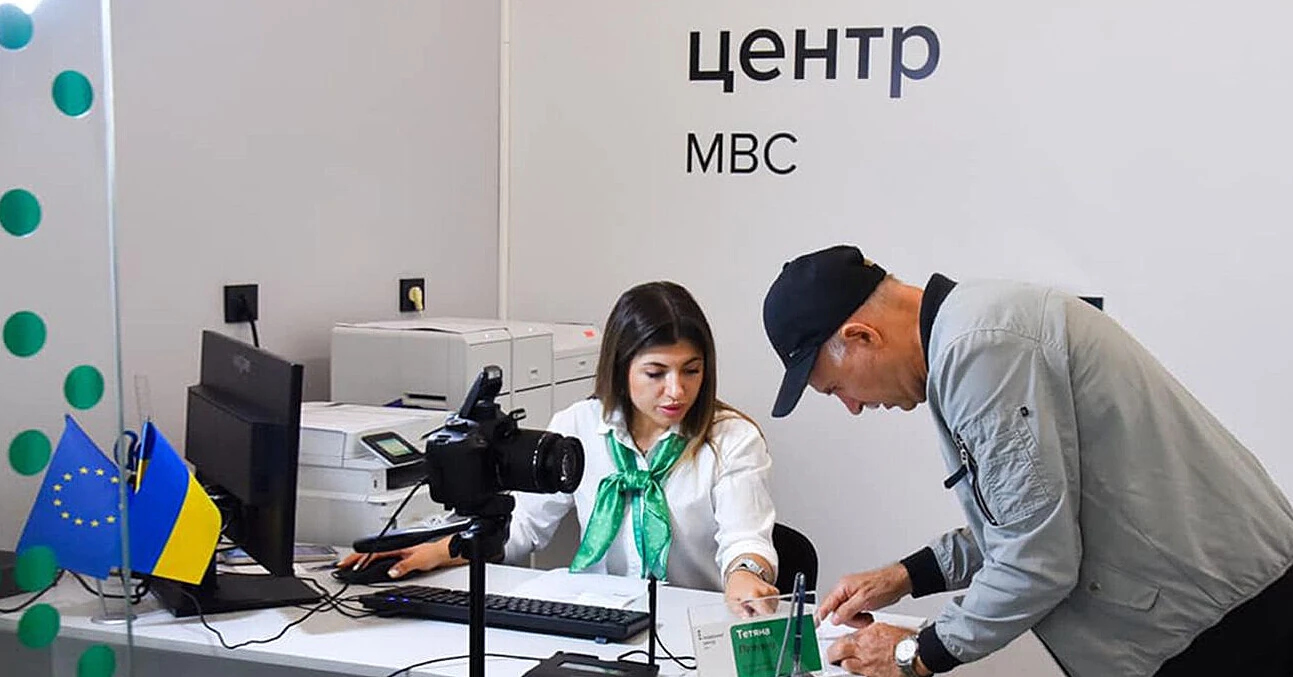
Ukrainians with old driver's licenses are being offered on the internet to "quickly obtain" a modern license, have it entered into the state database, and even complete the entire procedure without visiting an MIA service center.
State service centers and the Cyberpolice warn: under the guise of such assistance, fraudsters may operate, taking prepayment and issuing fake documents that are absent from state registries.
But there is an important nuance: owners of certain licenses issued before 2013 can indeed begin the procedure remotely and subsequently apply for exchange through the Driver's Cabinet or the "Diia" application. The main thing is to do this only through official MIA channels.
Fake license found on 72-year-old driver
One of the reasons for the warning was an incident in Ivano-Frankivsk region.
A 72-year-old man came to an MIA service center wanting to exchange a driver's license allegedly issued in 2024.
The administrator noticed signs of forgery: fonts differing from official ones, a blurry photo, and unclear inscriptions.
A check against state information systems revealed an even more serious problem: the license with the indicated series and number had been issued to another person.
The man said he previously had an old paper driver's license, but did not present it when applying. Police were called to the service center to clarify the circumstances.
How internet "helpers" operate
The scheme is built around the understandable desire of owners of old documents to avoid bureaucracy.
In social networks and messengers, people are offered to obtain a new driver's license remotely. Intermediaries may claim to work at an MIA service center or to have the necessary connections there.
To make the offer more convincing, fraudsters use photos of employees, images of state institutions, and official symbols.
Then the client is asked for photographs of documents and prepayment.
Offers that should especially raise suspicion include:
- communicating exclusively through a messenger;
- transferring money to a personal bank card;
- "entering the license into the database" for a separate fee;
- issuing a document without the prescribed data check;
- sending a stranger photos of a passport, tax number, and driver's license;
- receiving an "official license" through a non-official website or Telegram channel.
Old paper licenses are still valid
At the same time, owners of paper licenses do not need to urgently replace the document just because it looks outdated.
The MIA Main Service Center separately emphasizes: driver's licenses in the form of a paper booklet, previously issued on the territory of Ukraine, including before 1991, remain valid in Ukraine.
There is no mandatory requirement to replace such a document with a plastic one.
Exchange may be needed if the owner wishes, for example, to obtain a modern license that is displayed in electronic services and better meets international requirements.
Can old licenses actually be exchanged online?
Yes, and here it is especially important not to confuse the state remote procedure with the services of internet intermediaries.
On September 1, the MIA Main Service Center clarified the procedure for driver's licenses issued before 2013.
The problem with such documents is that information about them may be absent from modern electronic registers. The database may not contain the year and place of issue, series, number, or information about open categories.
Therefore, the first step is not "buying new licenses online," but officially clarifying old data using MIA archives.
First, you need to enter the old license into the modern registry
To update information remotely, the owner must contact the regional service center of the MIA of the region where the driver's license was issued.
The application must be accompanied by copies of:
- the old driver's license;
- passport or ID card;
- document with information about the registered place of residence;
- taxpayer identification number.
The application can be sent by regular mail. In that case, the application is signed by hand, and copies of the documents must be certified by the applicant.
There is also an electronic option: the application can be sent digitally, but it must be signed with the electronic signature of the license owner themselves.
Thus, no intermediary in Telegram is needed for this procedure.
What happens after archive verification
Service center employees check the information against archival materials and, if confirmed, transfer it to the Unified State Register of the MIA.
After that, the driver's license should appear in the Driver's Cabinet and may be displayed in the "Diia" application.
There is a particularity: old MIA archives may lack the owner's photograph. Therefore, in the Driver's Cabinet, the old license sometimes appears without a photo after updating.
The Main Service Center separately warns that there is no need to send a photograph or its scan for this purpose.
Only then can an online exchange be requested
After the license appears in the electronic register, the owner can submit an application for exchange through the Driver's Cabinet or the "Diia" application.
The finished document can be received:
- at a post office in Ukraine;
- by addressed delivery;
- at the selected MIA service center.
That is why the promise to "make a license online" alone cannot be considered proof of fraud.
The main question is through which service the procedure is carried out. Official exchange goes through state systems after verification of the existing license. Fraudsters offer to bypass this verification and demand money to private accounts.
Online exchange is not possible for everyone
Even after the old document is updated, the MIA does not guarantee that the application can necessarily be completed remotely.
Problems may arise if the archives lack sufficient information or old data do not match the person's current data—for example, after a change of surname, other personal data, or place of registration.
In that case, the electronic application may be rejected, and the owner will have to personally contact a territorial MIA service center.
No need to exchange old licenses just for new categories
Rules for matching old and modern driver's categories apply to old-style documents.
For example, if a license issued before November 2008 had category B, upon exchange the new document will show the corresponding modern categories B1 and B.
For category C — C1 and C, for D — D1 and D, subject to conditions.
In such exchange of an old Ukrainian license, additional training, theoretical and practical exams are usually not required.
Moreover, the original date of category opening is preserved, which confirms driving experience.
Why sending fraudsters photos of documents is especially dangerous
Losing the cost of the "service" is not the only risk.
To produce a supposedly new license, fraudsters often ask for photographs of a passport, tax number, and current driver's license.
Thus, a person hands over a large set of personal data to strangers.
Subsequently, these may be used to create fake documents, attempt to access accounts, or other fraudulent schemes.
Therefore, the Cyberpolice recommends not sending documents to unknown persons and not transferring money to private cards for state services.
How to quickly verify an offer
An official state resource should have the address zone gov.ua.
MIA services do not require transferring state service fees to an employee's personal card and do not promise to secretly "add" a person to the state registry for a separate fee.
If in doubt, the procedure for obtaining a service is better checked independently on the website of the Main Service Center of the MIA.
A suspicious page, account, or correspondence can be reported to the Cyberpolice via the official submission form.
Main points for owners of paper licenses
An old license in the form of a paper booklet does not mean that the person must urgently obtain a new document.
If the license was legally issued in Ukraine, it remains valid on the country's territory.
If the owner wants a modern document, it is first worth checking whether the old license data are in the MIA electronic systems.
The current procedure allows owners of documents issued before 2013 to even begin updating data remotely. Therefore, there is no need to pay unknown "helpers" for entering the license into the database: such promises are exactly what state service centers call a characteristic sign of a fraudulent scheme.
