
Zelensky: Ukraine testing new generation of interceptors for jet-powered 'Shaheds'
Ukraine is testing new developments to intercept Russian jet-powered 'Shahed' drones and accelerating their transition to serial use. The goal is to obtain a defense tool that can be produced in sufficient quantities and will provide the necessary effectiveness against high-speed strike drones.
This was announced by President of Ukraine Volodymyr Zelensky after reports on countering Russian strike drones.
According to him, this concerns specifically a new generation of interceptor drones designed to defend against jet-powered 'Shaheds'. Several developments already exist and are undergoing testing.
"There are developments, testing continues. We are accelerating all processes. Ukraine needs a working defense tool in sufficient volumes and with the necessary effectiveness," – stated Zelensky.
The president did not disclose specific characteristics of the new systems, the number of samples undergoing testing, or the timeline for their possible mass production.
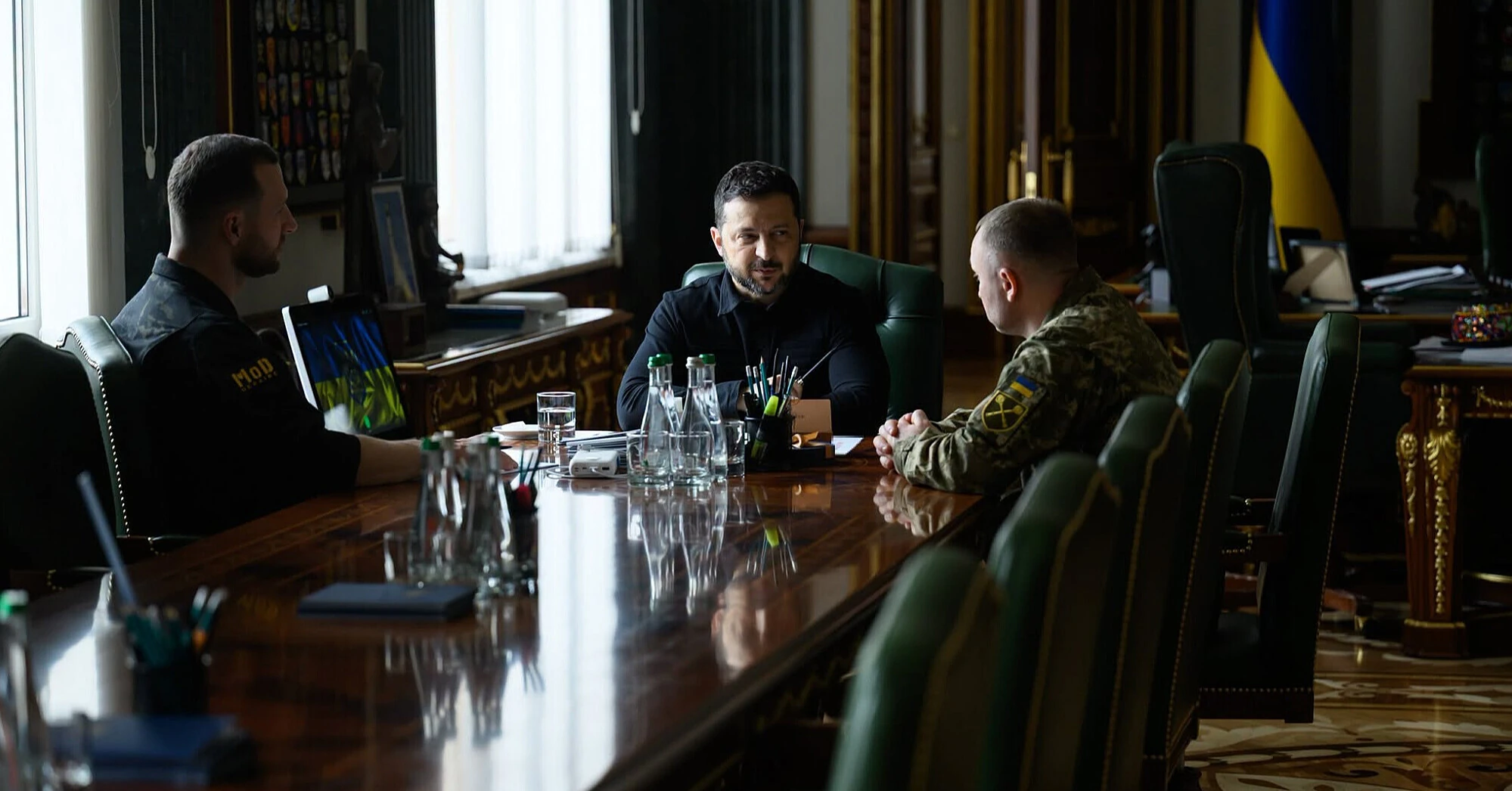
Zelensky said that further steps were discussed with Defense Minister Yevhen Khmara and Commander-in-Chief of the Armed Forces of Ukraine Mykhailo Drapatyi. According to the president, the financial basis for this work is already secured. Now the main issue is the speed of achieving practical results and subsequent scaling of production.
Work on means of intercepting jet-powered drones has been called one of the priorities of the defense industry by Ukrainian authorities in recent weeks. As early as September 3, at a meeting of the Supreme Commander-in-Chief's Staff, the main issue was accelerating the production of high-speed interceptors.
At that time, Zelensky said that Ukrainian manufacturers had already created relevant prototypes, but they still needed to be brought to the required level of effectiveness. At the Staff meeting, they also discussed involving private business in the production, supply, and configuration of certain types of air defense systems.
In a broader sense, Ukraine plans to create several relatively inexpensive layers of defense against new Russian drones. The president has previously said that the defense industry must provide sufficient quantities of not only high-speed interceptor drones but also inexpensive missiles. This approach should allow avoiding the expenditure of significantly more expensive traditional air defense assets on every aerial target.
In late August, Zelensky said that four Ukrainian companies had already developed interceptor drones capable of operating against jet-powered systems. In his assessment, at that time one of these developments was showing the most successful results.
At the same time, the president called combat aviation the main burden in intercepting jet-powered 'Shaheds'. It was the need to create a more mass-scale and economically acceptable way of countering such targets that led to the acceleration of the interceptor program.
The threat has grown noticeably in recent weeks along with the number of Russian drones. According to Zelensky, in just four days in late August Russia used almost 1,500 drones of various types against Ukraine, about 800 of which were jet-powered. The president called their interception the most complex task and set a goal to raise the overall destruction rate of Russian drones above 90% by autumn.
The scale of drone use continues to increase. On September 13, Zelensky reported that in one week Russia launched about 2,100 drones at Ukraine, with a significant portion being jet-powered 'Shaheds'. During the same period, Russian forces used almost 1,700 guided aerial bombs and 78 missiles of various types.
Russian strikes are not aimed only at military targets. In recent days, damage has been inflicted on energy and railway infrastructure, enterprises, gas stations, and residential buildings. Against this backdrop, the creation of a mass interceptor should become an additional layer of defense along with combat aviation, electronic warfare means, and traditional air defense systems.
At the same time, Zelensky's current message shows that the program remains at the stage of development and testing: authorities speak of the availability of promising solutions and secured funding, but do not yet announce the start of their mass delivery to the troops.
Based on materials from: Volodymyr Zelensky, Office of the President of Ukraine
