
Parliament took a step towards criminalizing "drop accounts", the draft passed first reading
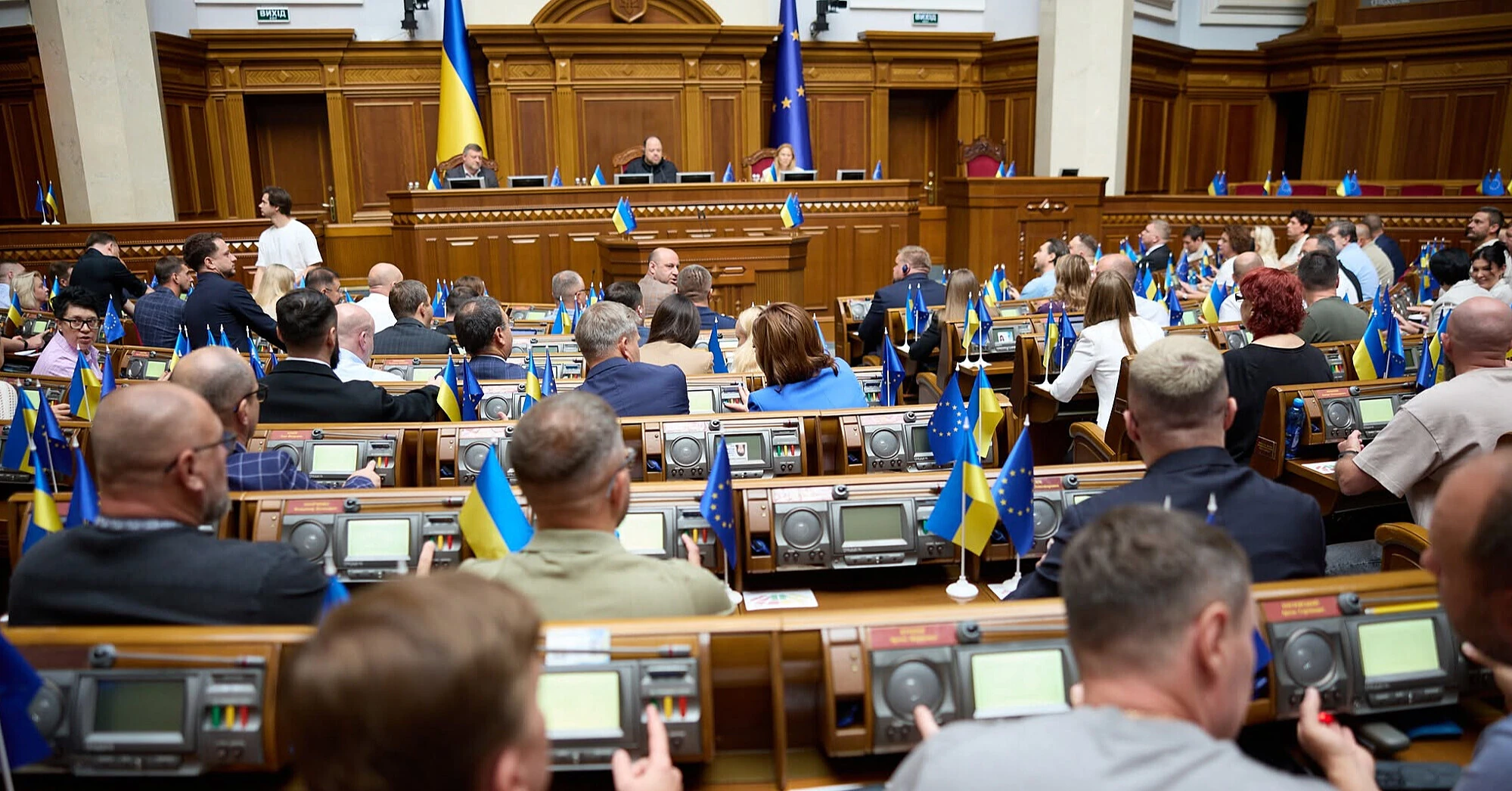
The Verkhovna Rada supported in first reading a draft law that introduces separate criminal liability for the transfer of bank accounts, payment cards, and access to them for use in fraudulent schemes. Repeat actions or work as part of an organized group may be punishable by up to eight years of imprisonment.
299 people's deputies voted for draft law No. 16013.
The document was submitted by President Volodymyr Zelensky in early September and designated as urgent. Its goal is to strengthen the protection of citizens' funds from financial fraud and block one of the key tools of fraudulent call centers - so-called "drop accounts".
These are bank accounts, cards, or access to them that owners transfer to other persons for receiving, transferring, or withdrawing money obtained as a result of fraud and other crimes.
Separate punishment for transferring your own account
The draft law proposes to supplement the Criminal Code with a new Article 200-1, which will separately regulate the transfer and circulation of payment instruments used for crimes.
Transfer of a payment instrument, personal data for access to it, as well as providing access to a bank or payment account or electronic wallet, if it is done for other persons to commit fraud or another criminal offense, will be punishable by a fine of 300 to 1000 tax-free minimum incomes of citizens.
That is, liability is proposed to be established directly for the account owner who knowingly transfers it for use in a criminal scheme.
Purchase and resale of accounts will be punished more severely
Significantly more serious punishment is provided for those who organize the circulation of such accounts.
Obtaining, purchasing, storing, or otherwise acquiring someone else's payment instrument or access data to it, gaining access to someone else's bank account or electronic wallet, as well as their subsequent transfer or sale for the purpose of use in fraud are proposed to be punishable by a fine of 3000 to 10,000 tax-free minimum incomes.
An alternative may be restriction of liberty for a term of two to five years, or imprisonment for a term of two to six years.
If such actions are committed repeatedly or by an organized group, the draft law provides for non-alternative imprisonment for a term of five to eight years.
Liability will also be increased for stealing access to accounts
The draft law also substantially rewrites the current Article 200 of the Criminal Code. It is proposed to extend it not only to counterfeit payment cards and documents, but also to payment instructions, electronic wallets, personal data for access, and directly bank and payment accounts.
In particular, separate liability is provided for theft, appropriation, or obtaining by deception of payment instruments or data for access to them, as well as for illegal gaining of access to a bank account or electronic wallet.
For this, it is proposed to establish a fine of 5000 to 8000 tax-free minimum incomes, restriction of liberty for a term of three to five years, or imprisonment for the same term.
If the offense is committed repeatedly or by a group of persons by prior conspiracy, the maximum punishment may be six years of imprisonment.
The draft law became part of the attack on fraudulent call centers
The initiative emerged against the backdrop of the state's intensified fight against fraudulent call centers and the infrastructure that allows them to receive and legalize money stolen from citizens.
In early September, Zelensky simultaneously submitted two related draft laws to the Verkhovna Rada. No. 16013 concerns "drops", payment instruments, and bank accounts, while No. 16014 concerns strengthening criminal liability for organizing fraudulent call centers and involving people in working in them.
Thus, the authorities are trying to simultaneously hit two components of such schemes: the organizers of call centers directly, and the networks of bank accounts through which money received from victims passes.
Draft No. 16013 is also intended to bring Ukrainian criminal legislation closer to EU Directive 2019/713, which establishes rules for combating fraud and counterfeiting related to non-cash payment means.
After adoption of the draft law in the first reading, it must be prepared for the second reading. Only after the final vote of the Verkhovna Rada and signature by the president can the proposed norms become law.
Source: Verkhovna Rada of Ukraine
