
CIA chief's mission did not deter Putin, concerns grow in Poland - media
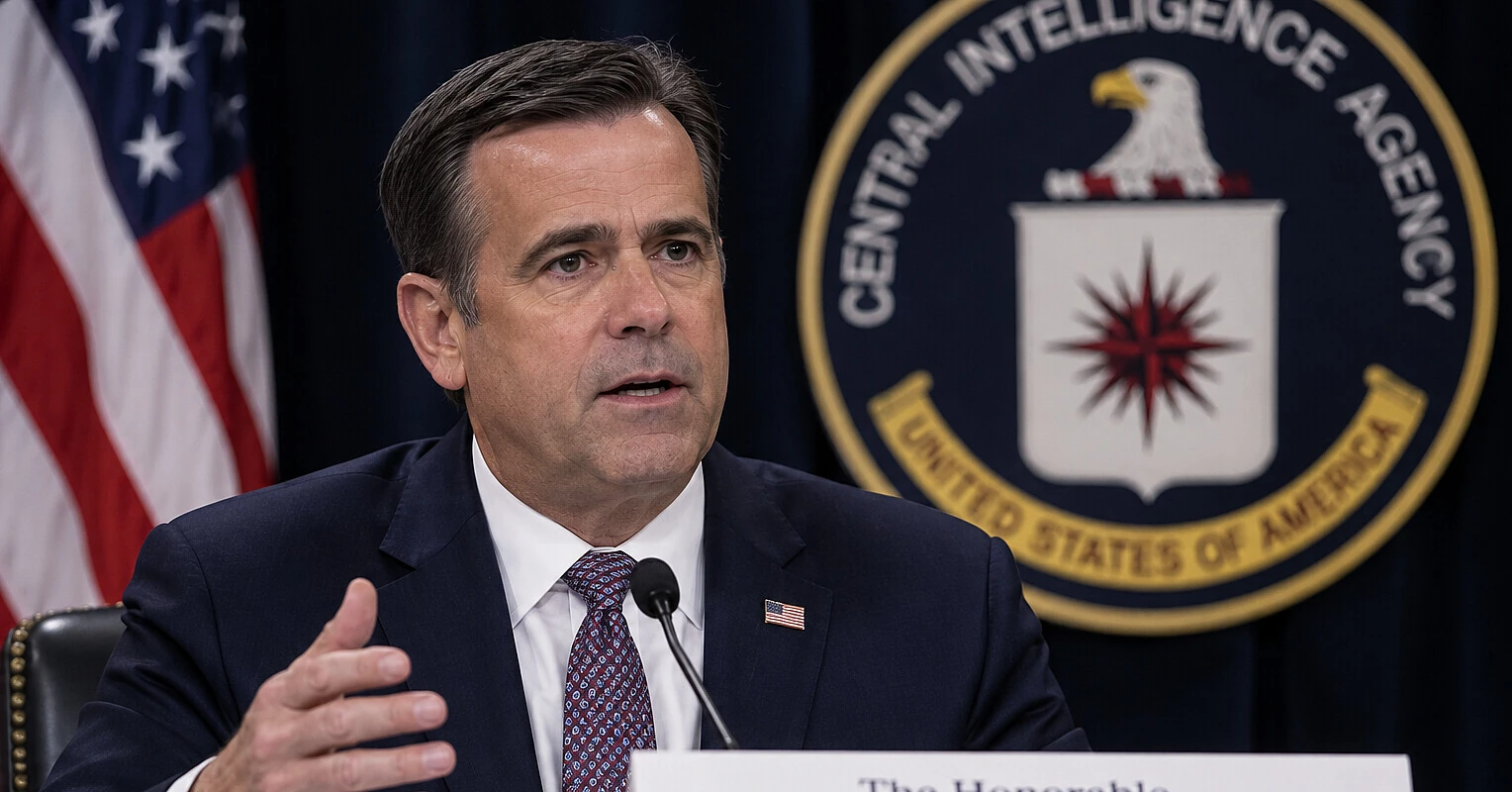
The Polish government is increasingly concerned about further escalation from Russia following the August mission of CIA Director John Ratcliffe to Moscow. According to Onet, during recent contacts with Warsaw, the American side made it clear that they did not expect such a rapid intensification of Russian strikes after the CIA chief's talks.
Ratcliffe secretly visited Moscow on August 25. He did not meet personally with Vladimir Putin, but held talks with the heads of Russian intelligence services. The American side, according to The Washington Post, tried to convince Moscow that further escalation of the war would worsen Russia's position and called for a return to negotiations.
However, after the visit, the intensity of Russian strikes on Ukraine did not decrease. The Washington Post later reported that Ratcliffe believed the main signal had been delivered to the Russian side, but the talks effectively did not change the Kremlin's stance. According to one of the publication's interlocutors, in Moscow the mission might have been perceived as an attempt by Washington to persuade Putin to stop, and the Russian leader himself might have seen it as a sign of weakness.
Now Onet, citing sources in Polish government circles, writes that Moscow's reaction came as a surprise for the Americans as well. According to one of the publication's interlocutors, after the new massive Russian strike, US representatives discussed with allies in Central Europe, including Poland, the possible motives of the Kremlin and viewed the attack as a demonstrative signal.
In Warsaw, this has intensified doubts about the ability of diplomatic pressure to change Russia's calculations. At the same time, Polish authorities do not officially question US allied guarantees. Minister-Coordinator of Special Services Tomasz Siemoniak, who recently met personally with Ratcliffe in Washington, stated that the CIA director confirmed the validity of American security guarantees for Poland. According to him, among the central topics of discussion were Russian sabotage and other hybrid operations.
An additional signal for Warsaw was the report received by Prime Minister Donald Tusk from the CIA director about possible events in the coming months. On September 10, Tusk called the document "quite accurate" and said that Poland and other European countries must prepare for various scenarios not only in Ukraine but also on NATO's eastern flank. He separately warned about possible provocations and sabotage operations.
According to Onet, among the scenarios Polish services are preparing for are sabotage against critical energy infrastructure and provocations using equipment that could be attempted to be presented as Ukrainian. These are not officially confirmed plans of Russia, but risk scenarios about which sources in government circles informed the Polish publication.
Concerns intensified after a series of Russian strikes directly near the Polish-Ukrainian border. On September 13, in the area of the Dorohusk-Yahodyn crossing, a Russian attack damaged a technical locomotive and other facilities on the Ukrainian side. According to Polish border guards, one of the drones struck about 800 meters from the crossing point. Two days later, a Russian drone again damaged a locomotive in Volyn about 30 km from the border.
At the same time, Warsaw continues intensive contacts with Washington in the defense sphere. Poland, in particular, is seeking to establish a permanent base for American troops on its territory. In June, Defense Minister Władysław Kosiniak-Kamysz reported that the US had responded positively to such a proposal.
Based on materials from: Onet, The Washington Post, TVN24, Rzeczpospolita
