
Norway will allow working Ukrainians to switch from temporary protection to a residence permit
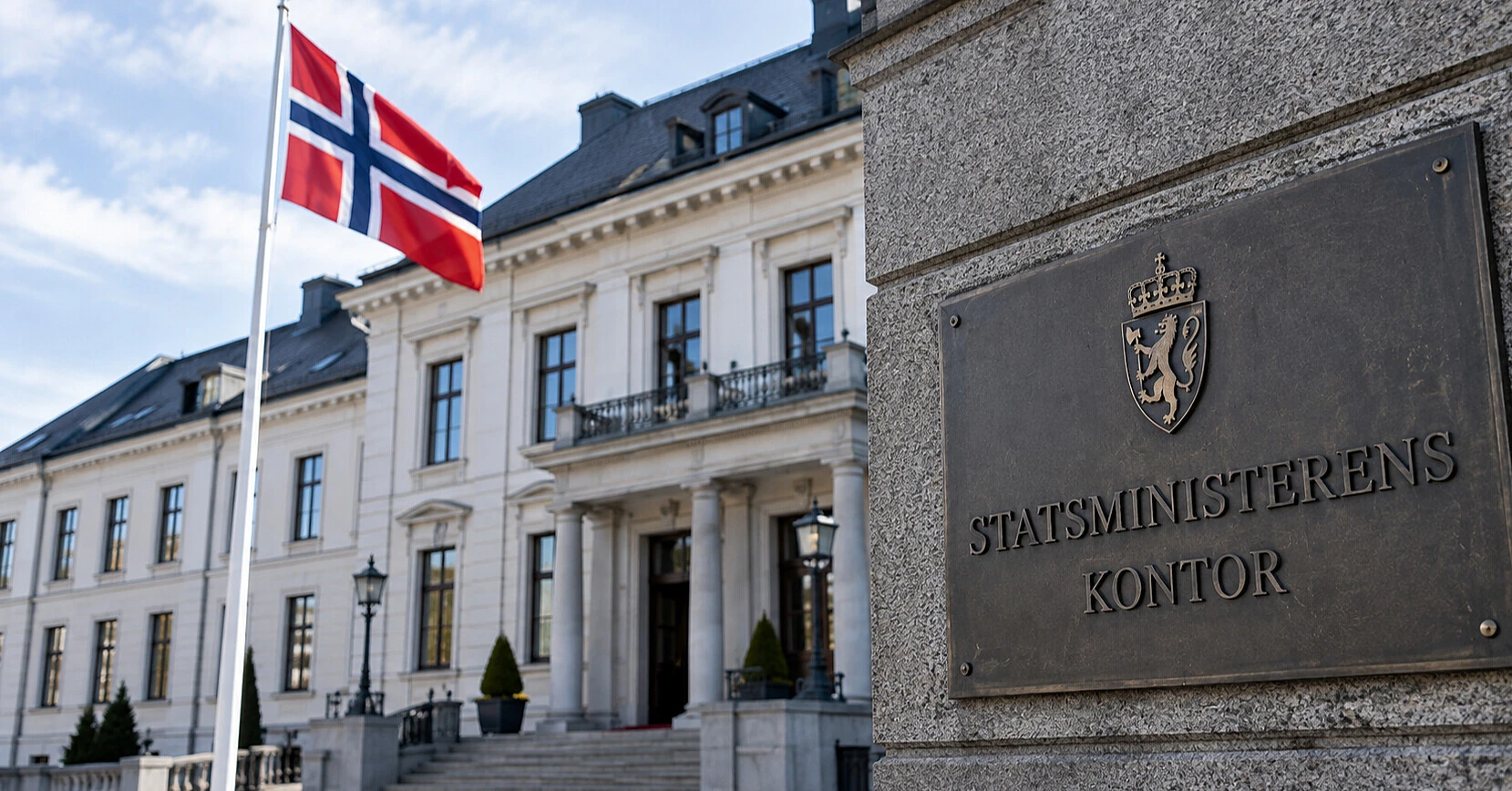
The Norwegian government has proposed allowing Ukrainians with temporary collective protection who work and can support themselves to obtain a separate residence permit based on employment. Such a residence permit could, after three years, give the right to apply for permanent residence in the country.
The new scheme was presented on September 17 by the Norwegian Ministry of Labour and Social Inclusion. The project is now open for public consultation, so the new rules have not yet entered into force. The authorities plan to launch the program in the summer of 2027.
The main difference from the current collective protection is the prospect of permanent residence. Most Ukrainians who arrived in Norway after the start of the full-scale war currently have temporary collective protection. It gives the right to live and work in the country, but in itself is not a basis for obtaining a permanent residence permit.
Under the new scheme, a working Ukrainian will be able to give up temporary collective protection status and switch to a residence permit based on employment. After three years of residence with such a permit, it will be possible to apply for a permanent residence permit, subject to other legal requirements.
A certain income will be required to obtain a residence permit
The government proposes to extend the program only to Ukrainians who are already in Norway, have temporary collective protection, and are sufficiently integrated into the labour market.
One of the main conditions will be a minimum income. The authorities are now considering two possible thresholds — 2.8 or 3 basic amounts of social insurance (G) per year. In current values this is respectively 382,337 or 409,647 Norwegian kroner per year.
The final income level is not yet determined — this very issue is part of the draft under discussion. In addition to sufficient income, the applicant must meet legal requirements, including good conduct requirements.
It is also proposed to consider income earned in the last 12 months. In this way, the authorities want to grant the new status to people who are already actually working and able to support themselves without constant social support.
The program will apply only to Ukrainians who were granted temporary collective protection before September 2026. For those who arrived later, the proposed special mechanism will not apply.
Family members will also be able to get the new status
Close relatives of a working applicant will be able to switch to the new residence permit together, if they are also in Norway under the temporary collective protection program.
In the draft, such relatives include a spouse or partner, as well as children under 20 years of age.
For families, a separate income requirement is proposed for the main applicant — at the level of Norway's standard requirement for family immigration. Currently this is 3.2 G, or 436,957 Norwegian kroner per year.
After switching to the new scheme, the previous residence permit under the collective protection program will be replaced by a new residence permit. At the same time, the government emphasizes that the collective protection mechanism itself is not being abolished and will continue to operate in 2027.
Applications will be accepted online
The government proposes to make the procedure fully electronic. Applications are planned to be submitted through the portal of the Norwegian Directorate of Immigration (UDI) using electronic identification.
This will allow some applications to be processed without visiting the immigration authorities in person. Moreover, the draft allows fully automated decision-making on applications if the necessary information can be verified by government systems.
The application will be subject to a fee. For an adult, a fee of 6,300 kroner is proposed, and for a minor — half of that amount.
Public consultation on the draft will last until October 30, 2026. After that, the government will be able to adjust the conditions of the program before its launch.
Almost half of working-age Ukrainians are already employed
The authorities explain the changes by a noticeable increase in employment among Ukrainian refugees. According to Statistics Norway, in July 2026 about 48% of displaced Ukrainians of working age were employed. A year earlier their share was about 41%.
Minister of Labour and Social Inclusion Kjersti Stenseng said that Ukrainians have already become an important part of many local communities and the labour market. According to her, the new system should provide greater predictability for Ukrainians themselves, their employers, and municipalities.
The government expects that the opportunity to obtain a more stable migration status will be an additional incentive for employment of those Ukrainians who are not yet working.
Based on materials from: NRK, Government of Norway, Norwegian Ministry of Labour and Social Inclusion
