
AfD and Putin's Representative Prepare Talks on Resumption of Russian Gas to Germany
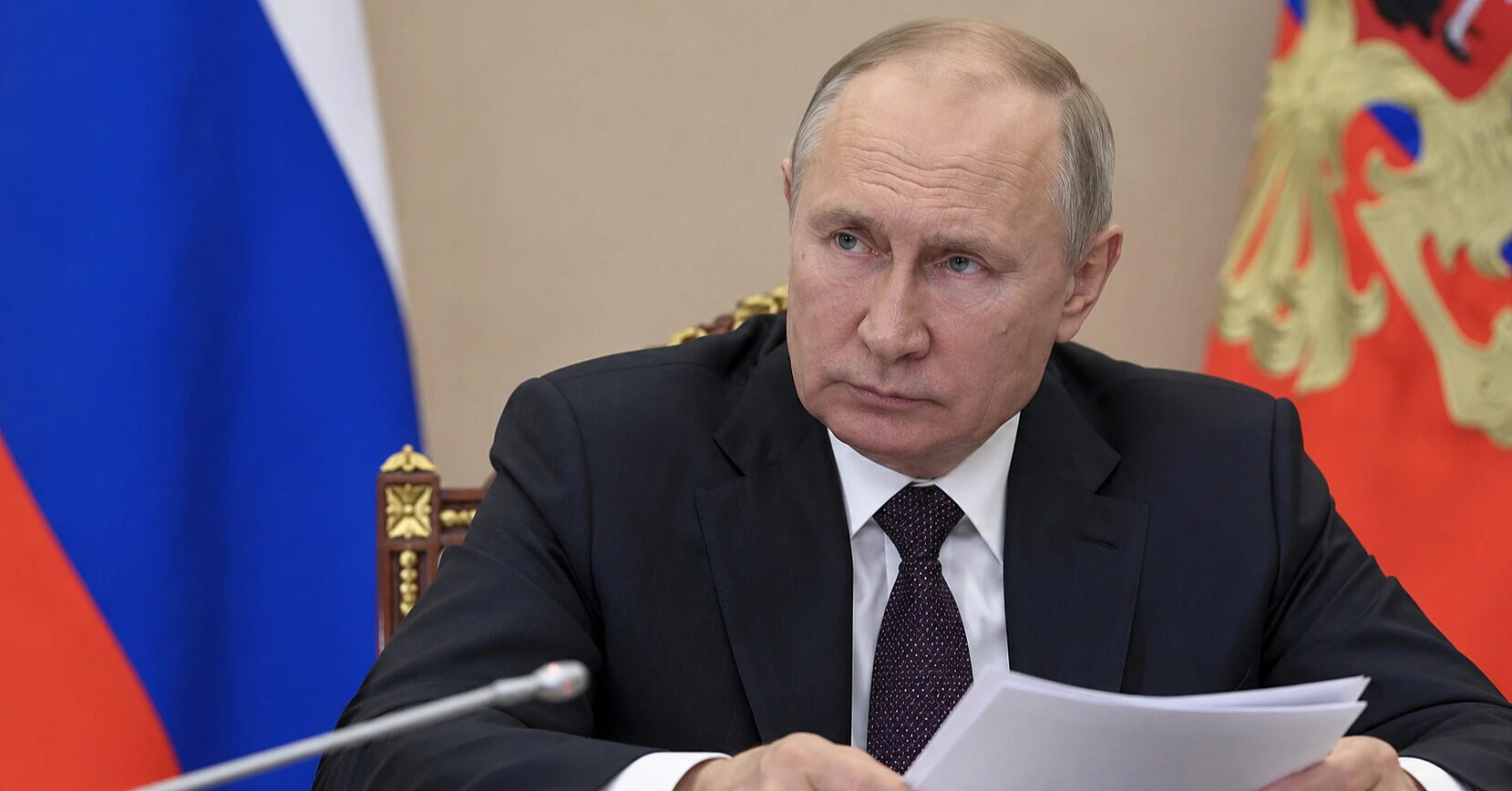
The leadership of the German party 'Alternative for Germany' (AfD) and the special representative of the President of the Russian Federation for economic cooperation, Kirill Dmitriev, have begun preparations for a meeting to discuss the possible resumption of Russian gas supplies to Germany and the fate of the Nord Stream pipelines. The talks could take place as early as March 2027, Reuters reported, citing two sources familiar with the preparations.
According to the agency, the meeting is expected to involve Dmitriev, who also heads the Russian Direct Investment Fund, and AfD co-chairpersons Alice Weidel and Tino Chrupalla. Party representatives and Dmitriev declined to comment on the preparation of the meeting.
One of the Reuters sources said the meeting is to be held only if, by that time, Russia and Ukraine agree on a certain framework for a peaceful settlement. The organizers are considering Israel, the United Arab Emirates, and India as possible venues.
In addition to representatives of Russia and the AfD, the organizers would like to involve the American side. In particular, this concerns Steve Witkoff and Jared Kushner, who participated in a meeting in Moscow with Dmitriev in September. However, a senior U.S. official told Reuters that Witkoff and Kushner have not yet been informed about the proposed gas meeting and have not received invitations.
Negotiations center on Nord Stream
One of the main topics of potential talks should be the restoration of Russian gas supplies, including the possibility of using the Nord Stream gas pipeline system. Part of its infrastructure was damaged as a result of explosions in the Baltic Sea in September 2022.
Before Russia's full-scale invasion of Ukraine, Germany was one of the largest European buyers of Russian energy. According to Reuters, Russia supplied more than half of Germany's natural gas imports and over a third of crude oil imports.
Alice Weidel has previously openly advocated the resumption of purchases of Russian oil and gas, linking access to cheaper energy resources with the competitiveness of German industry. In an interview with Reuters in June, she called for abandoning the boycott of Russian energy.
According to one of the agency's sources, the AfD hopes to use the possible negotiations also to demonstrate its own foreign policy agenda and criticize the government for energy costs. The party itself is not currently part of the federal government, so a possible meeting would not mean that Germany made a decision to resume purchases.
The topic is gaining additional political significance after the AfD strengthened its position in state elections. In September, the party became the largest political force following the elections in Saxony-Anhalt. The next state elections are scheduled in Mecklenburg-Western Pomerania, where German Nord Stream infrastructure is located on the Baltic Sea coast.
Germany has already restructured its gas import system
After the cessation of previous volumes of supplies from Russia, Germany significantly changed its import routes and built infrastructure for receiving liquefied natural gas. The Federal Network Agency of Germany notes that the lost Russian volumes were compensated by pipeline supplies from other countries and the development of LNG terminals.
In 2025, Germany imported 1,031 TWh of natural gas. Norway became the largest supplier with a share of 44%, another 24% came through the Netherlands, and 21% through Belgium. 106 TWh, or 10.3% of total gas imports, was imported through German LNG terminals. According to the Federal Network Agency, about 96% of LNG that came directly through German terminals in 2025 was of American origin.
Thus, the return of Russian supplies would now mean a change in the energy model that Germany had been building after the 2022 crisis. The former Green Party deputy responsible for Germany's energy policy, Michael Kellner, told Reuters that the country should not become dependent on Russia again. CDU deputy Roderich Kiesewetter also opposed the restoration of Nord Stream, saying that Russia used energy ties as a tool of pressure.
The return of Russian gas is limited by already adopted EU rules
Even if there is political support for resuming supplies in Germany in the future, this is hampered by legislation adopted at the European Union level. In January 2026, the EU Council finally approved a regulation on the phased cessation of imports of Russian natural gas.
For short-term contracts for the supply of Russian pipeline gas, the transition period ended on June 17, 2026. For long-term contracts, the ban is to take effect on September 30, 2027, and if the established requirements for filling gas storage facilities are not met, the deadline may be extended to November 1, 2027. Imports of Russian LNG under long-term contracts are to cease from January 1, 2027.
The regulation provides only temporary exceptions for some previously concluded contracts. Such contracts may be amended only in limited cases, and such amendments must not lead to an increase in supply volumes. Therefore, the launch of new large-scale supplies through Nord Stream would require taking into account not only the position of Germany's future government, but also current pan-European restrictions.
The American Chamber of Commerce in Russia positively assessed the idea of a possible meeting. Its President, Robert Agee, told Reuters that Germany's participation could expand the platform for discussing economic issues. At the same time, opponents of returning to Russian gas in Germany point to the risks of renewing the previous energy dependence.
At the moment, talk is only about preparations for possible negotiations. The date and place of the meeting have not been officially confirmed, AfD representatives and Dmitriev have not publicly announced it, and the American side that the organizers would like to attract has not yet received invitations.
Based on materials from: Reuters, Council of the EU, Federal Network Agency of Germany, EUR-Lex
