
Bloomberg: Russian officials move assets amid mobilization rumors
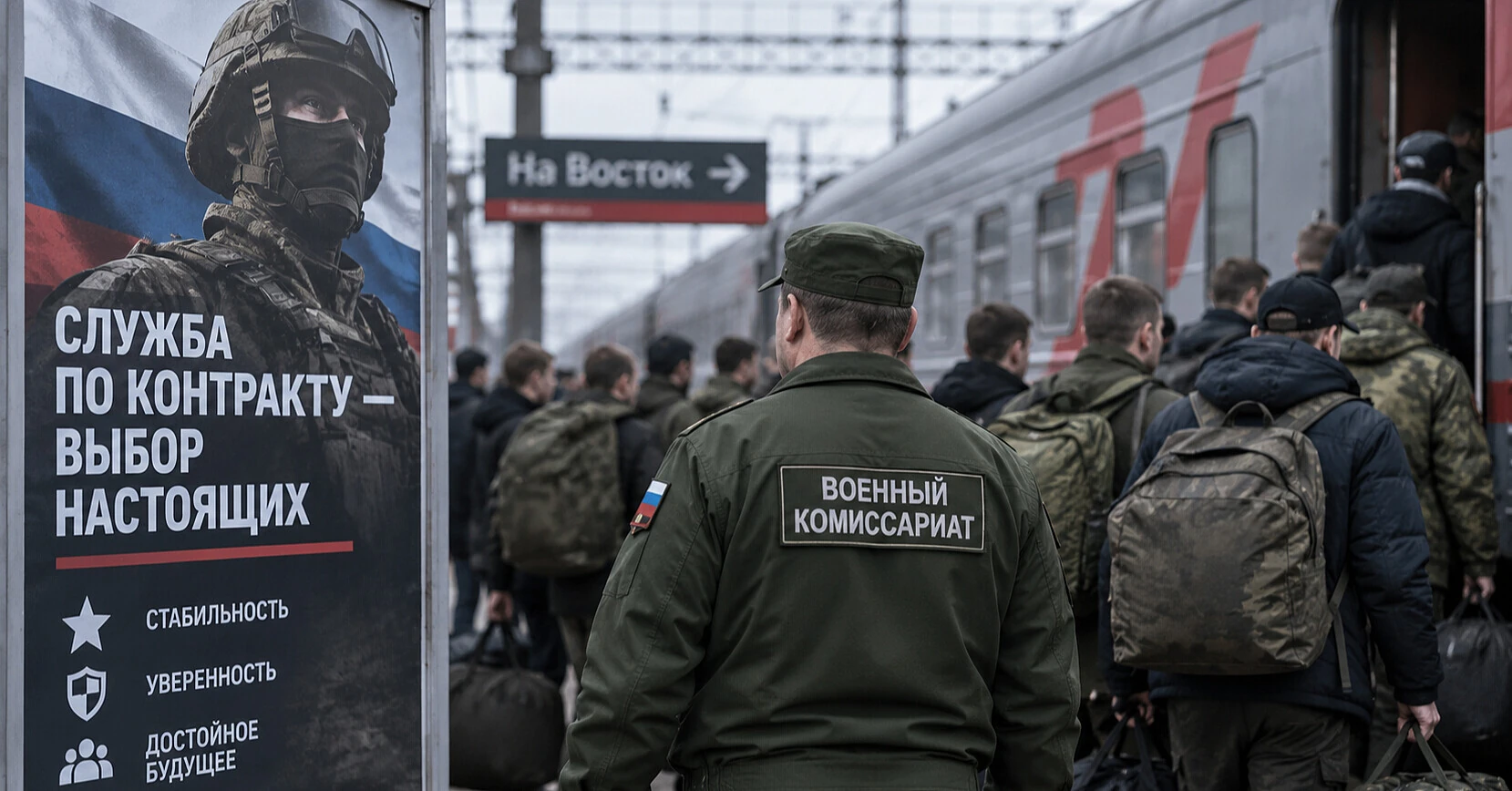
Fears are growing in Russia that after the State Duma elections conclude, the authorities may begin a new wave of mobilization for the war against Ukraine. According to Bloomberg, the anxiety has affected not only ordinary Russians, but also some officials and military enlistment office employees. However, there is no final confirmation of a decision on a new mobilization, and Russian authorities publicly deny such plans.
Bloomberg writes, citing documents obtained by the agency, that some Russian officials in recent months have tried to open bank accounts abroad and move part of their assets there. Similar actions were taken by individual employees of structures related to military conscription. Some of them also advised friends and relatives to leave Russia. The agency did not name these people, banks, or the amounts of transferred funds.
One European security official told Bloomberg that Russia is preparing to recruit an additional up to 300,000 people into the armed forces by the end of 2026. The agency emphasizes that it could not independently confirm this information. The decision on a new mass mobilization has also not been officially announced.
New mobilization may look different than in 2022
Bloomberg notes that if Russian authorities decide to expand forced conscription, they do not necessarily need to repeat the September 2022 model with mass distribution of paper summonses and a separate public announcement.
Over the past four years, a digital military registration system has been created in Russia. The unified registry is linked to tax data, police databases, medical information, the real estate registry, and the border control system.
An electronic summons is considered served seven days after it is posted in the registry, regardless of whether the recipient opened it. Simultaneously, a ban on leaving Russia may be automatically imposed upon the appearance of the summons.
If a person liable for military service does not appear at the enlistment office within the prescribed period, the legislation allows additional restrictions. Bloomberg points, in particular, to restrictions on vehicle registration and real estate transactions, obtaining loans, and registering as self-employed.
Such a system significantly reduces the ability to evade the call-up compared with the first mass mobilization in autumn 2022, when after the announcement of the call-up of 300,000 reservists, tens of thousands of Russians left the country in a short period.
Concerns intensified before the elections
State Duma elections are taking place in Russia on September 18–20, 2026. These are the first parliamentary elections since the start of the full-scale war against Ukraine. Against the backdrop of voting, reports about possible mobilization have become noticeably more frequent.
In late August, The Wall Street Journal reported, citing Western intelligence, that Russian military conducted exercises to practice mobilization procedures in Kaliningrad Oblast, and similar events took place in other regions. Sources emphasized that the exercises themselves do not mean a political decision on a new wave of mobilization has been made.
Russian independent media also reported in summer that the authorities were discussing various scenarios for replenishing the army after the elections. According to sources of Meduza, October was mentioned as one of the possible dates, but the publication's interlocutors emphasized that the discussion remained at the level of various options and there was no final decision.
Putin denies preparation of a new mobilization
Russian authorities have repeatedly rejected reports of a possible new draft. Vladimir Putin in early September called such reports an information attack and said there is currently no scenario that would require mobilization. Similar statements were made by Kremlin spokesman Dmitry Peskov and Deputy Chairman of the Security Council Dmitry Medvedev.
Medvedev claimed in late July that in the first half of 2026 about 200,000 people signed contracts with the Russian Defense Ministry, and over 16,000 more joined volunteer formations. According to him, the needs of the Russian army in personnel were fully satisfied.
Independent calculations, however, show some slowdown in voluntary recruitment. Researcher Janis Kluge of the German Institute for International and Security Affairs estimates that about 234,000 new contracts were concluded from January to August. In August the pace was about 1,000 people per day — about 20% less than a year earlier. At the same time, Kluge notes that current figures alone do not indicate the inevitability of a new mobilization.
An additional source of anxiety is the experience of 2022. Before the announcement of the then "partial mobilization," Kremlin representatives also denied that such a decision was being prepared. As a result, on September 21, 2022 Putin ordered the call-up of 300,000 reservists.
Therefore, at the moment Bloomberg records the preparatory infrastructure, fears inside Russia, and source data about a possible additional recruitment, however, there is no confirmed decision by the Kremlin on a new mass mobilization after the elections.
Based on: Bloomberg, The Straits Times, Meduza, Russianomics
