
Shuliak warned about the weak readiness of hromadas for winter blackouts
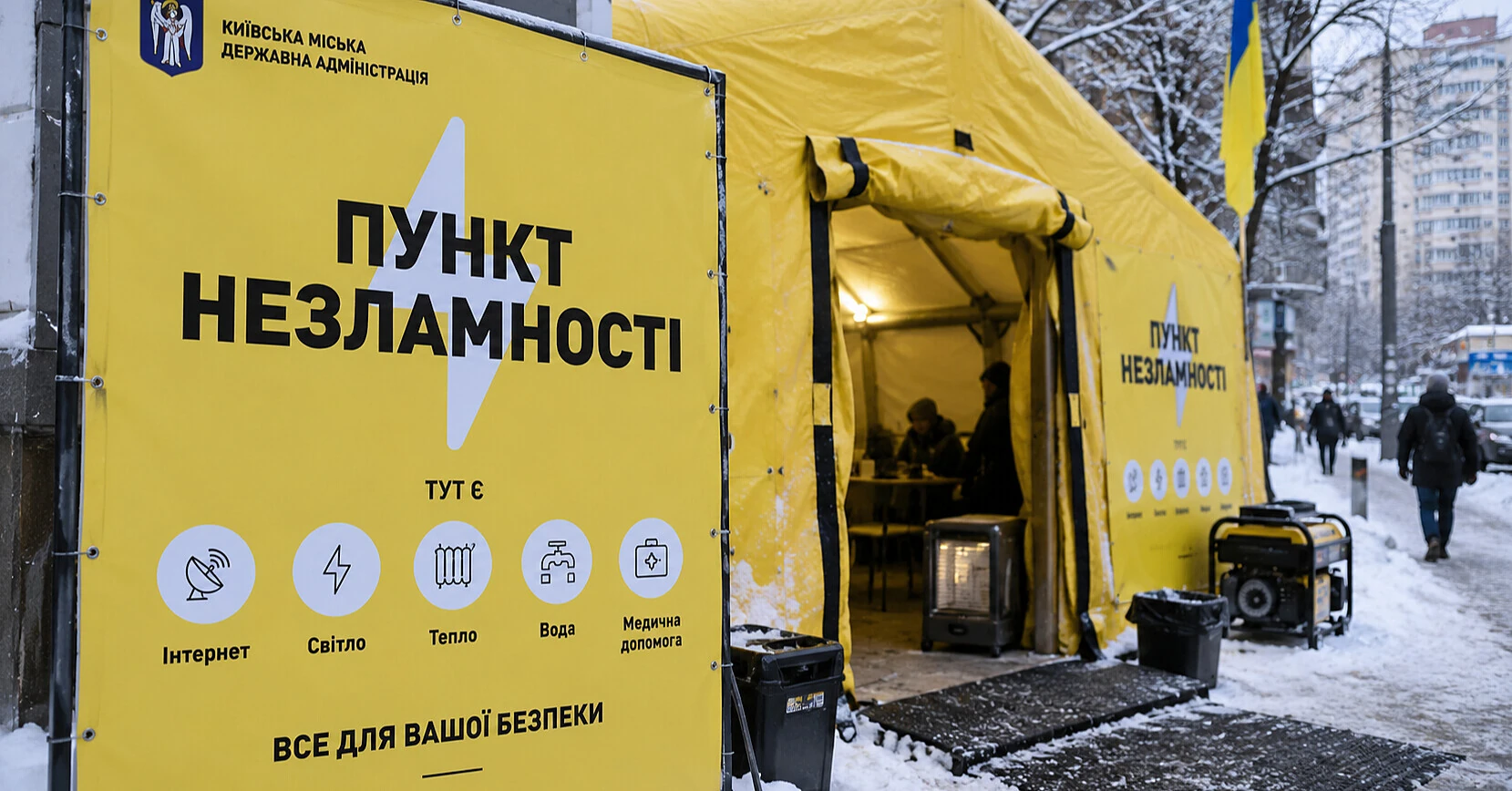
Almost a third of Ukrainian hromadas and every second major city will not be able to provide even basic critical services for 24 hours in winter in case of blackouts. This is according to a statement by Olena Shuliak, head of the VR Committee on State Power Organization, Local Self-Government, Regional Development, and Urban Planning, according to РБК-Україна .
Currently, backup power sources cover on average 67% of critical facilities. Despite this, only 4% of hromadas can withstand more than 72 hours of autonomous operation across all nine basic services simultaneously.
The situation is complicated by the fact that 78% of hromadas do not have sufficient fuel reserves. The request for fuel for generators and boiler houses is the most popular among local authorities and accounts for 48% of all needs.
"Therefore, first of all it is necessary to audit the capacity of existing generators against the actual load of facilities, introduce load priority protocols and separately focus on water utilities and pumping stations", Shuliak noted.
How to solve the fuel problem
To prevent a crisis, it is proposed to create regional fuel reserves in advance with clear supply priorities. First of all, fuel should go to hospitals, water utilities, and school boiler houses.
Shuliak also recommends concluding memorandums with local fuel companies to fix volumes, prices, and supply conditions during blackouts.
"Such memorandums can fix where and to which hromadas to supply fuel in case of a blackout, at what price and under what conditions, and companies will understand their role in a crisis situation in advance," the committee head noted.
Part of the fuel storage tanks can be obtained from donors, and small rural hromadas can pool reserves under the coordination of regional military administrations.
Lack of records of vulnerable residents
The survey also found that 34% of hromadas do not know the exact number of vulnerable residents they cannot support independently. The main reason is the lack of a unified local registry of such people.
"Such a registry should be linked to a specific action plan: who carries out evacuation and with what transport, who checks people's needs, who supplies water or medicine," Shuliak noted.
These data were shown by the survey "Readiness of hromadas for winter 2026/27", conducted from September 1 to 11 by the We Build Ukraine analytical center.
Shuliak said 145 hromadas from 24 regions of Ukraine and Kyiv anonymously participated in the survey. The majority of respondents were hromadas from the center of the country (46%), frontline territories (32%), and western regions (22%).
Recall that President Volodymyr Zelensky recently stated that Ukraine is ready to respond symmetrically to Russian strikes on the energy system in winter. At the same time, he noted that he continues to propose a step-by-step negotiation path to end the war.
