
Moscow Refinery completely halts oil processing after strike
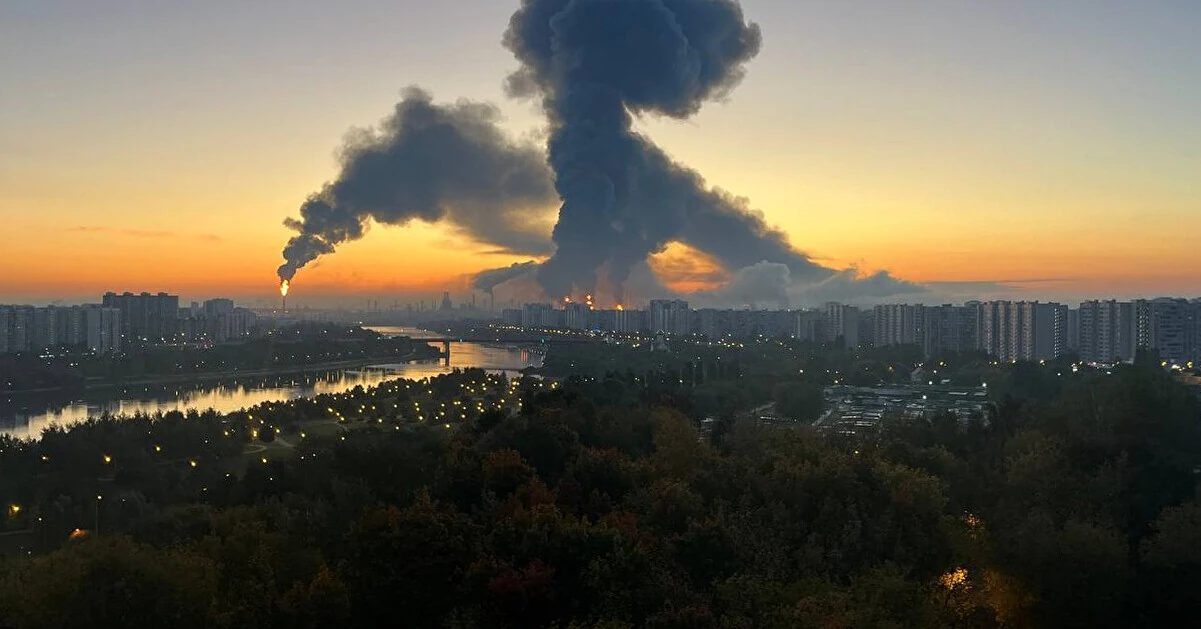
Gazprom Neft's Moscow Oil Refinery has completely halted primary oil processing after the September 20 strike. Both units that provide the plant's entire primary crude processing capacity caught fire and are now out of operation, three industry sources told Reuters.
This concerns the CDU-6 unit with a capacity of about 21.4 thousand tonnes of oil per day, accounting for 53% of the refinery's primary processing, and the Euro+ complex with a capacity of 18.8 thousand tonnes per day, providing the remaining 47%. According to the agency's interlocutors, equipment restoration and resumption of work may take several weeks.
Thus, after the strike, capacities totaling approximately 40.2 thousand tonnes of crude per day have been halted. Gazprom Neft did not promptly respond to a Reuters request about the consequences of the attack.
Another sign of the production halt was the disappearance of Moscow Refinery products from trading on the St. Petersburg International Mercantile Exchange: since September 21, the company's fuel has not been offered there.
The Moscow Refinery is one of Russia's largest oil refining enterprises. In 2024, it processed about 11.6 million tonnes of oil, or approximately 230 thousand barrels per day. Over the year, the enterprise produced 2.9 million tonnes of gasoline, 3.2 million tonnes of diesel fuel and 1.3 million tonnes of bitumen.
The Ukrainian Defense Forces officially confirmed the strike on the plant on the morning of September 20. According to the General Staff of the Armed Forces of Ukraine, the CDU-6 primary processing unit, an integrated oil processing unit and an isomerization unit were hit at the enterprise in the Moscow district of Kapotnya. A large-scale fire broke out on the refinery's territory.
The General Staff estimated the enterprise's design capacity at about 12 million tonnes of oil per year and reported that the plant produces gasoline, diesel and aviation fuel, fuel oil and other petroleum products. The Ukrainian command also pointed out that the enterprise is involved in supplying the Russian army.
The SBU, which participated in the operation along with other components of the Defense Forces, stated that the Moscow Refinery provides up to 35% of the fuel needs of Moscow and the region with high-quality fuel and is one of the main suppliers of aviation fuel for Moscow airports.
The current halt became a new consequence of the strike that was not known immediately after the attack. On September 20, the Ukrainian side reported damage to three units, but the very next day industry sources confirmed that the destruction of two primary processing nodes led to a halt in receiving and refining crude oil at the entire enterprise.
Based on materials from: Reuters, General Staff of the Armed Forces of Ukraine, SBU
