
Putin again claimed that Russia allegedly "did not start the war"
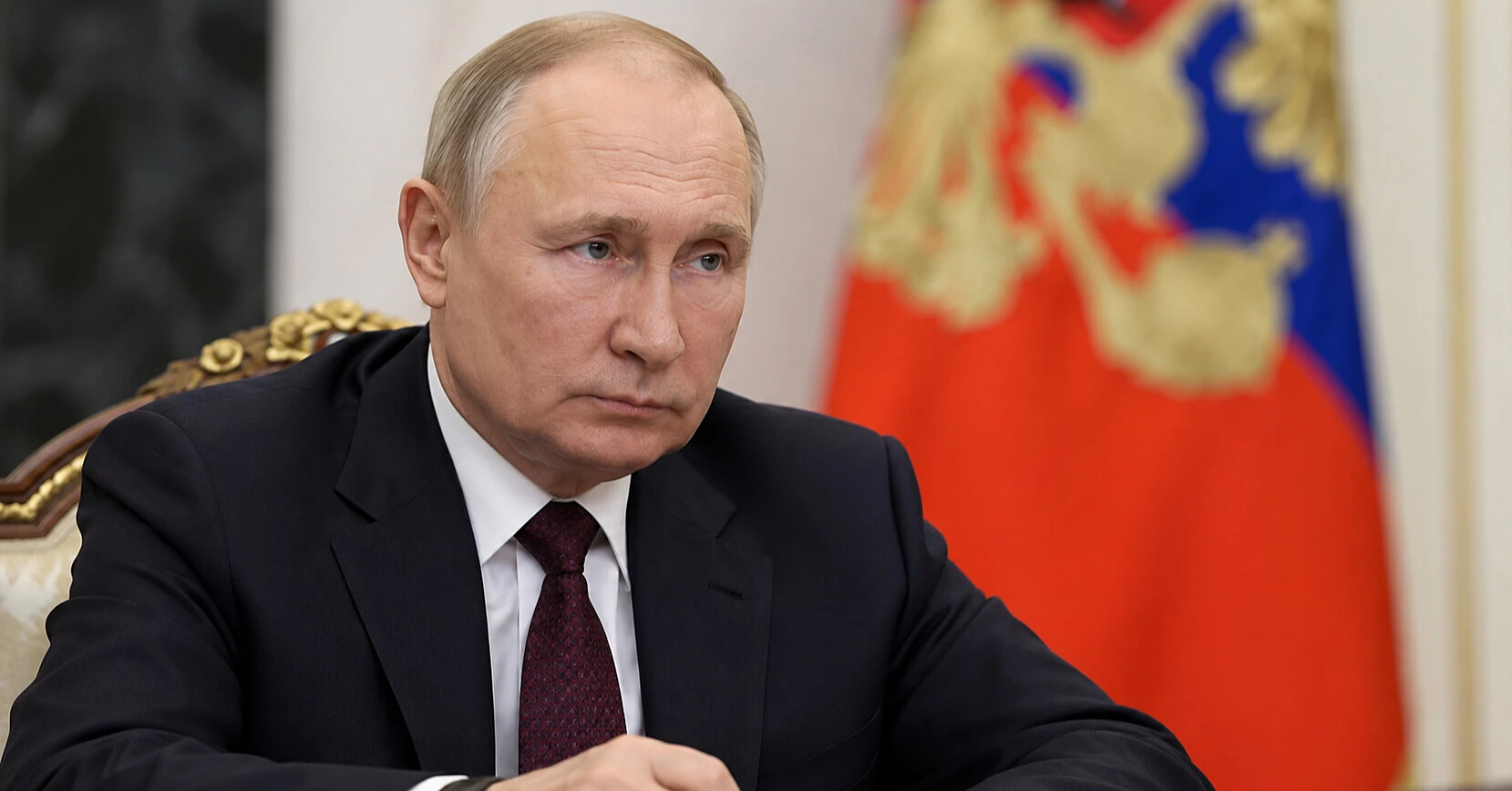
Russian President Vladimir Putin, speaking at the plenary session of the Valdai Discussion Club, once again presented Russia's version of the reasons for the war against Ukraine. He claimed that Russia allegedly did not start the hostilities but was forced to "defend itself," and specifically said that the actions of the Russian military conform to humanitarian norms.
The main statements of the Russian president are cited by TASS.
Putin said that, according to his version, Russia was not the initiator of the war.
"It was not us who wanted and not us who started fighting, but they started fighting with us," — he said.
The Russian president also claimed that Moscow was allegedly "deliberately put" in a position where it had to use weapons. As arguments he again mentioned NATO expansion, events in Ukraine after 2014, and declared "Russophobia" as allegedly the state ideology of Ukraine.
In addition, Putin repeated the thesis that the North Atlantic Alliance allegedly began "military development" of territories which he called historically Russian. Moscow has repeatedly used similar claims to explain the invasion of Ukraine.
However, the established chronology of events differs from the Russian president's version. It was Russia that on February 24, 2022, began a full-scale invasion of Ukraine, sending troops from several directions at once and launching missile strikes on Ukrainian territory. Before that, in 2014, Russia occupied and annexed Crimea, and also participated in hostilities in the Donbas.
Separately, Putin claimed that Russian servicemen allegedly adhere to norms of warfare. According to him, the professionalism of the army implies compliance with humanitarian requirements, and Russian forces "never first" deliberately attacked objects not directly related to military infrastructure.
These statements contradict the consequences of Russian attacks documented by international organizations. In a report by the Office of the UN High Commissioner for Human Rights for the period from December 2025 to May 2026, systematic and repeated strikes on Ukraine's energy infrastructure are described. They led to large-scale disruptions in electricity, heating and other vital services for the civilian population.
The UN monitoring mission also records an increase in civilian casualties. According to its data, from January to August 2026 in Ukraine at least 2,222 civilians were killed, and another 13,058 were wounded. This is 55% more than in the same period of 2025.
In August alone, the UN confirmed the death of at least 372 civilians and the wounding of another 2,349 people. The main cause of civilian casualties remained long-range weapons — missiles and drones. A significant part of such casualties was recorded far from the front line in Ukrainian cities.
The UN documented not only the consequences of attacks but also violations regarding prisoners and civilians. The June report of the organization noted continuing cases of torture and cruel treatment of Ukrainian prisoners of war, as well as human rights violations in the territories occupied by Russia.
In September, the UN Human Rights Office also reported that since the beginning of the full-scale invasion it had documented over a thousand cases of sexual violence against civilians and prisoners of war. According to the organization, 89% of the identified cases were linked to representatives of Russian authorities and security forces.
Thus, Putin's statements at Valdai repeat the official Kremlin position on the causes of the war and the actions of the Russian army, while international observers continue to document civilian casualties, strikes on energy infrastructure, and violations of international humanitarian law during the Russian invasion.
